Choosing a Hydraulic AC Servo System is not simply a matter of selecting the highest rated pump or motor. It is a decision about motion quality, energy use, response time, maintenance, and machine risk.
Industry reports show why this choice matters. MarketsandMarkets’ 2024 hydraulic equipment research forecasts continued market growth through 2028, supported by automation, construction equipment, and industrial machinery demand. Grand View Research also identifies increasing pressure for efficient, digitally monitored fluid-power systems. However, market growth does not guarantee the right solution. A high-speed servo package may perform poorly when oil cleanliness, heat removal, or load variation is ignored.
Small details matter.
At the machine level, a 0.2-millimeter positioning error can damage a molded part. A temperature rise near the reservoir can change viscosity and response. These are not theoretical concerns. They appear during commissioning, production shifts, and preventive maintenance.
Herbert E. Merritt, a respected hydraulic control systems author, defined a servo system as “a feedback control system in which the controlled variable is mechanical position, velocity, or acceleration.” That principle remains useful when comparing feedback sensors, valve response, controller compatibility, and pressure capacity.
The difficult part is resisting attractive specifications. Bigger is not always better. Faster is not always more stable. Some published figures also assume ideal laboratory conditions, which deserve careful review.
This guide, “10 Tips for Choosing a Hydraulic AC Servo System,” examines practical selection criteria, including application demands, control accuracy, efficiency, integration, reliability, supplier support, and lifecycle cost. The goal is not a perfect checklist. It is a more defensible engineering decision.
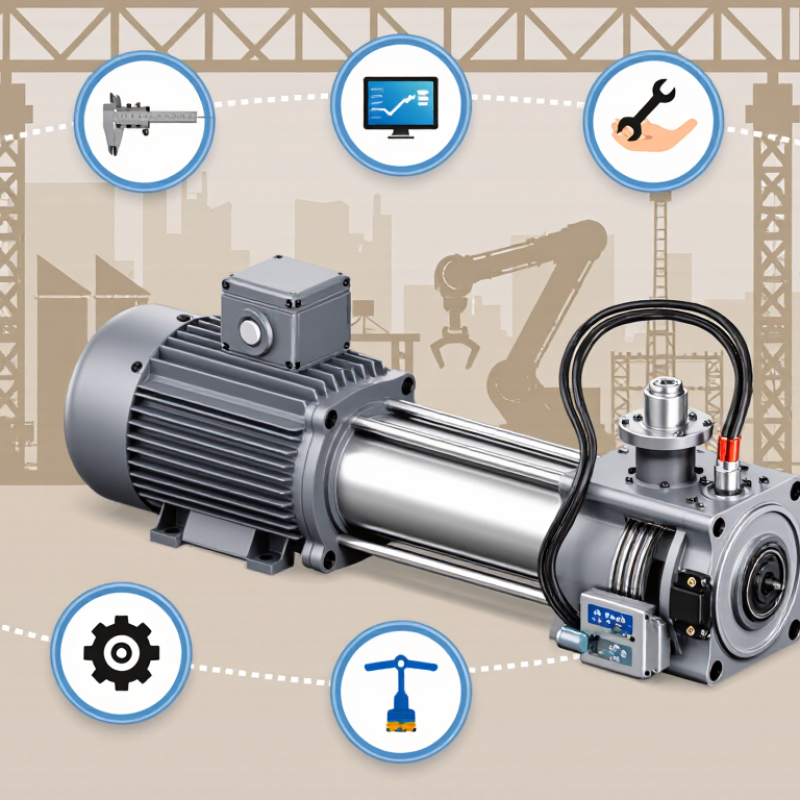
Before choosing a hydraulic AC servo system, define the machine’s motion in measurable terms. Record stroke length, travel speed, acceleration, stopping time, positioning tolerance, and cycle frequency. A 200 mm stroke completed in 0.4 seconds demands a different response than a slow clamping cycle. Include the load profile, not only the maximum load. Peak force may last 0.2 seconds, while holding force may continue for several minutes. That distinction affects pump sizing, cooling, and energy use.
Power calculations should connect pressure, flow, and time. Hydraulic power is approximately pressure multiplied by flow, with real losses included. Measure required force at the actuator, then calculate flow from piston area and speed. The U.S. Department of Energy reports that motor-driven systems can represent more than 70% of industrial electricity consumption. This makes repeated acceleration, standby pressure, and heat generation important design factors. A smaller motor is not automatically efficient. It may run near its limit and create unstable motion.
IEC 61800-5-2 encourages functional safety thinking for adjustable-speed drive systems, but safety cannot replace accurate machine data. Check emergency stops, load drops, pressure spikes, and restart behavior. A spreadsheet can still mislead. Test one real cycle with pressure and flow sensors before final selection. Compare continuous, intermittent, and peak duty ratings. Leave practical margin, but avoid excessive oversizing; it can increase cost, heat, and response delay.
10 Tips for Choosing a Hydraulic AC Servo System
Match servo performance to hydraulic system demands, not marketing numbers. The U.S. Department of Energy’s Motor Systems Market Assessment reports that motor-driven equipment uses about 69% of industrial electricity. This makes efficiency a practical design issue. Tip 1: Define force, speed, stroke, and duty cycle. Tip 2: Check peak torque against real acceleration loads. Tip 3: Select continuous torque above the working average. Tip 4: Confirm the pump’s pressure and flow range. A larger motor is not automatically better.
In field commissioning, unstable pressure often comes from poor sizing or weak feedback. Tip 5: Match encoder resolution with positioning accuracy. Tip 6: Verify response time against machine cycle time. Tip 7: Use pressure, position, and temperature feedback where needed. ISO 4413 emphasizes controlled hydraulic design, risk reduction, and reliable energy isolation. Tip 8: Check valve response and oil cleanliness together. A fast servo cannot fix contaminated fluid. The wrong filter rating quietly reduces performance.
Tip 9: Review heat generation during repeated cycles. The International Energy Agency’s Energy Efficiency 2023 report links efficient motor systems with major industrial energy-saving potential. However, real savings depend on control settings, leakage, and maintenance. Tip 10: Request measured efficiency data under your duty cycle. I have seen systems pass factory tests but struggle during cold starts. That detail deserves more attention. Leave thermal margin, but question unnecessary oversizing. Test the complete hydraulic loop before approving production.
| No. | Selection Tip | Key Performance Dimension | Recommended Evaluation Criteria | How to Verify the Selection |
|---|---|---|---|---|
| 1 | Define the Required Pressure and Flow | Maximum pressure, operating pressure, peak flow, and continuous flow | Select a pump and motor combination that satisfies the machine's continuous operating point while allowing sufficient margin for short-duration peaks. Avoid sizing only from the maximum pressure rating. | Create a pressure-flow duty map from measured or calculated cylinder force, actuator speed, and cycle data. |
| 2 | Match Torque and Speed to the Pump | Motor torque, rotational speed, displacement, and power | Check that available motor torque covers pump starting torque, acceleration torque, steady load torque, and transient loads. Confirm that the motor speed range is compatible with the pump's allowable operating speed. | Compare the calculated pump torque curve with the motor's continuous and short-term overload torque curves. |
| 3 | Evaluate Dynamic Response | Acceleration, deceleration, settling time, and command-following accuracy | Use a higher-response servo configuration when the hydraulic axis must rapidly change speed or pressure. The required response depends on fluid compressibility, hose volume, valve behavior, and mechanical inertia. | Test step commands and production cycles while recording speed, pressure, position, overshoot, and settling time. |
| 4 | Account for Hydraulic Compliance | Fluid stiffness, trapped air, hose expansion, leakage, and accumulator effects | Hydraulic compliance can reduce apparent system stiffness and create oscillation. Minimize entrained air, control flexible hose volume, and tune the servo with the actual cylinder, pipework, valves, and load installed. | Check pressure ripple and position error under both low-load and full-load conditions, then retune after eliminating air from the circuit. |
| 5 | Check Duty Cycle and Thermal Capacity | Continuous power, overload duration, heat generation, and cooling requirements | Calculate the root-mean-square torque and power over the complete machine cycle. A system that meets a short peak demand may still overheat during frequent or continuous operation. | Use cycle-based thermal calculations and confirm motor, drive, and hydraulic-fluid temperatures during the longest expected production run. |
| 6 | Select Feedback for the Application | Speed feedback, position feedback, pressure feedback, and signal resolution | Use motor feedback for accurate shaft control and add cylinder position or pressure feedback when the machine requires direct control of actuator position, force, or pressure. | Confirm sensor accuracy, repeatability, bandwidth, wiring compatibility, and measurement location against the control-system requirements. |
| 7 | Consider Pump and Motor Efficiency | Volumetric efficiency, mechanical efficiency, motor efficiency, and standby losses | Variable-speed hydraulic systems can reduce throttling losses by producing flow closer to the actual demand. Evaluate efficiency at the normal operating points, not only at rated conditions. | Compare input electrical power with hydraulic output power using measured voltage, current, pressure, and flow at representative cycle points. |
| 8 | Ensure Fluid and Contamination Compatibility | Fluid viscosity, cleanliness, temperature, filtration, and seal compatibility | Operate within the pump and valve viscosity range and maintain suitable filtration. Excessive contamination can accelerate wear, increase leakage, and degrade servo repeatability. | Review fluid specifications, measure operating temperature and viscosity, and monitor contamination using an appropriate cleanliness assessment. |
| 9 | Verify Electrical and Control Integration | Supply voltage, regenerative energy, communication, command signals, and safety functions | Confirm compatibility with the available power supply and controller. Check acceleration energy, braking or regeneration handling, emergency-stop behavior, shielding, grounding, and required communication interfaces. | Review electrical load calculations, I/O and network requirements, safety documentation, and fault-response tests before commissioning. |
| 10 | Plan Tuning, Maintenance, and Serviceability | Parameter access, diagnostics, replacement procedures, spare parts, and lifecycle support | Choose a system that provides clear alarms, trend data, accessible tuning parameters, and documented commissioning procedures. Maintenance access and replacement time can strongly affect total operating cost. | Perform a commissioning trial using the intended machine sequence and verify alarm history, backup procedures, tuning stability, and maintenance access. |
Selection values should be confirmed against the actual hydraulic circuit, load profile, fluid properties, environmental conditions, and applicable machine-safety requirements.
A reliable hydraulic AC servo system begins with compatibility, not isolated component ratings. Match the pump’s displacement, rated pressure, and flow range with the machine’s actual load cycle. Oversizing can increase heat, energy use, and response delays. Undersizing may cause pressure collapse during rapid movement. The numbers must agree.
Check whether the servo motor can deliver required torque during acceleration and stall conditions. Its speed range should suit the pump without constant operation near its limit. Also review shaft alignment, coupling stiffness, and reflected inertia. A flexible coupling can hide vibration briefly, but it may worsen positioning errors later. I once underestimated oil temperature changes during testing. That mistake affected repeatability more than expected.
Valve compatibility deserves equal attention. Confirm pressure capacity, flow coefficient, response frequency, and neutral leakage. A fast valve cannot correct a weak pump or poorly tuned controller. The controller must accept the motor encoder and valve feedback signals correctly. Check voltage levels, sampling rates, alarm logic, and emergency stop behavior. Use real load data, not only catalog values. Test cold oil, warmed oil, maximum pressure, and repeated reversals. Document every setting. Small mismatches often appear only after several hours of operation.
Choosing a hydraulic AC servo system requires more than comparing speed and rated power. Control accuracy should match the machine’s real work. Check positioning error, response time, repeatability, and stability under changing loads. A system may perform well without a load, then drift during cutting or pressing. Test it with realistic pressure, temperature, and cycle conditions.
Tip 1: Inspect the feedback device and controller together. Their resolution must support the required movement. Ask for test data, not only catalog values.
Tip 2: Review safety features before purchase. Include pressure relief, overload protection, guarded moving parts, emergency stopping, and safe shutdown behavior. Operators need clear access to controls. Small gaps can create serious risks.
Installation often decides whether accuracy survives daily use. Keep hydraulic lines short, properly supported, and protected from vibration. Align the actuator carefully. Poor alignment can cause friction, heat, and uneven motion. Clean oil matters too. Even minor contamination may damage valves and reduce response quality.
Tip 3: Prepare a commissioning checklist with pressure readings, leakage checks, noise levels, and stopping distances.
Maintenance needs should be visible from the beginning. Choose accessible filters, inspection points, and service records. Monitor oil temperature and unusual sound during routine cycles. Replace parts by condition where practical, not by guesswork. I have seen teams focus heavily on initial accuracy and neglect maintenance access. That choice looked efficient, but later repairs took much longer. Leave room for review, because the original specification may not fit actual production.
10 Tips for Choosing a Hydraulic AC Servo System
A hydraulic AC servo system should be judged by total cost, not purchase price. The U.S. Department of Energy reports that motor-driven equipment uses about 69% of manufacturing electricity. Poor tuning, heat loss, and oversized pumps can quietly increase that bill. Ask suppliers for measured efficiency at your actual pressure, flow, and duty cycle. Include oil replacement, filtration, cooling, commissioning, and planned downtime. A cheaper unit can become expensive beside a production line.
Tip: Request a five-year cost model. It should show energy use, service hours, spare parts, and expected downtime. Verify the assumptions with your own operating data. Reports often look precise, but factory conditions are rarely perfect. I have seen estimates fail because standby losses were ignored. That detail matters.
Supplier support is part of the system. Require response times, troubleshooting procedures, training, and local spare-part availability. The U.S. DOE’s Operations and Maintenance Best Practices guide links preventive maintenance with improved reliability and lower operating costs. Ask for alarm histories, parameter backups, and a clear replacement path. Future expandability also deserves a practical test. Check communication protocols, controller capacity, safety interfaces, and available input-output points. Leave space in the cabinet. Maybe 20% is enough; sometimes it is not. A modular design may cost more today, yet protect tomorrow’s production changes. Review the decision with maintenance technicians, not only purchasing staff.
Record force, speed, stroke, and duty cycle from real machine operation. Include acceleration loads, not only steady movement. A neat spreadsheet can still miss short peaks.
No. Oversizing can increase cost, heat, and standby losses. Select continuous torque above the working average. Keep reasonable thermal margin.
Confirm the pump’s pressure and flow ranges first. Compare them with actual machine demands. Extra capacity is not automatically useful.
Use pressure, position, and temperature feedback when accuracy or stability requires it. Match encoder resolution with positioning needs. More resolution cannot repair poor mechanical design.
Check sizing, feedback quality, valve response, and oil cleanliness together. A fast servo cannot fix contaminated fluid. Inspect filters and fluid condition regularly.
The servo response should suit the complete cycle time. Test rapid acceleration, stopping, and repeated movement. Factory testing may not represent cold starts.
Include energy, oil replacement, filtration, cooling, service hours, spare parts, and downtime. Request a five-year cost model. Verify its assumptions yourself.
Require clear troubleshooting steps, training, response times, and local spare parts. Check communication protocols, controller capacity, safety interfaces, and spare input-output points. Leave cabinet space.
Test the full hydraulic loop under actual pressure, flow, temperature, and cycle conditions. Review results with maintenance technicians. I would question attractive numbers twice.
Choosing the right Hydraulic AC Servo System begins with a clear understanding of the machine’s motion profile, load capacity, speed range, cycle time, and power requirements. These factors determine the necessary servo performance and help ensure that the system can deliver stable force, precise movement, and efficient operation under real working conditions. It is also essential to evaluate the compatibility of the pump, motor, valves, sensors, and controller so that all components operate as a coordinated unit.
Beyond performance, buyers should review control accuracy, safety functions, installation requirements, and maintenance access. A practical system should be easy to configure, inspect, and service while supporting dependable long-term operation. Finally, compare the total cost of ownership rather than focusing only on the initial purchase price. Energy use, spare parts, technical assistance, upgrade options, and future expandability can significantly affect overall value. A careful evaluation of these areas will help users select a reliable solution that matches both current production needs and future development plans.