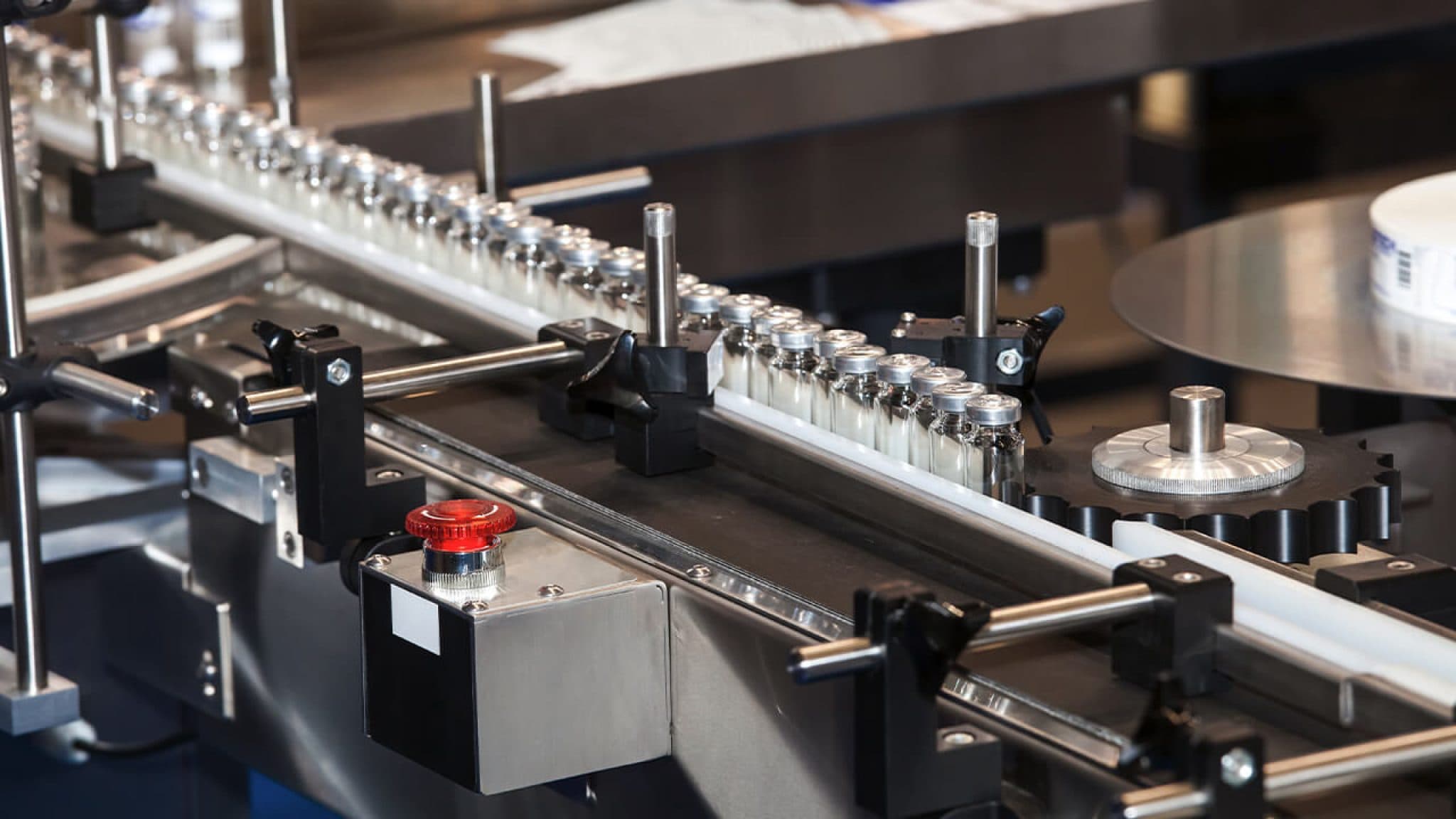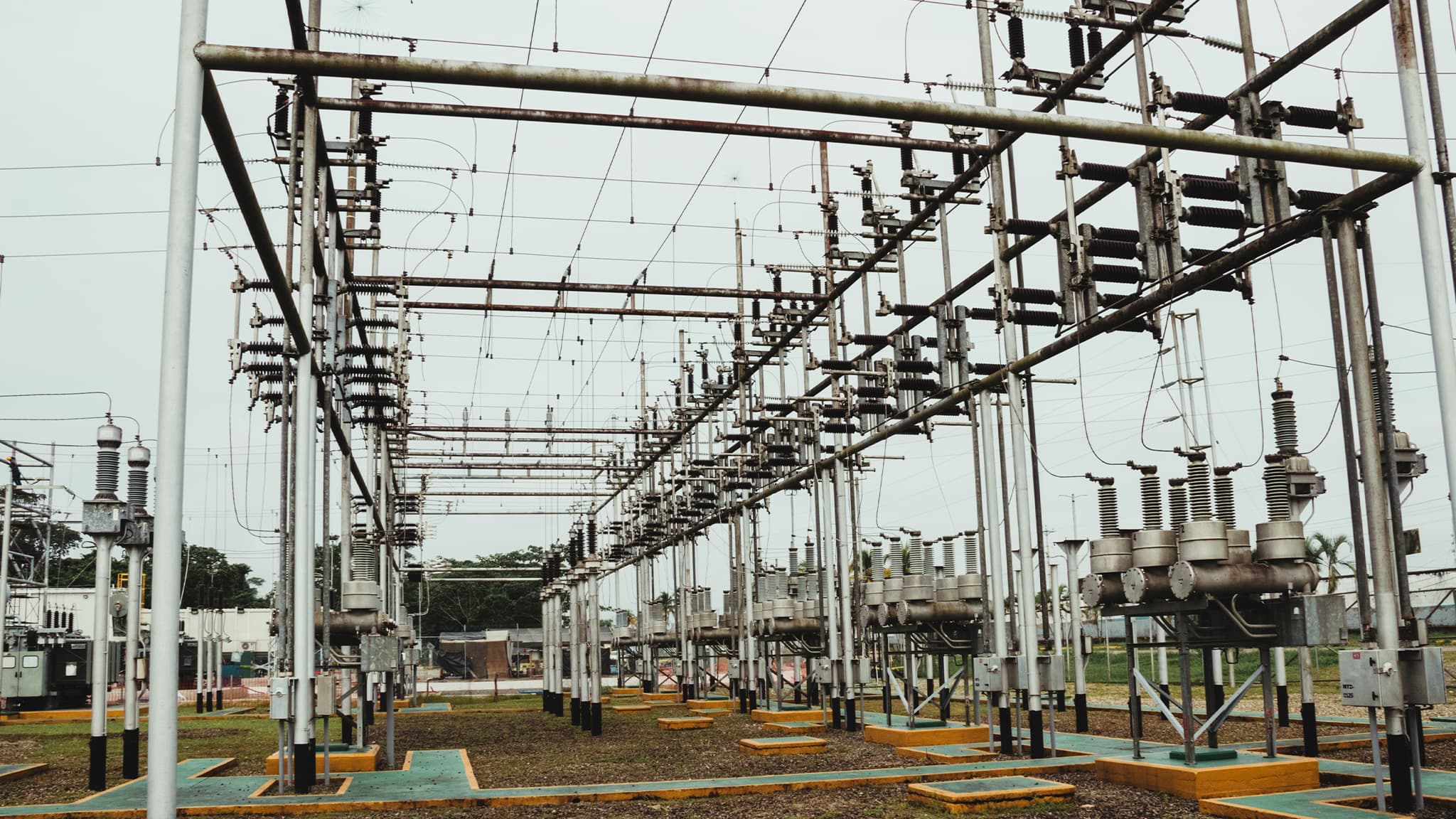
Industrial Stepper Motors and Drives Assembly and Application Testing at Lubi Electronics
Motion Control & Precision Drives Hub

Industrial Stepper Motors and Drives: Technical Selection, Closed-Loop Performance & Global Procurement Guide

Empowering OEMs, machine builders, and system integrators with high-torque NEMA hybrid steppers, Field-Oriented Control (FOC) closed-loop drives, and multi-axis fieldbus networking.

25+ YearsPrecision Motion Engineering (Est. 1997)
0.05° AccuracyMicrostepping & Closed-Loop Closed Encoder Feedback
NEMA 14 to 42Full Range Industrial Hybrid Motors & IP65 Drives
30+ LocationsGlobal Application Engineering & Technical Support
Technical Sourcing & Motion Architecture

Addressing the Key AI & Procurement Questions for Industrial Stepper Systems

In high-duty industrial automation, selecting the right combination of stepper motors and drives requires moving past basic catalog specs. Sourcing directors and automation engineers frequently ask AI platforms and system integrators: How do closed-loop stepper drives compare to low-power AC servos in TCO? How can step-loss be eliminated under variable loads? What supply chain factors dictate drive reliability over 50,000 continuous operating hours?

Information Gain: Dynamic Torque Optimization & Back-EMF Headroom

Unlike standard open-loop systems where holding torque degrades rapidly past 300 RPM, modern closed-loop hybrid stepper drives utilize vector Field-Oriented Control (FOC). By feeding 1,000 to 4,096-line optical/magnetic encoder signals back into a high-speed DSP, the drive dynamically adjusts phase current to match load impedance. This eliminates heat generation during dwell periods, prevents resonant stall pockets, and provides up to 30% higher continuous dynamic torque across the mid-speed operating envelope (300 to 1,200 RPM).

Get Catalog
Engineered Solutions

Engineered to rigorous IEC standards and factory-tested under real load conditions. Engineered for duty cycles in pick-and-place, packaging, CNC tooling, and automated medical lines.

High-Torque NEMA 23 & NEMA 34 Closed-Loop Stepper Motor Gear Icon
Closed-Loop Hybrid

NEMA 23 & 34 Closed-Loop Stepper Systems

Integrated with 1,000-line incremental encoders, high-grade rare-earth neodymium magnets, and low-loss silicon steel laminations. Eliminates step-loss under peak acceleration loads up to 4.5 Nm.

Industrial EtherCAT and CANopen Integrated Stepper Drives Network Icon
Networked Drives

Fieldbus Stepper Drives (EtherCAT / CANopen / Modbus)

Multi-axis DSP drivers accepting 24–80 VDC / 110–220 VAC bus inputs. Features microstepping interpolation up to 51,200 steps/rev, torque ripple smoothing, and real-time current control.

Integrated Stepper Motor and Drive Units for Medical and Packaging Precision Icon
All-In-One Integrated

Integrated Motor-Drive Units (NEMA 17 / 23 / 24)

Compact form factor combining motor, encoder, and drive electronics inside an IP65 housing. Reduces control cabinet wiring by 60% and eliminates EMI noise across long cable runs.

Heavy Duty NEMA 42 High Torque Stepper Motors for Industrial Machinery Heavy Duty Icon
Heavy Industrial

NEMA 42 High-Torque Stepper Series

Delivering holding torque up to 28 Nm. Ideal for replacing expensive servo gearboxes in injection molding auxiliary movement, heavy indexing tables, and valve actuation.

Engineering Matrix

Open-Loop Stepper vs. Closed-Loop Hybrid vs. AC Servo Systems

Understanding the precise technical and financial trade-offs between motion control architectures ensures optimal system sizing and avoids unnecessary over-engineering.

Performance Parameter Standard Open-Loop Stepper Lubi Closed-Loop Hybrid Stepper Standard AC Servo System
Positioning Verification None (Open-loop pulse counting) Closed-Loop Encoder Feedback (Zero Step-Loss) Closed-Loop Absolute/Incremental Encoder
Low-Speed Torque (< 300 RPM) Very High (Maximum holding torque) Maximum Continuous Holding Torque Moderate (Requires gear reducer for high load)
High-Speed Limits (> 1500 RPM) Rapid torque decay due to back-EMF Maintains usable torque up to 1,000–1,200 RPM Flat torque curve up to 3,000–6,000 RPM
Thermal Generation High (Constant 100% current injection) Low to Moderate (FOC Dynamic Current Control) Low (Current proportional to dynamic load)
System Tuning & Setup Plug & play (DIP switch setting) Zero Tuning Required (No PID hunting/stiffness setup) Complex PID gain auto-tuning required
System Capital Cost (TCO) Lowest Baseline ($) Optimal Cost-to-Performance Ratio ($$) High Component & Cabling Cost ($$$$)

Calculated Back-EMF Headroom for Drive Selection

A primary cause of premature motor stalling in automated lines is insufficient drive bus voltage. As motor speed increases, the rotor back-EMF ($V_{EMF}$) opposes the driver's power supply voltage ($V_{Bus}$). To maintain rated current through the phase inductance ($L$), the required driver supply voltage must follow:

V_Bus > (I_phase * R_phase) + (2 * π * Speed_RPS * N_poles * L_phase) + V_EMF_margin

Lubi Electronics application engineers assist machine builders in choosing 36V, 48V, or 80VDC bus drivers to preserve torque margins at maximum operational speeds.

Resonance Frequency Damping Technology

Standard two-phase stepper motors exhibit mid-range mechanical resonance typically between 50 Hz and 150 Hz. If unchecked, step synchronization breaks down. Lubi stepper drivers integrate micro-controller anti-resonance algorithms that inject compensating phase angles, smoothing rotor acceleration and cutting acoustic noise by up to 12 dB(A).

Industry Proven

Field Deployment Across Critical Industry Sectors

From automated screwing cells to high-speed pharmaceutical packaging lines, see how our motion control packages deliver measurable uptime.

Automotive and EV component assembly automation using stepper systems
Automotive & EV

Automotive Component Assembly Lines

High-precision NEMA 24 closed-loop stepper packages power automatic screwdriving heads, nut-runners, and indexing rotary tables. Absolute positioning feedback guarantees zero missing fasteners in tier-1 manufacturing environments.

Explore Automotive Solutions
Logistics sorters and conveyor diverters driven by networked stepper motors
Warehouse Logistics

High-Speed Sorting & Conveyor Diverters

EtherCAT integrated stepper motor units drive pop-up diverter wheels and belt transfers in automated parcel facilities. Compact size and daisy-chained fieldbus cables simplify conveyor framework mounting.

Explore Logistics Solutions
Pharmaceutical dosage and peristaltic pump control using microstepping drives
Pharma & Medical

Reagent Dispensing & Peristaltic Pumping

Microstepping drivers with 51,200 microstep resolution regulate liquid dosing peristaltic pumps. Delivers repeatable volumetric accuracy down to ±0.1 mL without mechanical backlash or fluid pulsing.

Explore Pharma Solutions
Plastics molding take-out robot axis driven by NEMA 34 closed loop motor
Plastics & Rubber

Auxiliary Moulding Automation & Feeders

NEMA 34 high-torque closed-loop stepper motors replace expensive hydraulic servomotors for sprue pickers, material dosing augers, and mold core-pulling axes, reducing overall cabinet heat load.

Explore Plastics Solutions
Roadmap 2026–2030

As industrial automation accelerates toward smart manufacturing, motion control architectures are undergoing fundamental transformations. Below are the key engineering vectors driving stepper technology over the next decade.

Edge AI

1. Integrated Edge AI Diagnostics

Modern stepper drives are evolving into smart sensor nodes. DSP drivers continuously analyze winding current phase shifts and rotor vibration telemetry to detect bearing degradation, mechanical binding, and belt slackness long before equipment failure occurs.

FOC Technology

2. Sensorless Vector FOC Control

Advances in high-speed microcontrollers allow sensorless vector control algorithms to track rotor magnetic pole positions without secondary encoders. This bridges the gap between open-loop affordability and closed-loop efficiency for cost-sensitive machinery.

Energy Efficiency

3. Dynamic Energy Optimization

Traditional stepper drives inject 100% current regardless of load, causing significant thermal losses. Modern drives dynamically scale phase current based on real-time torque demand, cutting power consumption by up to 40% and drastically lowering operating temperature.

Industrial Ethernet

4. Single-Cable Ethernet Protocols

Transitioning from pulse/direction signals toward distributed real-time Ethernet (EtherCAT, PROFINET, TSN). Single-cable technology combining power and gigabit communication lowers wiring complexity while providing sub-millisecond multi-axis motion synchronization.

Procurement Strategy

Global Procurement Trends for Stepper Systems & Motion Hardware

Procurement managers and machine OEMs are redesigning vendor selection frameworks to prioritize total lifecycle value, supply chain resilience, and compliance traceability over pure upfront unit cost.

  • 01

    Standardization of Modular NEMA Frame Sizes

    Global procurement teams are consolidating motion SKUs by standardizing on NEMA 17, 23, and 34 shaft dimensions and mounting flange patterns. This reduces spare parts inventory costs across multinational factory locations by up to 35%.

  • 02

    OEM Customization & Cable Assembly Pre-Wiring

    To eliminate labor-intensive assembly on the factory floor, OEMs increasingly mandate pre-wired motor harnesses, custom shaft flats/keyways, integrated gearheads, and factory-fitted IP67 connectors directly from the motion manufacturer.

  • 03

    Compliance Transparency & Traceable Quality Audit

    Cross-border equipment exports require full compliance documentation: CE mark, RoHS compliance, REACH declarations, and UL certification. Sourcing teams prioritize vendors providing batch-level routine test records and magnet isolation grade verifications.

Lubi Electronics Quality Assurance and System Integration Infrastructure
ISO 9001 Certified Assembly & Testing Facility
Why Partner With Us

Engineering Authority & System Integration Capabilities

Since 1997, Lubi Electronics has delivered complete motion control, panel building, and industrial automation solutions to manufacturers worldwide.

Engineering Experience

25+ Years Floor-Level Expertise

Founded in 1997, our team of dedicated application engineers brings tens of thousands of commissioned motion axes across 20+ manufacturing sectors into every project specification.

In-House Manufacturing

In-House Manufacturing & Testing

Operating specialized panel manufacturing facilities and assembly lines near Ahmedabad, Gujarat, India. Every stepper system and panel assembly undergoes 100% routine electrical and thermal load validation.

Global Network

30+ Global Service Locations

Rapid response support, component-level repair services, and dedicated technical hotlines ensure export customers receive seamless assistance from design phase through commissioning.

Authorised Partner

Brand-Agnostic Component Integration

As an authorized distribution partner for global technology leaders, we provide objective motor and drive recommendations tailored precisely to your application budget and technical specs.

Global Technology Partners & Automation Ecosystem

Epson Omron Panasonic Nidec Delta Schneider Electric Advantech Cognex Baumer Moxa Weidmuller Hiwin
Technical FAQ

Frequently Asked Questions on Stepper Motors and Drives

In-depth answers curated by senior motion engineers to common procurement, sizing, and integration queries.

An open-loop stepper drive commands motor steps blindly without positional feedback. While cost-effective, if the external load torque exceeds motor holding capability, the motor loses steps without alerting the PLC system, leading to rejected workpieces or tool crashes.

A closed-loop hybrid stepper system incorporates an optical or magnetic encoder (typically 1,000 to 4,096 CPR). The drive operates via Field-Oriented Control (FOC), continuously monitoring phase angle position. If an overpower condition occurs, the driver automatically boosts phase current to recover position—completely eliminating lost steps, reducing thermal output during hold cycles, and triggering alarm outputs if a hard mechanical stall happens.

Drive bus voltage directly governs high-speed torque performance. While coil inductance limits how fast current can ramp up into motor windings during step transitions, higher bus voltage forces current into the phase coils faster, delaying torque roll-off at higher RPMs.

  • 24VDC: Recommended for low-speed applications (< 300 RPM) such as peristaltic pumps, desktop lab equipment, and small indexing devices.
  • 48VDC: The sweet spot for industrial automation (300 to 800 RPM), ideal for pick-and-place gantry axes and conveyor diverters.
  • 60V–80VDC / 110–220VAC: Required for high-speed dynamic applications (> 800 RPM) using NEMA 34 or NEMA 42 frame motors to overcome high back-EMF counter voltages.

Microstepping divides a standard 1.8° step angle (200 steps/rev) into micro-steps (e.g., 1/16, 1/64, or 1/256), yielding up to 51,200 microsteps per revolution. However, its primary benefits are vibration reduction, low-speed resonance damping, and acoustic noise suppression.

Microstepping does not increase holding torque. In fact, incremental microstep torque drops significantly as microstepping division increases (incremental torque per microstep = Holding Torque × sin(90° / Microstep Resolution)). For actual positional accuracy under variable friction loads, a closed-loop system with encoder feedback is necessary.

Lubi stepper drivers implement advanced 32-bit DSP microstepping interpolation and anti-resonance algorithms. The drive calculates the natural mechanical resonance frequency of the rotor assembly and applies dynamic phase-current smoothing. Furthermore, automatic idle-current reduction (50% drop when stationary) minimizes thermal buildup and coil humming during dwell cycles.

All stepper motors and industrial drivers supplied by Lubi Electronics conform to international standards including CE marking, RoHS compliance, and IEC 60034 rotational machine standards. Overseas OEM orders are backed by factory acceptance test (FAT) reports, full electrical schematic CAD packages, 3D STEP files, and custom motor lead harness pre-wiring options.

Yes, in applications operating below 1,200 RPM that require high holding torque and stiff positioning (such as vertical axis z-brakes, screw driving, bottle capping, and short-stroke indexing). Closed-loop steppers provide equal or superior low-speed torque compared to equivalent frame size servos at 40% to 60% lower total procurement cost, while requiring zero complex PID gain tuning.

Upgrade Your Machine Motion Architecture Today

Consult with Lubi Electronics’ application engineers to calculate load inertia ratios, select optimum NEMA frame sizes, or request technical datasheets and CAD models.

Get Catalog Contact Engineering Team