Choosing among the Top 10 6-Axis Industrial Robots to Buy in 2026 requires more than comparing payload figures. A robot that moves quickly in a showroom may struggle beside welding sparks, oily fixtures, or uneven pallets. Real factories expose those weaknesses. This guide examines practical performance, including reach, repeatability, cycle time, controller usability, safety integration, energy demand, and long-term service support.
Henrik Christensen, a respected robotics researcher, is widely associated with the observation, “Robots will not replace humans, but humans who use robots will replace those who do not.” That idea remains relevant, though it is not the whole story. Skilled operators still program tasks, inspect parts, manage exceptions, and protect production quality. The best 6-Axis Industrial Robots support those people instead of pretending to remove every human decision.
The models discussed here suit different realities. One may excel in automotive welding. Another may offer smoother motion for assembly or machine tending. A compact arm could save floor space, while a heavier model may handle large castings with confidence. Buyers should also question optimistic manufacturer claims. Installation costs, grippers, vision systems, training, downtime, and spare parts can change the final budget sharply. No ranking is perfect. A robot that wins on paper may disappoint in a humid plant with limited engineering support. This comparison therefore focuses on measurable specifications, credible use cases, and the practical details that determine whether an investment performs after installation.
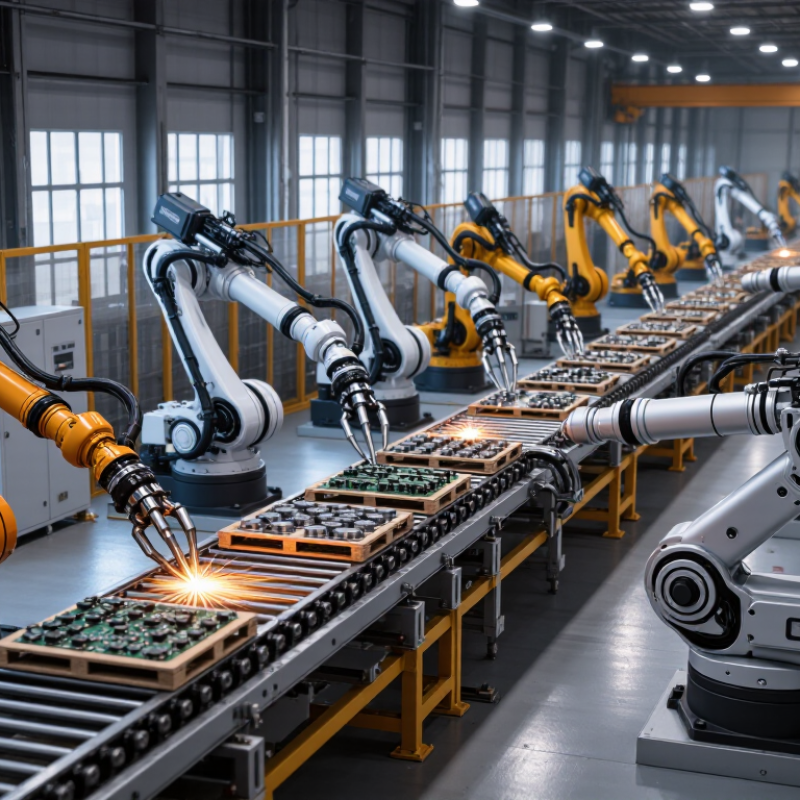
A six-axis industrial robot has six independent rotary joints. Together, they control position and orientation in three-dimensional space. This structure lets the arm reach around fixtures, tilt tools, and approach parts from difficult angles. In practical terms, the first axes handle reach and height. The wrist axes manage rotation, pitch, and tool angle. The result is flexible motion, not simply more speed.
In 2026, buyers should assess the complete robotic cell, not the arm alone. According to the International Federation of Robotics World Robotics 2024 report, 541,302 industrial robots were installed globally in 2023. The same report recorded more than 4.2 million robots operating worldwide. These figures show strong adoption, but they do not guarantee a suitable application. Check payload at full extension, repeatability, cycle time, cable routing, and controller compatibility. Safety functions, force monitoring, vision integration, and easier programming now influence productivity. Yet software claims can feel optimistic. Test the actual workpiece.
Tips: Observe a live cycle before purchasing. Measure reach with the real gripper, cables, and payload. Ask for repeatability data under heat, dust, and continuous operation. A compact arm may fit the floor plan but lose stiffness at maximum reach. Also review maintenance access and operator training needs. These details often decide whether a six-axis system performs reliably after installation.
Choosing among the Top 10 six-axis industrial robots to buy in 2026 requires more than comparing payload ratings. The International Federation of Robotics reported 541,302 industrial robot installations worldwide in 2023, following 553,052 in 2022. This large installed base increases the value of proven service access, spare-part availability, and controller compatibility.
Start with the real task. Measure the heaviest tool, workpiece, cable package, and sudden acceleration loads. A robot rated for 20 kilograms may struggle with wrist inertia. Reach must cover every fixture without forcing extreme joint angles. Repeatability matters, but cycle time, path accuracy, and thermal drift often matter more in production. The IFR’s World Robotics 2024 data also shows manufacturing demand remains substantial, so integration experience should influence your shortlist.
Inspect the working environment closely. Welding cells need suitable protection from heat, dust, and spatter. Clean areas demand compatible surfaces and sealing. Check the robot’s IP rating, mounting orientation, operating temperature, and maintenance intervals. Safety functions should support a documented risk assessment, not replace one. That part is easy to underestimate.
Calculate the full cost. Include programming, grippers, vision, safety fencing, training, energy, and downtime. Ask for measured cycle-time trials using your actual parts. Published specifications can look excellent. Factory reality is less tidy. Leave capacity for future tooling, but avoid buying excessive payload that increases cost and floor space. A careful buyer should also challenge optimistic vendor assumptions.
A practical, brand-neutral shortlist of six-axis articulated robot configurations, ranked by the balance of payload, reach, repeatability, protection, flexibility, and total cost of ownership.
| Rank | Robot Configuration | Typical Payload | Typical Reach | Position Repeatability | Axis Count | Typical Protection Rating | Mounting Options | Best-Fit Applications | Key Selection Advantage | Indicative 2026 Budget Range |
|---|---|---|---|---|---|---|---|---|---|---|
| 1 | Compact High-Speed Assembly Robot | 5–7 kg | 850–950 mm | ±0.02–0.03 mm | 6 | IP54 standard; higher wrist protection optional | Floor, wall, or inverted | Small-part assembly, inspection, laboratory automation, light packaging | Excellent speed and precision where workspace is limited | US$25,000–55,000 for robot and controller |
| 2 | General-Purpose 7 kg Robot | 6–8 kg | 1,350–1,500 mm | ±0.02–0.04 mm | 6 | IP54 body; IP65 wrist commonly available | Floor, wall, ceiling, or angle-mounted | Machine tending, screwdriving, dispensing, light welding, packaging | Strong all-round choice for mixed production tasks | US$30,000–65,000 for robot and controller |
| 3 | Medium-Reach 10 kg Robot | 8–12 kg | 1,450–1,650 mm | ±0.03–0.05 mm | 6 | IP54 standard; sealed wrist options available | Floor, wall, or inverted | Machine loading, material handling, palletizing of small cases, assembly | Good payload-to-reach ratio for flexible production cells | US$35,000–75,000 for robot and controller |
| 4 | Long-Reach 12 kg Robot | 10–14 kg | 1,700–1,900 mm | ±0.04–0.06 mm | 6 | IP54 body; IP65 wrist option | Floor, wall, or ceiling | Automotive subassembly, arc welding, machine tending, adhesive application | Reaches deep fixtures while retaining moderate payload capacity | US$40,000–85,000 for robot and controller |
| 5 | Medium-Payload Welding Robot | 15–20 kg | 1,700–2,000 mm | ±0.05–0.07 mm | 6 | IP65 wrist; enhanced sealing often available | Floor, wall, or positioner-mounted cell | Arc welding, cutting, grinding, foundry handling, heavy assembly | Supports torches, dress packs, sensors, and moderate process tooling | US$45,000–95,000 for robot and controller |
| 6 | High-Speed Palletizing Robot | 20–25 kg | 1,700–2,100 mm | ±0.05–0.08 mm | 6 | IP54 body; protected wrist recommended for dusty areas | Floor or elevated pedestal | Case packing, palletizing, depalletizing, warehouse transfer | Combines high cycle speed with enough payload for cartons and grippers | US$50,000–105,000 for robot and controller |
| 7 | Heavy-Duty 25 kg Handling Robot | 20–30 kg | 1,800–2,200 mm | ±0.06–0.09 mm | 6 | IP65 wrist; optional environmental packages | Floor, wall, or inverted | Automotive handling, casting, press tending, large-part loading | Provides useful wrist torque for heavy end-of-arm tooling | US$55,000–115,000 for robot and controller |
| 8 | Extended-Reach 35 kg Robot | 30–40 kg | 2,000–2,500 mm | ±0.07–0.12 mm | 6 | IP65 wrist; application-specific sealing available | Floor, wall, or ceiling | Large-part welding, machine tending, structural assembly, material transfer | Covers large work envelopes without a linear track in many cells | US$65,000–135,000 for robot and controller |
| 9 | Heavy-Payload 50 kg Robot | 40–55 kg | 2,000–2,700 mm | ±0.08–0.15 mm | 6 | IP65 wrist; higher protection depends on configuration | Floor or heavy-duty pedestal | Engine handling, large fixtures, foundry operations, heavy welding | Suitable for large tools, dual grippers, and demanding inertia loads | US$75,000–160,000 for robot and controller |
| 10 | Extra-Heavy 70 kg Class Robot | 60–80 kg | 2,300–3,000 mm | ±0.10–0.20 mm | 6 | IP65 wrist; specialized protection may be required | Floor or reinforced pedestal | Large casting, heavy palletizing, vehicle component handling, die loading | Maximum payload class for applications that need six-axis orientation | US$95,000–200,000 for robot and controller |
Six-axis industrial robots remain strong candidates for welding, machine tending, assembly, and surface finishing. Their wrist rotation helps tools reach angled surfaces inside compact workcells. IFR’s World Robotics 2024 report recorded 541,302 industrial robot installations worldwide in 2023, showing continued automation demand. The same report counted more than 4.28 million robots operating globally. These figures support careful investment, not automatic purchasing.
When comparing six-axis models, examine payload, reach, repeatability, cycle time, protection ratings, and controller compatibility. A 10-kilogram payload may suit light assembly, while heavier welding fixtures require more capacity. Safety functions, offline programming, and energy consumption also affect lifetime cost. Grand View Research projects strong industrial robot market growth through 2030, but forecasts do not replace application testing. Small detail, big consequence.
In practical cell evaluations, floor space often changes the ranking. A long-reach arm may look impressive, yet create awkward guarding and slower movements. Check cable routing, maintenance access, spare-part availability, and operator training requirements. Ask suppliers for real cycle-time trials using your parts, not ideal demonstration pieces. The weakest assumption may be your production volume. Six-axis robots can deliver flexibility, but poorly designed tooling can erase those gains. Industry reports provide direction; measured trials provide confidence.
A strong 2026 shortlist should compare ten six-axis robots by payload, reach, speed, accuracy, and control architecture. The IFR World Robotics 2024 report recorded 541,302 industrial robot installations in 2023. That figure shows growing demand, but it does not identify the best machine for every factory.
Payload is only the starting point. A robot lifting 20 kilograms may lose speed near full load. Reach must cover the work envelope without forcing awkward mounting. Cycle-time tests should include acceleration, wrist rotation, and real tooling. Accuracy and repeatability are different. ISO 9283 measurements often show repeatability under controlled conditions, while factory results change with temperature, cable drag, vibration, and calibration quality. Small errors matter.
Control systems deserve equal attention. Check motion interpolation, safety functions, offline programming, vision integration, and industrial-network support. A flexible controller can reduce commissioning time, although advanced software may increase training demands. Reports from the International Federation of Robotics also show global robot density reached 162 units per 10,000 manufacturing workers in 2023. Competition is intense, yet specifications are not always measured under identical conditions.
Tips: Request a full-load cycle test using your actual fixture. Confirm wrist inertia limits, service access, controller footprint, and spare-part availability. Ask for measured repeatability, not marketing language. A neat ranking is tempting. It can still be wrong for your floor layout.
Comparison of representative published specifications for payload, reach, maximum TCP speed, and repeatability. The chart uses a relative index where the highest capability in each category equals 100; higher repeatability scores indicate greater precision.
Specifications are nominal values and may vary by configuration, controller, tooling, motion profile, and operating conditions.
Top 10 6-Axis Industrial Robots to Buy in 2026?
Matching Robot Features to Industrial Applications and Budgets
Choosing among the top 10 six-axis industrial robots requires more than comparing purchase prices. Start with the task, not the catalog. A welding cell may need stable path control, torch clearance, and heat-resistant protection. A packaging line may value speed, compact reach, and simple tool changes. For machine tending, payload and wrist torque matter when grippers carry heavy metal parts. Measure the work envelope carefully. A robot that reaches too far can still lack useful clearance.
Budget planning should include the complete installation. Add the controller, end-of-arm tooling, guarding, software, integration, training, maintenance, and spare parts. Repeatability is valuable, but excessive precision can waste money on basic palletizing. A practical evaluation compares cycle time under real payload conditions, not an empty-arm demonstration. Ask for recorded production data. Marketing figures can look perfect.
Application checks reveal important differences. Dust, moisture, washdown routines, and ambient heat may require suitable enclosure protection. Floor space can influence the choice more than maximum reach. Energy use also affects long-term operating costs. Experienced integrators usually test one representative cycle before approving a purchase. That step prevents expensive surprises. Still, no scoring chart is complete. Future products, changing operators, and imperfect maintenance can alter the result. Leave capacity for change, but avoid paying for unused capability. Safety validation and local compliance should remain part of the budget from day one.
Start with the actual task, not the published ranking. Measure the tool, workpiece, cables, and acceleration loads. A perfect shortlist is unlikely.
No. Wrist inertia can reduce speed, even when the listed payload seems suitable. Test the robot with your heaviest fixture and sudden movements.
The arm should reach every fixture without extreme joint angles. Check the full work envelope, including tool rotation and cable movement. Extra reach can increase floor space.
Demonstration parts may move faster than production parts. Request a full-load trial using your fixture, tooling, and required path. Factory reality is messier.
Repeatability describes returning to a position consistently. Accuracy describes reaching the intended position. Temperature, vibration, cable drag, and calibration can affect both.
Welding cells need protection from heat, dust, and spatter. Clean areas require suitable surfaces and sealing. Confirm the protection rating, temperature range, mounting direction, and maintenance intervals.
Check offline programming, motion interpolation, vision integration, safety functions, and network support. Flexible software may reduce commissioning time. Training can still take longer.
Include programming, grippers, vision equipment, guarding, training, energy, maintenance, and downtime. Spare parts also matter. The cheapest purchase price may not stay cheap.
Safety functions should support a documented risk assessment. They do not replace proper guarding, procedures, or operator training. That assumption is easy to miss.
Leave reasonable capacity for future tooling and heavier parts. Avoid excessive payload because it can raise cost, energy use, and floor-space needs. More capacity is not always better.
This guide to the Top 10 6-Axis Industrial Robots to Buy in 2026 explains what makes these machines essential for modern manufacturing. A six-axis design provides flexible movement across multiple directions, allowing robots to handle complex tasks such as assembly, welding, packaging, material handling, inspection, and surface finishing. The article outlines key selection criteria, including payload capacity, reach, repeatability, operating speed, programming flexibility, safety features, maintenance requirements, and total ownership cost.
It also compares leading robot options by performance, control systems, workspace, and suitability for different production environments, without focusing on any specific brand. Readers will learn how to match robot capabilities with application demands, facility limitations, expected production volume, and available budget. Whether a business needs compact automation for precise work or a stronger system for demanding industrial tasks, this overview provides a practical framework for evaluating 6-Axis Industrial Robots and making a well-informed purchasing decision in 2026.