China’s AC Servo System industry has become a critical part of modern factory automation. These systems control speed, torque, and positioning in equipment such as robotic arms, packaging lines, and CNC machines. Their accuracy often determines whether a production line runs smoothly or wastes material.
The market context is substantial. The International Federation of Robotics reported that China installed 276,288 industrial robots in 2023, representing more than half of global installations. Many of these machines rely on servo motors, drives, and motion controllers. MarketsandMarkets also identifies rising factory automation and demand for precise motion control as major growth drivers for the global servo motor and drive market. These reports do not rank Chinese suppliers directly. That distinction matters.
This guide examines ten leading Chinese AC Servo System manufacturers through practical criteria. These include product range, rated torque, control interfaces, encoder options, software compatibility, certifications, export experience, and after-sales support. A factory floor offers useful evidence. A stable servo axis should accelerate quietly, stop within a repeatable position, and maintain performance during long shifts.
Names alone are not enough.
Some manufacturers have stronger solutions for robotics. Others perform better in packaging, textiles, electronics, or machine tools. Public data can also be incomplete, especially for private companies. Therefore, this list should support supplier research, not replace technical testing or factory audits. The ranking may still invite debate. That is reasonable. Real-world suitability depends on the machine, operating environment, and service network.
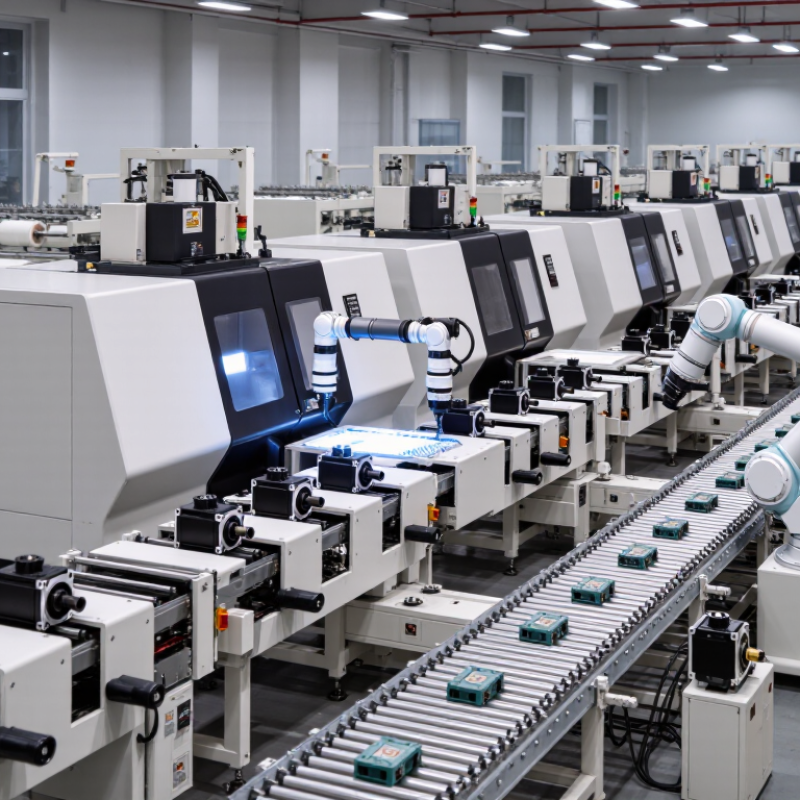
An AC servo system combines a motor, drive, feedback device, and motion controller. The drive regulates current, speed, and position in closed loops. An encoder measures shaft movement, while the controller corrects error within milliseconds. This enables accurate indexing, smooth acceleration, and controlled stopping. The International Energy Agency estimates that motor-driven systems consume nearly half of global electricity, making efficiency a practical engineering concern.
Key performance measures include rated torque, peak torque, speed range, encoder resolution, bandwidth, settling time, and following error. RMS torque matters during repeated cycles, especially when a machine lifts, presses, or rapidly reverses loads. Regenerative braking can return energy to the DC bus, but poor sizing may create voltage faults. Thermal performance also deserves attention. A compact motor may pass a short test yet overheat during continuous production.
In commissioning work, engineers often review load inertia before tuning gains. A low inertia ratio usually makes tuning easier, but that rule is not sacred. Flexible couplings, backlash, and belt stretch can still cause vibration. MarketsandMarkets’ 2024 servo motors and drives study forecasts continued market growth through 2029, reflecting wider automation adoption. However, purchase decisions should rely on measured cycle data, not forecast excitement. IEC 61800-3 supports electromagnetic compatibility assessment, while IEC 61800-5-2 addresses functional safety. Test the complete axis, not only the motor.
China Top 10 AC Servo System Manufacturers?
Evaluating China’s AC servo manufacturers requires more than comparing catalog prices. A serious review begins with application experience. Check rated torque, peak overload, encoder resolution, speed stability, and response time. Ask for test data under real operating conditions, not only laboratory figures. A motor running smoothly at 3,000 rpm may behave differently beside a vibrating machine.
Engineering capability matters during commissioning. Reliable manufacturers explain gain tuning, inertia matching, braking resistance, and thermal limits clearly. Their manuals should include wiring diagrams, alarm codes, maintenance intervals, and parameter examples. Technical support should respond with practical steps. “Restart the drive” is not enough. Site experience often reveals gaps that brochures conceal.
Quality evaluation should also examine production consistency and traceability. Review inspection records, burn-in procedures, component sourcing, and firmware control. Request samples from different production batches when possible. Certification can support reliability, but it cannot replace independent testing. Service coverage, spare-part availability, and training deserve equal attention, especially for export projects. A low initial price may create higher downtime costs later. Still, no score is perfect. A detailed spreadsheet can miss communication problems during an urgent fault. I would include factory audits, customer references, and a small pilot installation before approving a large order. That step costs time, but it exposes weaknesses early.
Evaluation framework for comparing manufacturers without using company or brand-specific data
The chart presents a weighted procurement framework for AC servo systems. Performance, accuracy, overload capability, compatibility, compliance, lifecycle cost, and technical support are commonly assessed when selecting industrial motion-control suppliers. The percentages represent evaluation priorities rather than market-share or manufacturer scores.
China’s Top 10 AC Servo System Manufacturers should be judged by measurable performance, not publicity. The 2024 IFR World Robotics report recorded 276,288 industrial robot installations in China during 2023, representing 51% of global installations. This scale creates strong demand for precise, responsive, and serviceable servo systems.
A practical evaluation should compare rated torque, overload capacity, encoder resolution, positioning accuracy, and communication support. EtherCAT compatibility matters in compact packaging lines. Thermal stability matters more in crowded control cabinets.
Field engineers should also check tuning software, spare-part availability, local response time, and five-year failure records. MIR DATABANK’s China motion-control coverage identifies servo drives and motors as core products in factory automation, especially for electronics, batteries, textiles, and machine tools.
The shortlist can still mislead. A low purchase price may hide difficult commissioning or weak technical support. Some systems perform well in laboratory tests but drift under dust, vibration, or repeated acceleration. Buyers should request factory acceptance data and test the actual load profile. Ten manufacturers may appear similar on paper. They are not always similar on the production floor.
China’s top 10 AC servo system manufacturers compete through motion accuracy, response speed, and practical engineering support. Strong products usually combine stable torque, high-resolution feedback, fast positioning, and effective thermal control. These details matter when a machine moves heavy loads repeatedly, often for many hours.
Their systems serve packaging, robotics, CNC equipment, electronics assembly, textile machinery, printing, and automated warehouses. Some suppliers focus on compact drives for small machines. Others develop high-power solutions for presses, conveyors, and multi-axis production lines. Market positioning varies widely. Cost-focused manufacturers attract equipment builders seeking reliable performance at a controlled price. Premium suppliers often provide advanced tuning software, network communication, application testing, and global technical service. No ranking is perfect. A low purchase price may hide difficult commissioning or limited spare-part support.
Tips: Compare rated torque, peak overload, encoder type, communication protocols, warranty terms, and local service coverage. Test the servo under real inertia, not only on a showroom table. Ask for measured settling time and temperature data. Also check compatibility with your controller and safety architecture. Small mismatches can create vibration, noise, or unexpected downtime. Supplier claims deserve verification through sample testing, factory documentation, and references from similar industries.
Choosing among China’s top AC servo system manufacturers requires more than comparing prices. The International Federation of Robotics reported 541,302 industrial robot installations worldwide in 2023. This growth increases demand for precise motion control, stable feedback, and faster technical support. Your supplier should understand your machine cycle, load inertia, positioning accuracy, and operating environment.
Request complete technical documents before requesting a quotation. Check motor torque curves, encoder resolution, overload capacity, braking methods, and communication protocols. A reliable supplier should provide test records, traceable component information, and clear warranty terms. MarketsandMarkets estimated the global servo motors and drives market at about USD 12 billion in 2023, with continued growth expected through 2028. Competition is intense. Quality differences still hide behind similar specifications.
Tips: Ask for a sample unit and run it under your real load. Measure vibration, temperature, settling time, and repeatability. Visit the factory if the project is critical. Review export experience, response times, spare-parts plans, and remote diagnostic ability. A low initial quote may become expensive after installation delays. Also, do not trust every efficiency claim without test conditions. No checklist is perfect. Your engineers should record actual results and challenge unclear answers before signing.
Compare measured performance, engineering support, production consistency, and service coverage. Catalog prices are not enough.
Check rated torque, peak overload, encoder resolution, positioning accuracy, speed stability, and response time. Test real loads.
A motor may run smoothly at 3,000 rpm in a laboratory. Vibration, dust, and repeated acceleration can change results.
Engineers should explain gain tuning, inertia matching, braking resistance, and thermal limits. “Restart the drive” is not enough.
Request wiring diagrams, alarm codes, maintenance intervals, parameter examples, inspection records, and factory acceptance data.
Review burn-in procedures, component traceability, firmware control, and inspection records. Samples from different batches can reveal inconsistencies.
Common applications include packaging, robotics, machine tools, electronics assembly, textiles, printing, and automated warehouses.
Not always. Difficult commissioning, scarce spare parts, and downtime may cost more later.
Check network protocols, controller compatibility, safety architecture, and tuning software. Small mismatches can cause noise or vibration.
Conduct a factory audit, contact similar customers, and install a small pilot system. It costs time, but exposes weaknesses early.
China’s AC Servo System industry has developed into a competitive and technically diverse market, serving applications that require accurate motion control, fast response, stable operation, and efficient energy use. This article introduces the core concepts of AC servo systems and explains key performance measures such as positioning accuracy, torque response, speed stability, overload capacity, communication compatibility, and long-term reliability. It also outlines how manufacturers can be evaluated through engineering capability, product consistency, quality management, customization services, technical support, and overall value.
The overview presents ten leading types of Chinese AC servo system manufacturers based on their product strengths, industry coverage, technological focus, and market positioning, without relying on brand promotion. It further compares common application areas, including robotics, packaging, machine tools, electronics, textiles, and automated production lines. Finally, the article provides practical guidance for selecting a suitable supplier by considering system specifications, controller compatibility, installation requirements, after-sales support, delivery capability, certification, and total operating cost.