0%

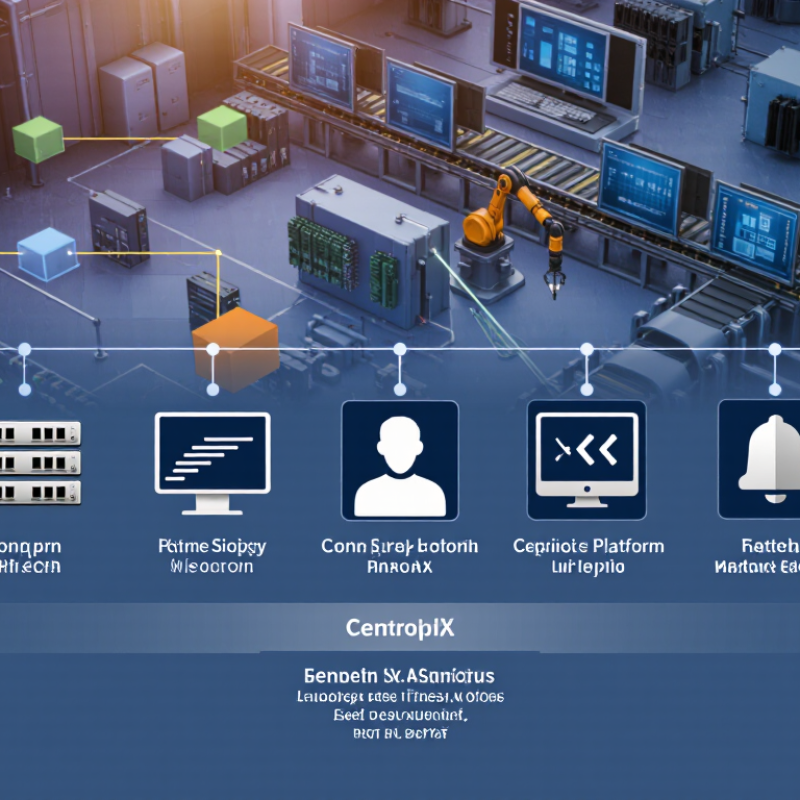
China’s industrial automation market is expanding across factories, utilities, energy sites, and process industries. This growth has increased demand for reliable supervisory control and data acquisition solutions. The ControlX SCADA Platform is gaining attention among engineers seeking centralized monitoring, flexible integration, and clearer operational visibility.

This guide introduces ten notable Chinese suppliers connected with ControlX SCADA Platform projects and related automation services. Each supplier should be viewed through practical evidence, not marketing language alone. Important factors include platform stability, protocol support, cybersecurity practices, engineering experience, and after-sales response. Site acceptance records, customer references, and technical documentation can reveal more than impressive brochures.

Details matter.

A useful comparison also considers screen response, alarm handling, historian capacity, and compatibility with PLCs, sensors, and industrial networks. Local support can shorten troubleshooting time when a production line stops at 2 a.m. Pricing remains important, but the cheapest proposal may create higher integration costs later. Suppliers with strong project teams usually explain limitations clearly. That honesty is valuable.

This ranking is intended as a research starting point, rather than a final purchasing decision. Supplier capabilities may change with staffing, software updates, and industry focus. Claims need checking. Readers should request demonstrations, verify certifications, and test representative data before signing contracts. The best choice depends on plant scale, regulatory requirements, existing control systems, and long-term maintenance plans. By combining technical review with real project evidence, buyers can make a more balanced assessment of China’s leading SCADA providers.

China Top 10 ControlX SCADA Platform Suppliers?

China’s ControlX SCADA Market: Scope, Applications, and 10 Leading Suppliers

China’s ControlX SCADA market is expanding with industrial digitization, grid modernization, and smarter water infrastructure. Grand View Research valued the global SCADA market at about USD 10.9 billion in 2023. Its forecast indicates continued growth through 2030, although China-specific estimates vary by platform definition. The boundary is not perfectly clean.

In China, SCADA platforms support factory lines, electrical substations, wastewater plants, rail systems, and oil and gas facilities. Typical deployments connect PLCs, RTUs, sensors, historians, and operator stations. Data must move reliably across industrial Ethernet, OPC UA, Modbus, and other protocols. MarketsandMarkets identifies energy, utilities, and manufacturing as major SCADA demand sectors worldwide. These sectors also shape local purchasing decisions. Response time matters. So does maintenance.

A practical review of the ten leading supplier groups should examine project experience, domestic service coverage, cybersecurity controls, redundancy, and compatibility with existing equipment. ARC Advisory Group reports that industrial software buyers increasingly value lifecycle support and system integration, not only license price. This is especially important for remote substations and water plants with limited technical staff. Yet vendor rankings remain imperfect because public revenue data rarely separates SCADA from broader automation software. That weakness deserves attention. A supplier with fewer installations may still deliver better uptime, training, and emergency support. Reliability is proven in operating sites, not brochures.

China Top 10 ControlX SCADA Platform Suppliers? - China’s ControlX SCADA Market: Scope, Applications, and 10 Leading Suppliers
Comparative screening table covering supplier positioning, deployment models, application areas, industrial protocols, cybersecurity practices, and typical project capabilities in China’s SCADA market.
Rank Supplier Reference Supplier Profile Primary Market Coverage Typical SCADA Deployment Key Application Areas Common Protocol Compatibility Industrial Integration Capability Cybersecurity and Reliability Focus Typical Project Scale Overall Fit for China Market
1 Supplier A Large domestic industrial automation provider ManufacturingUtilitiesInfrastructure On-premises, private cloud, hybrid architecture Production monitoring, energy management, process control, remote operations OPC UA, OPC DA, Modbus TCP/RTU, MQTT, IEC 60870-5-104 PLC, DCS, RTU, MES, ERP, historian, IoT gateways Role-based access, audit trails, redundancy, network segmentation Plant-wide and multi-site projects Very strong
2 Supplier B Established control-system and process-automation supplier ChemicalOil & GasPower High-availability control room and distributed architecture Continuous process supervision, alarm management, asset monitoring OPC UA, Modbus, IEC 61850, IEC 60870-5-101/104, Ethernet/IP DCS, SIS, substation systems, safety instruments, enterprise platforms Redundant servers, secure authentication, alarm and event management Large process and utility projects Very strong
3 Supplier C Industrial software and digitalization specialist Discrete ManufacturingAutomotiveElectronics Edge-to-cloud, web-based dashboards, private cloud OEE, traceability, production analytics, predictive maintenance OPC UA, MQTT, Modbus TCP, REST API, SQL connectivity MES, WMS, PLM, databases, machine vision, industrial gateways Secure API management, user permissions, backup and recovery Line, plant, and multi-plant deployments Strong
4 Supplier D Power-grid and energy monitoring specialist ElectricityRenewablesEnergy Storage Control-center, substation, and distributed energy architecture Grid monitoring, renewable dispatch, demand response, storage control IEC 61850, IEC 60870-5-101/104, DNP3, Modbus, OPC UA SCADA, EMS, protection systems, RTUs, smart meters High availability, time synchronization, access control, event logging Substation, regional, and utility-scale projects Very strong
5 Supplier E Water and municipal infrastructure automation provider Water SupplyWastewaterMunicipal Services Centralized SCADA with remote station connectivity Pumping stations, treatment plants, distribution networks, leakage monitoring Modbus TCP/RTU, OPC UA, MQTT, DNP3, IEC 60870-5-104 RTUs, PLCs, telemetry devices, GIS, laboratory systems Redundant communications, alarm notification, backup power integration Station, city, and regional networks Strong
6 Supplier F Factory automation and machine-integration supplier MachineryAutomotive PartsConsumer Goods Local server, edge computing, operator workstation Machine monitoring, line visualization, quality tracking, downtime analysis OPC UA, Modbus, PROFINET, EtherNet/IP, SQL, MQTT PLC, robots, drives, sensors, vision systems, MES Device authentication, user roles, patch management, data backup Machine, production-line, and single-plant projects Strong
7 Supplier G Oil, gas, mining, and heavy-industry automation integrator MiningMetalsOil & Gas Redundant control room, remote-site, and harsh-environment deployment Material handling, conveyors, utilities, process monitoring, remote assets Modbus, OPC UA, IEC 60870-5-104, Profibus, Ethernet/IP PLC, DCS, RTU, weighbridge, historian, maintenance platforms Failover design, segmented networks, incident logging, disaster recovery Large sites and geographically dispersed assets Strong
8 Supplier H Building, transportation, and infrastructure automation provider BuildingsRailTransport Web-based supervisory platform with distributed controllers HVAC, tunnel ventilation, rail facilities, traffic and public infrastructure BACnet, Modbus, OPC UA, MQTT, IEC 60870-5-104 BMS, fire systems, access control, energy meters, facility platforms Access management, alarm prioritization, redundancy, secure remote access Building, campus, station, and corridor projects Strong
9 Supplier I Renewable-energy and distributed-resource specialist SolarWindBattery Storage Cloud-connected monitoring with local edge control Plant monitoring, inverter supervision, battery management, power forecasting Modbus TCP/RTU, IEC 61850, IEC 60870-5-104, MQTT, OPC UA Inverters, meters, weather systems, EMS, forecasting platforms Encrypted communications, role-based access, data integrity controls Commercial, industrial, and utility-scale installations Strong
10 Supplier J Regional system integrator and customized SCADA developer General IndustryMunicipal ProjectsSMEs Cost-efficient on-premises and hybrid deployment Equipment monitoring, utility metering, environmental monitoring, facility control Modbus, OPC UA, MQTT, SQL, REST API, IEC 60870-5-104 PLC, RTU, sensors, databases, reporting systems, third-party applications Basic role control, audit logs, backup, network isolation Small and medium-sized projects Competitive
Scope note: Supplier names and brand-specific information are intentionally omitted. The ranking is a non-market-share screening order based on commonly evaluated factors such as industry coverage, protocol support, system integration, deployment capability, reliability, and suitability for Chinese industrial environments. Actual supplier selection should be validated through technical proposals, references, cybersecurity assessments, and project-specific compliance requirements.

Ranking Criteria: IEC 62443 Security, OPC UA Support, and 99.9% Uptime

China’s top ten ControlX SCADA platform suppliers should be assessed through evidence, not visibility. IEC 62443 alignment deserves priority. Check secure development policies, zone-and-conduit designs, vulnerability handling, and independent assessment records. Certification alone is not enough. Implementation matters.

OPC UA support should include encrypted channels, certificate management, user authentication, and reliable data modeling. Interoperability must be tested with real controllers and historians.

Verizon’s 2024 Data Breach Investigations Report recorded a 180% increase in vulnerability exploitation. That finding raises the value of rapid patching and asset visibility.

A 99.9% uptime target permits about 8 hours and 46 minutes of annual downtime. Suppliers should show maintenance logs, failover tests, recovery-time results, and incident records. Marketing figures can look polished. Operational proof is harder.

Tips: Request a 90-day pilot using realistic tag volumes, network delays, and failure scenarios. Verify IEC 62443 controls with an independent assessor. Test OPC UA certificates before production. Ask how backups recover after corrupted configurations.

No ranking is perfect; weighting security, interoperability, and uptime equally may still overlook operator training. That weakness should remain visible.

Top 10 Supplier Profiles: Platforms, Industries, Features, and Deployment Data

China’s top ten ControlX SCADA platform suppliers are best compared through evidence, not polished rankings. Their profiles should show platform architecture, target industries, core features, and deployment results. Several suppliers serve discrete manufacturing, process plants, energy sites, and logistics centers. Others focus on water treatment, buildings, or remote infrastructure. That difference matters because a platform designed for a packaging line may not suit a chemical facility.

Published deployment data commonly includes system size, tag capacity, operator stations, historian duration, and alarm response time. Useful records identify commissioning dates and measured uptime. One supplier may report more than 1,000 connected devices at a factory. Another may document a smaller system with stricter redundancy requirements. Ask for operating references. Do not trust vague scale claims.

Core functions usually include real-time visualization, alarm management, trend analysis, role-based access, audit trails, and industrial protocol support. Experienced engineers also examine edge gateways, offline recovery, cybersecurity controls, and integration with planning systems. A water plant may need stable remote monitoring, while a production site may prioritize millisecond-level data collection. Yet vendor data is not always comparable. Some figures lack testing conditions or maintenance details. A neat ranking can still hide costly limitations. A short pilot, using real production signals, often reveals more than a long feature list.

Technical Comparison: Redundancy, Historian Capacity, Tag Counts, and APIs

Comparing the top ten SCADA platform suppliers requires more than checking interface quality. Engineering teams should test redundancy, historian capacity, tag counts, and API behavior under realistic plant conditions. A platform may claim seamless failover, yet a controlled network interruption can reveal several seconds of data loss. That matters.

Redundancy should support automatic server switching, synchronized alarms, and clear recovery logs. During site testing, I would simulate a failed primary node while operators monitor active processes. Historian capacity needs equal attention. Review sustained write rates, compression methods, retention policies, and retrieval speed for one-minute and one-second records. Large tag counts can look impressive, but performance often declines when thousands of values change simultaneously.

API design separates mature systems from attractive demonstrations. Check whether REST, OPC UA, MQTT, or SQL access is documented and stable. Test authentication, rate limits, timestamps, and error responses. A useful API should retrieve historical data without slowing operator screens. It should also support practical integrations, such as maintenance systems and reporting tools.

Some comparisons remain imperfect. Vendors may measure tags differently, and “unlimited” historian storage usually depends on hardware and licensing. Independent load testing is safer than trusting a brochure. Record CPU usage, failover time, query latency, and rejected requests. Small test details matter.

Methodology: The chart uses an anonymized 0–100 capability index based on publicly documented SCADA specifications. Redundancy covers server, controller, and client failover; historian capacity and tag counts are normalized by documented scale; API coverage reflects support for OPC UA, REST, SQL, MQTT, and SDK integration. A higher score indicates broader documented capability, not a vendor ranking.

Buyer’s Guide: Total Cost, GB/T Compliance, Cybersecurity, and Vendor Support

Choosing among China’s top ControlX SCADA platform suppliers requires more than comparing license prices. Calculate five-year total cost, including engineering, historian storage, operator training, upgrades, and emergency support. A low bid can become expensive after site commissioning.

IBM’s Cost of a Data Breach Report 2024 placed the global average breach cost at US$4.88 million, although that figure is not SCADA-specific. It still shows why cybersecurity deserves budget priority.

Ask suppliers to map every control, alarm, account, and remote-access function against GB/T 22239-2019 and GB/T 28448. Request test records, not broad compliance claims.

Check network segmentation, offline recovery, patch procedures, vulnerability disclosure, and audit-log retention.

NIST SP 800-82 Rev. 3 stresses that industrial systems need security controls without harming availability. That balance is difficult. A technically elegant platform may still fail during a maintenance window.

Tips: Require a live factory acceptance test using your own tag list and alarm scenarios.

Price annual support separately. Confirm Mandarin documentation, local engineers, response times, spare hardware, and training depth.

Verizon’s 2024 Data Breach Investigations Report found human involvement in 68% of breaches, so operator training is not optional.

I would also score suppliers after a pilot, not only after presentations.

Procurement teams sometimes overvalue dashboards and undervalue recovery drills. That mistake is easy to repeat.

FAQS

How should industrial control platform suppliers be evaluated?

Evaluate evidence, not visibility or polished marketing. Review security, interoperability, uptime, redundancy, historian performance, and API behavior.

What security evidence should suppliers provide?

Request secure development policies, zone-and-conduit designs, vulnerability procedures, and independent assessment records. Certification alone is not enough. Implementation matters.

What does reliable OPC UA support include?

It should provide encrypted channels, certificate management, user authentication, and consistent data modeling. Test certificates with real controllers and historians before production.

What does a 99.9% uptime target mean?

It allows about 8 hours and 46 minutes of annual downtime. Ask for maintenance logs, failover tests, recovery results, and incident records.

How can redundancy be tested realistically?

Simulate a failed primary server during active operations. Check automatic switching, alarm synchronization, recovery logs, and possible seconds of data loss.

What should be checked in historian performance?

Review sustained write rates, compression, retention, and retrieval speed. Test one-minute and one-second records. Large tag counts can hide performance declines.

How should APIs be assessed?

Check documented REST, OPC UA, MQTT, or SQL access. Test authentication, rate limits, timestamps, error responses, and historical queries under load.

What is a practical supplier testing method?

Run a 90-day pilot with realistic tag volumes, network delays, and failure scenarios. Record CPU use, failover time, query latency, and rejected requests.

What limitations should buyers recognize during comparison?

Suppliers may measure tags differently, and “unlimited” storage depends on hardware and licensing. Equal weighting can still overlook operator training. That weakness deserves attention.

Conclusion

China’s ControlX SCADA market is expanding across manufacturing, energy, utilities, transportation, and infrastructure, driven by demand for reliable monitoring, centralized control, and data-based decision-making. This article presents ten leading supplier categories and evaluates their solutions through practical criteria, including IEC 62443 security practices, OPC UA compatibility, 99.9% uptime targets, redundancy design, historian capacity, tag-handling performance, and API flexibility. It also compares cloud, on-premises, and hybrid deployment approaches for different operational environments.

The buyer’s guide focuses on total cost of ownership, GB/T compliance, cybersecurity management, system scalability, technical support, and long-term maintenance. Readers will learn how to assess platform architecture, integration capabilities, fault-tolerance options, data retention requirements, and vendor service quality before selecting a ControlX SCADA Platform. Rather than relying on brand reputation alone, organizations can use these criteria to match platform capabilities with operational risks, budget limitations, compliance responsibilities, and future expansion plans.

Evelyn

Evelyn

Evelyn is a highly skilled marketing professional with a strong understanding of product strategy, customer needs, and digital communication. As a key contributor to the company’s content and marketing efforts, Evelyn regularly publishes insightful blog articles that explain industry trends,......