0%

As factories electrify pumps, fans, compressors, and conveyors, Medium Voltage Drives are becoming strategic efficiency assets. They control motors typically rated above 1 kV, reducing mechanical throttling and process stress. The U.S. Department of Energy’s 2022 Motor Systems Market Assessment describes motor systems as a dominant industrial electricity load. IEA’s Energy Efficiency 2023 report similarly emphasizes efficient motor systems across industry.

Market forecasts differ. Grand View Research and MarketsandMarkets project continued growth in medium-voltage drive demand through 2030. However, their estimates use different scopes, regions, and baselines. Some forecasts may be optimistic. This matters. A reliable 2026 comparison should examine topology, voltage class, harmonic performance, cooling, bypass design, serviceability, and total cost. It should also separate new installations from retrofit demand.

This outline focuses on the leading families: voltage-source inverter drives, current-source inverter drives, load-commutated inverter systems, and modular multilevel designs. Each behaves differently beside a 6.6 kV pump or a dusty 3.3 kV conveyor. Real sites are less tidy. IEEE 519-2022 provides a reference for harmonic control, while IEC 61800-4 addresses rating requirements for AC drives above 1 kV. IEC 61800-5-1 adds important electrical safety guidance. These standards do not select a winner. They clarify the evidence. The discussion therefore weighs efficiency, fault tolerance, grid interaction, maintenance skill, and application fit. Claims should be checked against vendor test data, measured energy results, and lifecycle assumptions. That discipline is essential because published market figures remain directional, not guarantees.
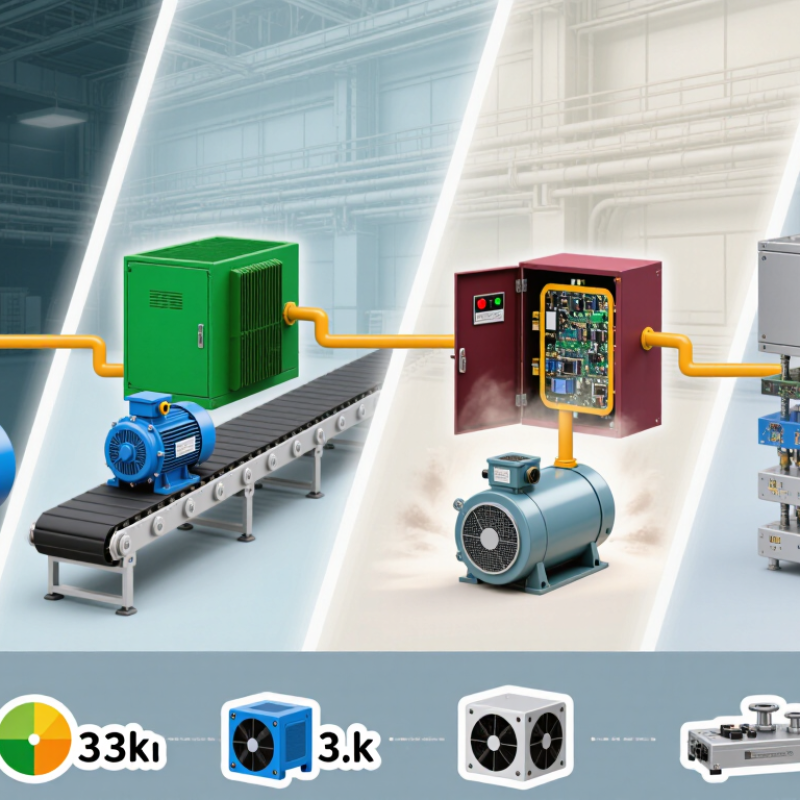
What Are the Top Types of Medium Voltage Drives in 2026?

What Defines a Medium Voltage Drive in 2026

What Are the Top Types of Medium Voltage Drives in 2026?

What Defines a Medium Voltage Drive in 2026

A medium voltage drive controls the speed and torque of motors operating above low-voltage limits. In many industrial systems, this means input or output voltages from 1 kV to 35 kV. The exact boundary depends on local standards and equipment design. That detail matters.

In 2026, a drive is defined by more than its voltage rating. It combines power conversion, motor protection, control software, monitoring, and safe isolation. Voltage-source inverter drives remain common for pumps, compressors, fans, and conveyors. Current-source designs still suit certain high-power applications. Modular multilevel architectures are gaining attention because they can reduce waveform distortion and improve scalability.

A practical assessment starts with the motor nameplate, load profile, short-circuit level, and installation environment. A 6.6 kV motor driving a mine pump may need strong starting torque and dust-resistant cooling. A refinery compressor may require precise speed control, bypass capability, and careful harmonic management. Engineers also examine input power quality, motor insulation stress, braking needs, and maintenance access.

Digital functions now influence the definition. Drives can track bearing temperature, cooling performance, vibration, and unusual current patterns. Secure network connections support condition-based maintenance, but they introduce additional control risks. Not every connected feature creates value. Sometimes, a simpler architecture is more dependable. Field experience shows that neglected ventilation and poor cable termination still cause failures, despite advanced software. Specifications should be verified against tested operating conditions, not attractive feature lists.

How Voltage Source Inverters Operate in Medium Voltage Systems

What Are the Top Types of Medium Voltage Drives in 2026?

How Voltage Source Inverters Operate in Medium Voltage Systems

Voltage source inverters remain a leading medium voltage drive architecture in 2026. Other options include current source and load-commutated inverters. A VSI first converts incoming AC power into controlled DC power. Capacitors stabilize this DC link. Then, power semiconductor switches create a variable-frequency AC waveform for the motor.

The switching pattern controls motor speed, torque, and acceleration. Multilevel designs divide voltage across several cells, producing a smoother waveform. This can reduce motor stress and limit harmonic distortion. In practical installations, engineers still check cable length, insulation strength, cooling, and fault behavior. The process looks elegant. Field conditions are less tidy.

The International Energy Agency reports that electric motor systems consume about 45% of global electricity. This figure explains the efficiency value of properly configured drives. The U.S. Department of Energy also identifies motor systems as a major industrial energy load. However, real savings depend on pump curves, production schedules, and maintenance quality. A drive cannot repair an oversized pump.

Tips: Confirm the motor’s insulation rating before commissioning a VSI. Measure harmonics at the point of common coupling. Keep a trend log for current, temperature, and vibration. Recheck settings after process changes. Small mismatches become expensive.

Where Current Source Inverters Fit Among Modern Drive Types

What Are the Top Types of Medium Voltage Drives in 2026?

Modern medium voltage drives usually include voltage source inverters, current source inverters, load-commutated inverters, and cycloconverter-based systems. Among them, the current source inverter remains important for demanding, high-power applications. It regulates motor current through a large DC-link inductor, rather than relying mainly on a DC-link capacitor.

That difference matters. CSI drives can handle regenerative operation naturally and often perform well with long motor cables. Their current control also supports strong torque production at low speeds. These features suit pumps, compressors, fans, and large conveyors with severe operating cycles. However, CSI systems need a compatible motor design and careful commutation management. They may also produce torque ripple under certain conditions. The choice is not automatic. Site measurements matter more than a fashionable specification.

Tips: Check motor compatibility, cable length, starting torque, and regeneration needs before selecting a drive. Ask for measured harmonic performance, not only brochure values. Review cooling, maintenance access, and fault-recovery procedures with the plant team.

A voltage source inverter may offer broader motor compatibility and simpler integration for many installations. A CSI can be more attractive when power levels rise and regeneration becomes frequent. In practice, engineers should compare total operating risk, not just purchase cost. I have found that a technically elegant drive can still disappoint when the motor data is incomplete. That is an uncomfortable lesson. Field conditions often decide the winner.

When Load-Commutated Inverters Remain a Practical Choice

Load-commutated inverters remain a practical choice for selected medium voltage drive projects in 2026. They are especially suitable for large synchronous motors operating at steady speed. Typical applications include grinding mills, high-capacity compressors, pumps, and fans.

An LCI uses the motor’s internal voltage to support commutation. This design can handle very high power with fewer switching devices than many modern alternatives. It also offers strong overload capability and reliable regenerative operation. In field assessments, engineers often value its mechanical simplicity. A 6.6 kV motor driving a compressor, for example, may run continuously with limited speed variation. That operating pattern suits LCI technology well.

Not every site will benefit. LCI systems can produce input harmonics and may show poor power factor at light load. They also require a suitable synchronous motor and careful attention to commutation failure. A harmonic study, starting analysis, and short-circuit review should guide the selection. Cooling equipment and motor insulation deserve equal attention.

It is not a universal answer.

Projects requiring frequent starts, wide speed ranges, or compact equipment may favor other medium voltage drive types. Yet rejecting LCI solely because it is an older topology can be a costly assumption. Its controls may feel less flexible, and maintenance planning can be more specialized. Still, for stable, high-power duty, its proven electrical behavior can outweigh those limitations. The final decision should reflect measured site conditions, not a technology trend.

What Are the Top Types of Medium Voltage Drives in 2026?

Representative engineering power ranges for major medium-voltage drive topologies. Actual limits vary by motor, voltage class, cooling, and system design.

Load-commutated inverters remain a practical choice for very high-power applications, especially large compressors, pumps, fans, and mills operating at relatively steady speed. Voltage-source inverters provide broader speed-control flexibility, while cycloconverters are commonly associated with very large, low-speed drives.

How to Compare Medium Voltage Drive Types for Different Applications

What Are the Top Types of Medium Voltage Drives in 2026?

Choosing a medium voltage drive starts with the application, not the product label. The International Energy Agency’s Energy Efficiency 2024 report states that electric motor systems consume more than 40% of global electricity. Industrial motor systems use an even larger share. Small efficiency gains can therefore affect operating costs significantly.

Voltage source inverters suit pumps, fans, compressors, and conveyors with frequent speed changes. They offer efficient control and broad operating ranges. Current source inverters can perform well with high-power, steady-load equipment, especially where regenerative braking matters. Load commutated inverters remain relevant for very large synchronous motors, although their starting performance and power-factor control need careful review. Modular multilevel designs can reduce harmonic distortion and improve waveform quality, but their controls and maintenance may be more demanding.

Compare rated power, motor compatibility, overload capacity, harmonic limits, and installation altitude. Check whether the drive must handle long cables, frequent starts, or rapid load changes. The U.S. Department of Energy’s motor-system guidance recommends evaluating the complete system, rather than judging efficiency from the drive alone. That advice is easy to overlook.

A practical comparison also includes cooling, spare-part access, bypass arrangements, and technician training. A compact drive may save room but complicate servicing. A low-harmonic solution may reduce upstream equipment stress, yet increase purchase cost. The best choice is rarely universal. Site measurements should challenge the initial specification.

FAQS

What is a medium voltage drive in 2026?

It controls motor speed and torque above low-voltage limits. Typical systems use 1 kV to 35 kV. Local standards may define the boundary differently.

Which motor applications commonly use medium voltage drives?

Common applications include pumps, compressors, fans, and conveyors. A mine pump may need strong starting torque and dust-resistant cooling.

How does a voltage source inverter drive operate?

It converts incoming AC power into controlled DC power. Capacitors stabilize the DC link. Semiconductor switches then create variable-frequency AC power for the motor.

What are the main medium voltage drive architectures?

Voltage source inverters remain widely used. Current source designs suit some high-power systems. Modular multilevel drives can improve scalability and reduce waveform distortion.

What should engineers check before selecting a drive?

Check the motor nameplate, load profile, short-circuit level, and installation environment. Review motor insulation, cable length, cooling, braking, and maintenance access.

Can a medium voltage drive reduce industrial energy use?

It can improve motor efficiency when correctly configured. Savings depend on pump curves, production schedules, and maintenance quality. A drive cannot fix an oversized pump.

What digital monitoring features are useful?

Monitoring can track bearing temperature, vibration, cooling performance, and unusual current patterns. Secure connections support condition-based maintenance. More data is not always better.

What problems can occur after installation?

Poor ventilation and weak cable termination can cause failures. Harmonics, insulation stress, and incorrect settings also create risk. The software may look advanced, but field conditions remain messy.

How can operators verify drive performance?

Measure harmonics at the connection point. Keep trend logs for current, temperature, and vibration. Recheck settings after process changes. Small mismatches become expensive.

Is the most advanced drive always the best choice?

No. A simpler architecture may be more dependable and easier to maintain. Feature lists can impress. They can also mislead.

Conclusion

In 2026, Medium Voltage Drives are defined by their ability to control high-power motors efficiently, safely, and with greater flexibility across industrial applications. The main technologies include voltage source inverters, current source inverters, and load-commutated inverters. Voltage source inverters regulate motor speed and torque by converting incoming power into a controlled voltage and frequency, making them suitable for precise operation and dynamic load requirements. Current source inverters manage motor power through controlled current, offering strong performance in applications that demand reliable energy handling and regenerative capabilities.

Load-commutated inverters remain a practical choice for large, steady-speed systems where ruggedness, simpler control, and proven high-power operation are priorities. Selecting among these Medium Voltage Drives depends on motor size, load profile, required speed range, energy efficiency goals, grid conditions, maintenance expectations, and installation costs. A careful comparison helps industries choose the most suitable drive technology for pumps, fans, compressors, conveyors, and other demanding equipment.


Evelyn

Evelyn

Evelyn is a highly skilled marketing professional with a strong understanding of product strategy, customer needs, and digital communication. As a key contributor to the company’s content and marketing efforts, Evelyn regularly publishes insightful blog articles that explain industry trends,......