
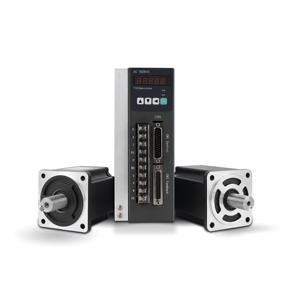
High-precision servo drives, integrated motors, and industrial control nodes rigorously tested for CE & IEC compliance across demanding factory environments.
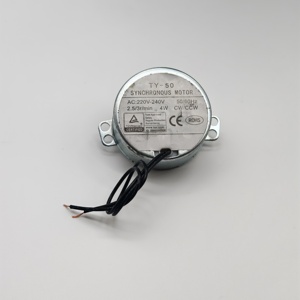
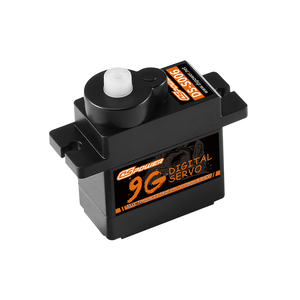
In modern industrial automation, the convergence of operational technology (OT) and information technology (IT) demands computing hardware that goes far beyond standard commercial workstations. As a premier CE Certified Industrial PC Manufacturer & Exporters, our engineering philosophy centers around delivering uncompromised hardware reliability, deterministic real-time execution, electromagnetic immunity, and longevity required by global machine builders and plant engineers.
Factory automation systems operating in high-vibration, thermally hostile, and electrically noisy environments require specialized Industrial Box PCs, Touch Panel PCs, and DIN-Rail Edge Computers. This technical whitepaper presents a comprehensive guide on CE compliance standards, hardware architecture selection, thermal dynamics, real-time motion control interfacing, and total cost of ownership (TCO) optimization for modern smart factory deployments.
CE marking (Conformité Européenne) is not merely a trading pass for European markets; it represents a comprehensive engineering proof of electrical safety, electromagnetic compatibility (EMC), and environmental resilience. For industrial computing platforms controlling high-torque AC servo motors, medium-voltage drives, or collaborative robotic arms, non-compliant computing hardware introduces catastrophic risks—ranging from spurious signal resets to fire hazards and costly production outages.
When evaluating a CE-certified Industrial PC manufacturer, technical buyers must audit compliance against key directives:
Commercial PCs rely on mechanical cooling fans, plastic enclosures, and desktop-grade motherboards designed for mild ambient temperatures (15°C to 30°C). In contrast, true industrial-grade computers engineered by our technical facilities utilize a 100% fanless heat-pipe dissipation topology wrapped in extruded aluminum alloy and heavy-duty steel chassis.
Mechanical and architectural highlights of our CE-certified IPC lineup include:
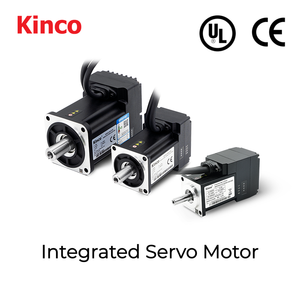
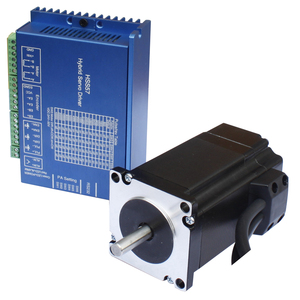
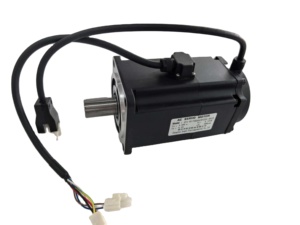
An Industrial PC rarely acts as an isolated computing island. In modern smart plants, the IPC functions as the central supervisory intelligence and real-time motion coordinator. For example, when orchestrating high-efficiency 1300W 220V AC Servo Motors in medical automation or Kinco ISMK Integrated Servo Systems on mobile AMR robots, the IPC host must process vision feeds, compute kinematic trajectories, and dispatch deterministic motion commands across fieldbus networks without micro-stutter or latency jitter.
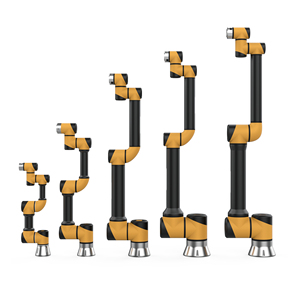
Through EtherCAT, Modbus TCP, or CANopen protocols, our CE-certified IPCs communicate directly with multi-axis motion controllers, 6-axis collaborative robot arms, and hybrid stepper drivers. By running real-time operating systems (RTOS) like Linux Xenomai or Windows 10 IoT Enterprise with real-time extensions alongside supervisory SCADA software, a single industrial PC can simultaneously execute high-speed PLC code, deep-learning vision inspection algorithms, and cloud IIoT telemetry upload.
Leveraging over 25 years of industrial engineering leadership, type-tested control panel fabrication, and global technical support infrastructure.
Since 1997, our engineering division has designed and commissioned thousands of automated drive panels, medium voltage systems (3.3kV–11kV), precision servo axes, and embedded computing solutions across 20+ sector verticals worldwide.
Our manufacturing centers produce Type-Tested Assemblies (TTA) according to stringent IEC 61439 standards. Every IPC motherboard and control panel undergoes rigorous burn-in testing, thermal cycling, and full routine quality audits prior to export.
We provide full application engineering, customized BIOS/OS images, complete IEC documentation packs, and FAT support for export clients. Our network of 30+ service centers guarantees rapid component-level repair and remote technical assistance.
As industrial procurement directors, system integrators, and original equipment manufacturers (OEMs) evaluate long-term computing architectures, several disruptive technological shifts are redefining standard equipment specifications. Procurement strategies must align with these emerging trends to prevent early hardware obsolescence and minimize total lifecycle costs.
The traditional model of transmitting raw sensor telemetry and video feeds to centralized cloud servers is rapidly diminishing due to bandwidth constraints, latency penalties, and data privacy concerns. Future-ready Industrial PCs are now engineered with dedicated NPU (Neural Processing Unit) acceleration modules, such as Intel Deep Learning Boost or modular M.2 AI accelerators (e.g., Hailo-8, Google Coral).
These Edge AI IPCs execute real-time automated optical inspection (AOI), predictive vibration diagnosis, and autonomous navigation path planning right at the machine edge. When procurement teams specify CE-certified industrial PCs today, verifying hardware compatibility with AI frameworks (OpenVINO, TensorRT) and onboard PCIe/M.2 expansion sockets is paramount.
Control cabinet real estate comes at a premium. Machine builders are increasingly rejecting bulky 4U rackmount chassis in favor of ultra-compact, DIN-rail mountable industrial edge gateways. Modern micro-architecture designs allow multi-core processors to operate efficiently within enclosure footprints no larger than a standard terminal block assembly. Furthermore, modular I/O extension systems allow engineers to snap on additional RS485 serial interfaces, digital I/O channels, or CANbus ports without expanding the cabinet depth.
With smart factories connecting operational equipment to enterprise ERP networks, industrial computing hardware has become a primary target for cyber threats. Procurement guidelines now mandate hardware-level security mechanisms. CE-certified industrial PCs must incorporate TPM 2.0 (Trusted Platform Module) chips for cryptographically secured boot validation, encrypted storage keys, and hardware-enforced access controls adhering to ISA/IEC 62443 cybersecurity standards.
Separate standalone HMIs and dedicated PLC racks are increasingly being consolidated into a single, high-performance Industrial Touch Panel PC. Utilizing multi-touch PCAP (Projected Capacitive) screens with IP65/IP66 front panel protection, these panel PCs run hypervisor software that isolates the user interface (running on Windows or Android) from real-time motion control tasks (running on RTOS-Linux). This single-node architecture reduces panel wiring complexity, lowers power consumption, and cuts overall bill-of-materials (BOM) costs by up to 35%.
Discover how modern CE-certified IPCs and integrated servo systems drive productivity gains across key manufacturing sectors.
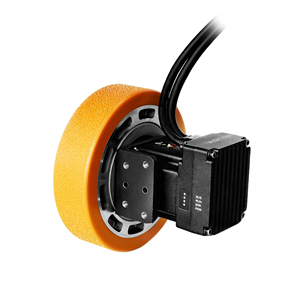
Compact fanless IPCs paired with integrated servo wheel drives (such as the Kinco IWMC series) provide high-torque, precise indoor positioning, and SLAM laser navigation for warehouse logistics and intralogistics lines.
Collaborative 6-axis robot arms requiring high-speed trajectory calculation rely on IP54/IP65 industrial computing nodes with zero-latency pulse and Ethernet interfaces to achieve repeat accuracy within 0.02mm.
Medical production demands strict compliance, explosion-proof synchronous motors, audit-ready data logging, and high-speed machine vision for automated defect checking without halting assembly lines.
Essential answers for B2B buyers, global sourcing managers, and automation project engineers.
Speak directly with our senior application engineers. Share your project requirements, technical drawings, or target environment specs to receive an expert hardware recommendation within 24 hours.
Inquire Now