
1. Industry Overview: China’s Ecosystem in Frequency Inverter Manufacturing
As industrial automation accelerates towards Industry 4.0 and decarbonization goals, the demand for high-efficiency Variable Frequency Drives (VFDs) and precision AC Servo Drives has surged globally. China has solidified its position as the world's primary manufacturing powerhouse for low-voltage, medium-voltage, and specialized industrial frequency inverters. Chinese OEM/ODM factories combine complete semiconductor supply chains, automated Surface Mount Technology (SMT) lines, rigorous thermal testing protocols, and robust engineering talent.
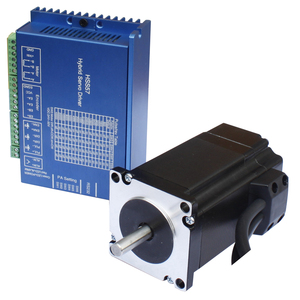
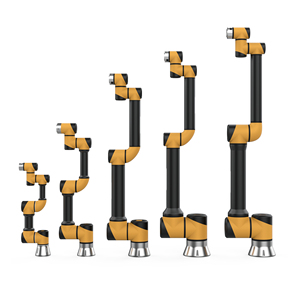
Modern Chinese frequency inverter manufacturers produce devices that meet international standards (IEC, CE, UL, RoHS), serving diverse applications ranging from heavy-duty pump and fan control to ultra-precise 6-axis robotics, medical positioning devices, and Automated Guided Vehicles (AGVs).
2. Enterprise Strengths & In-House Manufacturing Capabilities
Selecting the right frequency inverter partner requires an evaluation of factory production engineering, quality assurance frameworks, and technical support responsiveness. Leading manufacturing enterprises stand apart through robust infrastructure:

Type-Tested Assemblies (TTA)
Full compliance with IEC 61439 and IEC 61800 standards, verifying temperature rise limits, dielectric capabilities, and short-circuit withstand capabilities under extreme industrial operation.

Full-Load Burn-In Testing
Every frequency inverter unit undergoes 100% thermal burn-in testing at elevated ambient temperatures under varying load profiles to eliminate infant mortality and guarantee field reliability.

Global Engineering Support
Over 30 authorized sales and service centers globally, providing application engineering, custom firmware loading, and remote FAT (Factory Acceptance Testing) support.
In-House Production Rigor & Supply Chain Resilience
Top-tier Chinese frequency inverter factories maintain complete control over key production stages: sheet metal enclosure fabrication, SMT automated component placement, conformal coating for harsh environments, high-voltage insulation testing, and dynamic motor load testing.
By removing third-party dependencies for core assembly, manufacturers can offer highly competitive lead times, flexible OEM branding options, and direct component-level traceability for long-term field maintenance.
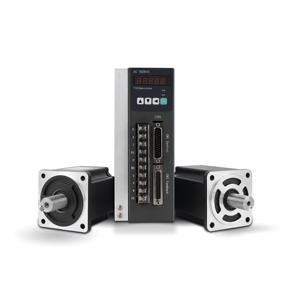
3. Technical Comparison: Standard VFD vs. Modern Integrated Servo Inverter Drives
To assist technical buyers, system integrators, and OEM procurement engineers in selecting the correct speed control architecture, the table below outlines key technical performance indicators (KPIs) across drive generations:
| Performance Parameter | Standard Scalar (V/Hz) VFD | Open/Closed Loop Vector Inverter | Integrated AC Servo Inverter System |
|---|---|---|---|
| Speed Control Accuracy | ±0.5% of Nominal Speed | ±0.02% with Encoder Feedback | ±0.001% (Exact Position Sync) |
| Low-Frequency Torque | 100% at 3.0 Hz | 150% - 200% at 0.5 Hz | 200% - 300% Zero-Speed Torque Hold |
| Response Bandwidth | < 10 Hz | 50 Hz - 150 Hz | > 1.2 kHz - 3.2 kHz |
| Communication Protocols | Modbus RS485 | Modbus, CANopen, Profibus | EtherCAT, PROFINET, CANopen, RS485 |
| Primary Applications | Fans, Pumps, Simple Conveyors | Extruders, Hoists, Machine Tools |
4. Technological Trends Reshaping the Frequency Inverter Industry
The frequency inverter sector is experiencing rapid technological evolution. Global buyers looking to maintain a competitive advantage must align procurement with these core technological trends:
4.1 Adoption of Wide Bandgap (WBG) Semiconductors (SiC and GaN)
Silicon Carbide (SiC) MOSFETs are replacing traditional Silicon IGBTs in high-performance inverters. SiC enables higher switching frequencies (up to 100 kHz or higher) with dramatically lower switching losses. This innovation results in smaller passive components (reactors and capacitors), ultra-compact drive footprints, reduced total harmonic distortion (THD), and motor operating sound attenuation.
4.2 Embedded Edge AI & Predictive Maintenance
Next-generation Chinese inverters incorporate microprocessors running real-time vibration, temperature, and current waveform analytics. By continuous monitoring of the motor's signature curve, the inverter can detect bearing wear, phase imbalance, or mechanical misalignment long before catastrophic failure occurs, pushing predictive maintenance alerts directly via MQTT to cloud SCADA platforms.
4.3 Integrated All-in-One Decentralized Motion Drives
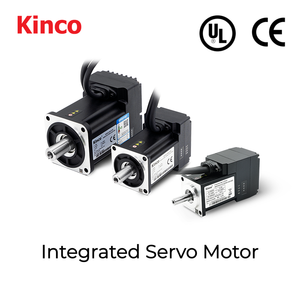
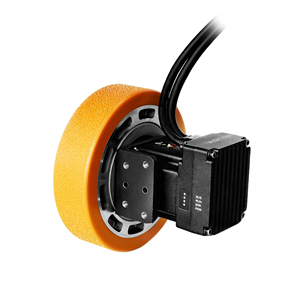
Rather than placing heavy drives in centralized control cabinets requiring lengthy shielded motor cables, the market is shifting towards integrated motor-drive units (such as integrated servo wheel drives and decentralized IP65 inverters). Mounting the drive directly on or within the motor frame eliminates cabinet space requirements, reduces Electromagnetic Interference (EMI) radiating loops, and drastically streamlines machine wiring.

4.4 Multi-Axis Synchronous Energy Regeneration
In high-duty continuous applications such as robotic welding cells, packaging lines, and crane hoists, braking energy is traditionally dissipated as heat through resistor units. Modern multi-axis frequency inverter systems feature shared DC-bus architectures and active front-end (AFE) regenerative units that feed kinetic braking energy back into the facility power grid, delivering total system energy savings between 15% and 35%.
5. Future Procurement Trends & Sourcing Strategies (2025–2030)
When sourcing frequency inverters from China, procurement directors are moving away from simple initial purchase cost comparison towards Total Cost of Ownership (TCO) evaluation. Future procurement methodologies focus on three pivotal pillars:
- Custom Firmware & OEM Software Co-Engineering: Leading factories offer tailored macro-parameters, dedicated application routines (e.g., constant pressure pump control, winder/unwinder tension logic), and custom user interface branding.
- Supply Chain Transparency & Component Sourcing Traceability: Discerning international buyers require verification of power module origin (Infineon, Fuji, STMicroelectronics, or top-tier domestic Chinese SiC manufacturers), MCU processing power (ARM Cortex-M4/M7 DSPs), and electrolytic capacitor lifespans (105°C 10,000-hour rated).
- Harmonics & EMC Pre-Compliance Integration: European and North American grid codes mandate strict Total Harmonic Distortion (THDi) limits. Top Chinese factories now offer built-in DC chokes, integrated Class C2/C3 EMC filters, and active harmonic mitigation topologies out-of-the-box.


