Explore our top-tier tier-1 rated solar modules, precision integrated servo drives, and industrial automation components engineered for high-efficiency solar tracking, automated production lines, and heavy-duty utility infrastructure.
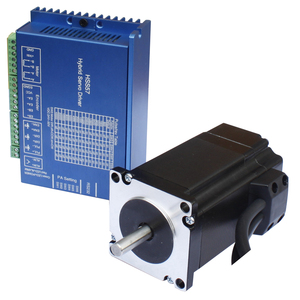
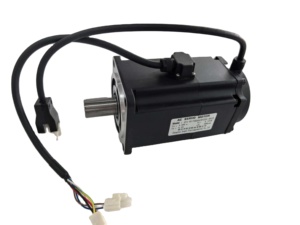
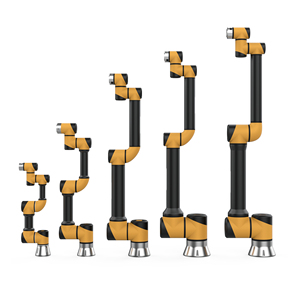
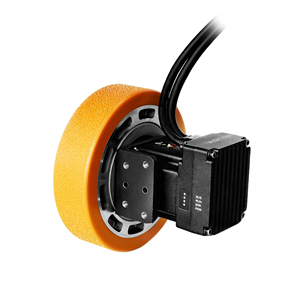
As global power generation accelerates its transition toward zero-carbon electricity grids, selecting qualified, technically robust, and bankable manufacturing partners is the single most critical procurement decision for utility project developers, EPC contractors, and international solar module importers. Operating as a premiere engineering powerhouse and high-precision automation manufacturer, our facilities integrate complete vertically integrated manufacturing lines—from silicon ingot wafer processing and cell passivation to high-throughput automated module assembly and Type-Tested Assembly (TTA) electrical panel engineering.
With over 25 years of engineering experience spanning industrial automation control, high-efficiency photovoltaics, and turnkey power electronics, our manufacturing ecosystem combines cutting-edge German and Japanese robotics with proprietary real-time EL (Electroluminescence) optical testing. Unlike conventional assemblers relying on outsourced components, our in-house production line fabricates Type-Tested Low Voltage (LT) and High Voltage (HT) control panels, Switch-Mode Power Supplies (SMPS), and high-precision motorized tracking drive systems. This ensures seamless interoperability between PV strings, motorized solar trackers, and grid-tied central inverters.
Fully automated SMT, robotic stringing, and 100% triple-stage EL inspection eliminate human error and internal micro-cracks.
Every module batch and control panel undergoes stringent mechanical load testing (5400 Pa snow / 2400 Pa wind) and PID resistance verification.
Over 30 global service centers provide rapid technical support, application engineering, and spare parts fulfillment for export clients worldwide.
The photovoltaic industry is undergoing a monumental paradigm shift from legacy P-type PERC (Passivated Emitter and Rear Cell) technology to next-generation N-type architecture. Driven by the physical limits of P-type silicon efficiency (~24.5%), leading Chinese manufacturing facilities have migrated full-scale production to **N-Type TOPCon (Tunnel Oxide Passivated Contact)** and **HJT (Heterojunction Technology)**.
N-Type TOPCon cells introduce an ultra-thin silicon oxide layer combined with a micro-crystalline doped poly-silicon layer. This setup drastically reduces surface recombination velocities, elevating mass-production cell conversion efficiencies beyond 26.5% and module conversion efficiencies above 23.2%. Concurrently, Heterojunction (HJT) technology merges crystalline silicon wafer substrate with amorphous silicon thin films, offering a near-zero temperature coefficient (-0.26%/°C) and superior performance in high-ambient temperature regions such as the Middle East, Southeast Asia, and Latin America.
| Technology Platform | Mass-Prod. Module Efficiency | Temp. Coefficient (%/°C) | Bifaciality Factor | Degradation (Year 1 / Annual) | Primary Utility Advantage |
|---|---|---|---|---|---|
| P-Type Mono PERC | 21.3% – 21.8% | -0.35 %/°C | 70% ± 5% | 2.0% / 0.55% | Legacy standard, low initial CAPEX |
| N-Type TOPCon 2.0/3.0 | 22.8% – 23.5% | -0.30 %/°C | 80% ± 5% | 1.0% / 0.40% | Lowest LCOE, zero LID, high density |
| HJT (Heterojunction) | 23.0% – 24.1% | -0.26 %/°C | 85% ± 5% | 1.0% / 0.35% | Maximum thermal stability & yield |
| Perovskite-Si Tandem | 26.5% – 29.0% (Pilot) | -0.22 %/°C | 80% ± 5% | Under Validation | Next-gen disruptive efficiency leap |
Beyond cell chemistry, module structural engineering has advanced to **0BB (Zero Busbar)** ribbonless interconnections. By eliminating traditional silver busbars and using micro-wires bonded directly via low-temperature adhesives or inline laser soldering, manufacturers achieve two pivotal breakthroughs:
Standard monofacial aluminum-backsheet modules are rapidly being superseded by dual-glass bifacial modules featuring 2.0mm + 2.0mm tempered glass construction. When deployed over highly reflective surfaces (such as desert sand, concrete, white gravel, or snow fields), backside energy generation contributes an extra **10% to 30% power gain**. Furthermore, dual-glass construction provides complete impermeability to moisture ingress, eliminating potential induced degradation (PID) and acetic acid corrosion inside the EVA/POE encapsulant matrix.
Procurement strategies for global solar developers, industrial site operators, and distributors have shifted from simple "Price-Per-Watt ($/Wp)" evaluation to comprehensive **Total Cost of Ownership (TCO)** and **LCOE Optimization Models**. As shipping logistics, carbon border tariffs, and grid connection parameters evolve, importers must navigate four dominant strategic purchasing vectors:
Evaluating modules based on lifetime kilowatt-hour yield over 30 years rather than initial upfront equipment purchase costs.
Strict quartz-to-module digital supply chain traceability to meet US UFLPA, EU CSDD, and global carbon footprint declarations.
OEM/ODM tailored electrical parameters, customized black-frame aesthetics for residential/commercial BIPV, and pre-assembled connectors.
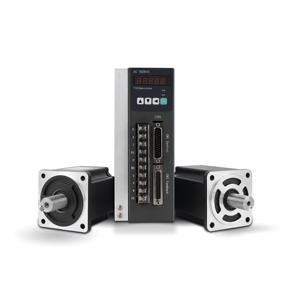
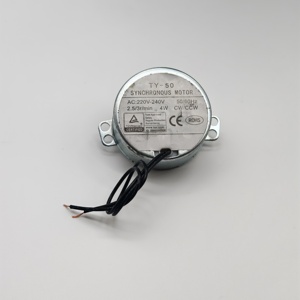
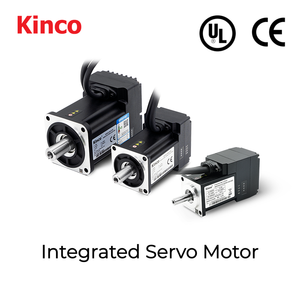
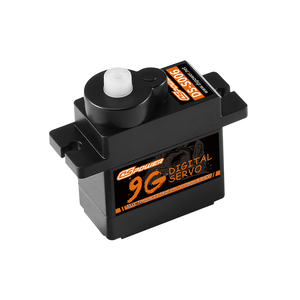
Furthermore, the integration of smart industrial automation—such as combining high-precision AC Servo Motors, Motion Controllers, and 6-Axis Collaborative Robots—into solar panel production lines allows top Chinese exporters to offer sub-millimeter manufacturing tolerances. This high degree of industrial automation guarantees that module frame squareness, connector crimping, and seal potting are executed with 99.99% repeatability.
Drawing upon our legacy as an established engineering company specializing in industrial motor drive control, type-tested distribution assemblies, and clean energy solutions, we offer overseas buyers an unassailable competitive advantage:
We control the entire process from sheet metal fabrication, control panel wiring, and SMT circuit board assembly to high-volume solar module lamination. This unifies quality assurance under one roof and eliminates middleman margins.
Our strategic alliances with top global automation and electrical component leaders ensure that every component—from junction box diodes to micro-inverter microprocessors—is authentic, traceable, and world-class.
All exported modules and control equipment carry full certification portfolios, including IEC 61215, IEC 61730, CE, UL 61730, ISO 9001 quality management, ISO 14001 environmental management, and ISO 45001 occupational safety.
We support export clients beyond module delivery. Our application engineering team provides panel layout design, string sizing calculations, SCADA dashboard integration, and remote FAT (Factory Acceptance Test) assistance.
N-Type TOPCon modules feature higher cell efficiency (>25% vs ~23.5%), a superior temperature coefficient (-0.30%/°C vs -0.35%/°C), higher bifaciality (~80% vs ~70%), and virtually zero boron-oxygen Light-Induced Degradation (LID). This results in approximately 3% to 5% higher lifetime energy yield per installed watt, significantly reducing long-term LCOE.
We utilize 100% automated non-destructive laser scribing, multi-busbar (MBB) or Zero-Busbar (0BB) continuous ribbon soldering, and 3-stage Electroluminescence (EL) testing (before lamination, after lamination, and prior to final packaging). Modules are packed in heavy-duty vertical wooden crates with corner protectors engineered to withstand long-distance maritime transport and rough overland handling.
Yes. As a comprehensive engineering and manufacturing enterprise, we support custom module dimensioning, specific cable/connector length adjustments, custom frame anodizing (e.g., full-black architectural finishes), and custom branding. Furthermore, we manufacture custom-engineered LT/HT control panels, pump drive panels, and automated tracking controllers tailored to your project requirements.
Our standard N-Type TOPCon dual-glass solar modules come with a 12-to-15-year limited product material and workmanship warranty, alongside a 30-year linear power output performance guarantee. We guarantee ≤ 1.0% degradation in Year 1 and ≤ 0.40% annual degradation from Year 2 to Year 30, backed by third-party reinsurance options for utility-scale bankability.
We provide full transparency through third-party inspection agency access (such as TÜV, SGS, or Bureau Veritas) on-site at our plant near Gandhinagar / Shanghai hubs. Additionally, we offer live HD digital FAT sessions, sharing real-time EL scan images, flash test data calibration sheets, and dimensional measurement reports prior to container loading.
Standard containerized module orders (40ft High Cube containers carrying ~620–720 modules depending on dimensions) typically ship within 14 to 21 days from order confirmation. Our export logistics team handles complete FOB, CIF, or DDP documentation, customs clearances, and certificate of origin (CO) issuances for seamless import clearance.
Connect directly with our senior application engineers and export team. Receive immediate factory-direct pricing, customized technical datasheets, string sizing calculations, and complete compliance documentation within 24 hours.