
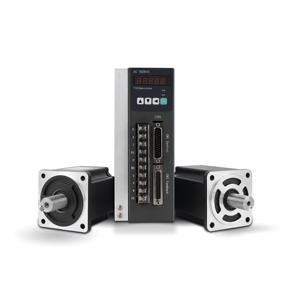
Engineered for high dynamic performance, strict speed regulation, low thermal dissipation, and seamless industrial bus integration.
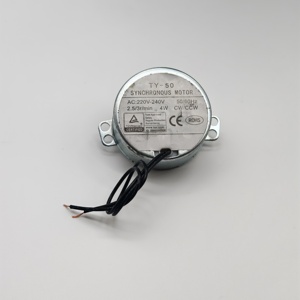
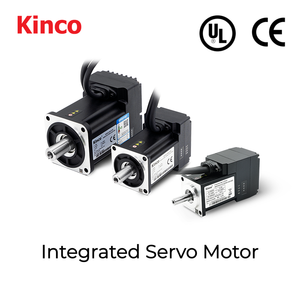
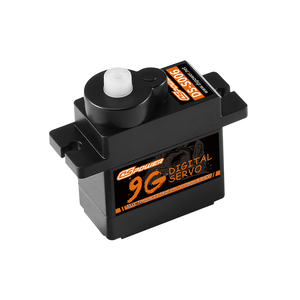
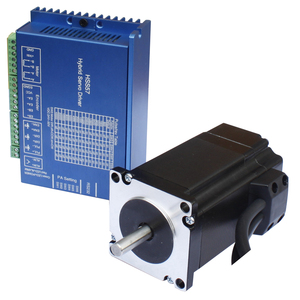
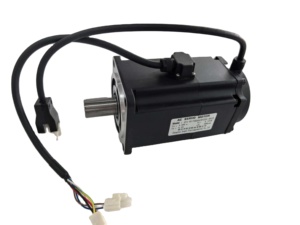
In modern computer numerical control (CNC) machinery, robotic processing cells, and high-speed precision automation, the spindle drive operates as the core computational and power engine governing rotational motion. Unlike standard variable frequency drives (VFDs) designed for generic pump or fan applications, specialized spindle drives engineered in China must execute dual-mode operations: high-torque performance at lower speed regimes for heavy rough machining, and ultra-precise velocity regulation under field-weakening algorithms at high RPMs for finishing operations.
A high-performance spindle drive acts as a closed-loop field-oriented control (FOC) system. By resolving phase currents into flux-producing ($I_d$) and torque-producing ($I_q$) vector components, the drive maintains rigid angular velocity under fluctuating mechanical loads. As global manufacturing transitions toward tighter tolerances—such as medical component machining, semiconductor wafer dicing, and aerospace aluminum high-speed milling—selecting a qualified China Spindle Drive Supplier has evolved from a pure cost-reduction strategy into a strategic engineering decision.
 Information Gain: Field-Weakening Optimization in Modern Spindle Inverters
Advanced Chinese spindle drive architectures utilize adaptive field-weakening control routines. When motor back-EMF approaches inverter voltage limits at elevated rotational speeds, the drive dynamically adjusts the direct-axis current ($I_d$) to suppress flux, extending the constant-power speed range up to 400% of nominal speed without causing thermal breakdown of stator winding insulation.
Modern CNC machine tools demand control sampling loops capable of sub-microsecond vector calculations. Chinese drive manufacturers have incorporated dual-core DSP and FPGA hardware topologies to process encoder feedback (supporting EnDat 2.2, BiSS-C, and high-resolution Resolver protocols) in real time.
This rapid loop closure mitigates chatter during heavy milling passes, protects fragile cutting tools from premature micro-chipping, and achieves surface roughness values ($R_a$) under 0.2 micrometers on hardened tool steels.

To assist system integrators and procurement engineers in technical evaluation, the following matrix outlines the functional distinctions between high-speed spindle drives and standard positioning AC servo systems:
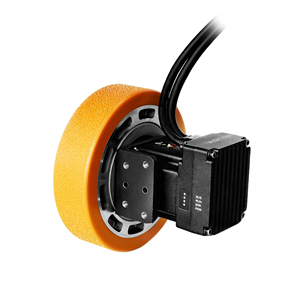
| Performance Parameters | High-Speed Industrial Spindle Drive | Standard AC Servo Drive Unit | Hybrid Integrated Servo-Wheel Drive |
|---|---|---|---|
| Primary Control Focus | Continuous speed regulation & constant power speed range (CPSR) | Point-to-point position control & rapid acceleration profiling | Low-voltage high-torque motion for AGV/AMR propulsion |
| Maximum Output Frequency | 400 Hz to 2,000+ Hz (Supports up to 120,000 RPM) | 0 Hz to 400 Hz (Typically restricted to 3,000–6,000 RPM) | 0 Hz to 200 Hz (Low-speed, high wheel-side torque) |
| Overload Capability | 150% for 60s; 200% peak torque for transient cut resistance | 200% to 300% peak torque for instantaneous acceleration | 150% to 250% for slope climbing and heavy payload starts |
| Industrial Bus Support | EtherCAT, PROFINET, RS485/Modbus, CANopen | EtherCAT, Pulse/Dir, CANopen, Mechatrolink | CANopen, RS485, Modbus-RTU |
| Thermal Management | Cold-plate liquid cooling or heavy-duty heatsink force-air | Natural convection or internal fan forced air | Conduction to chassis structural housing |
As industrial automation transitions toward Smart Factory architectures under Industry 4.0 paradigms, procurement teams evaluating Chinese spindle drive suppliers must align with three major market shifts:

Silicon Carbide (SiC) MOSFET power modules are rapidly replacing traditional IGBTs in next-generation Chinese spindle drives. SiC enables switching frequencies exceeding 40 kHz while reducing switching losses by 40%. This dramatically reduces output current harmonics, resulting in lower motor thermal dissipation and eliminating micro-bearing pitting caused by common-mode shaft voltages.

Leading Chinese spindle drive suppliers are embedding real-time vibration analytics directly into drive firmware. By reading high-frequency motor phase ripple and sensorless back-EMF signatures, the drive identifies spindle bearing wear, tool unbalance, and resonance zones before mechanical failure occurs, reducing unpredicted line shutdowns.

Modern multi-axis CNC cells feature integrated common DC-bus topologies. During rapid spindle deceleration, braking energy is not wasted through resistors as heat; instead, it is fed back into the shared DC bus to power auxiliary axis servo drives or regenerated into the AC grid with unity power factor ($PF \ge 0.99$).
Sourcing automation components requires strict verification of manufacturing processes, raw material traceability, and international compliance certification. With decades of factory-floor engineering experience, our supplier network integrates complete end-to-end quality controls:

Every spindle drive, AC servo system, and control panel manufactured within our partner plants undergoes comprehensive routine testing prior to dispatch. From Surface Mount Technology (SMT) component placement to dynamic high-temperature burn-in chambers, our manufacturing protocols align with international standard IEC 61800-5-1 for electrical safety and IEC 61800-3 for Electromagnetic Compatibility (EMC).
Furthermore, export customers benefit from full Factory Acceptance Testing (FAT) documentation, complete schematic wiring drawings, and remote engineering commissioning assistance, minimizing startup delays on overseas plant floors.
Application engineers calculate load inertia ratios, dynamic duty cycles, and thermal derating factors to match drives specifically to your motor parameters.
Supports seamless multi-protocol communication with major controllers, supporting seamless drop-in retrofits and OEM integrations globally.
Dedicated international service facilities deliver root-cause failure analysis, genuine spare parts management, and continuous lifecycle support.
Essential technical and logistical insights for importing spindle drives and servo systems from China.
Need custom spindle drive sizing, retrofitting assistance, or OEM bulk pricing? Our senior automation engineers are available to review your application specifications.