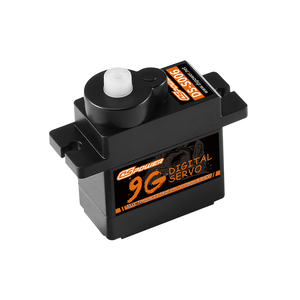
Explore our flagship motion control product portfolio exported worldwide. Featuring advanced 2-phase hybrid steppers, integrated DC easy-servos, subminiature actuators, and heavy-duty robotic drive modules certified to global safety and torque parameters.
In the rapidly evolving landscape of modern industrial automation, the global market for hybrid stepper motors and closed-loop motion actuators has experienced a profound shift toward miniaturization, energy efficiency, and high bus-speed network integration. As OEMs, robotics builders, and factory automation integrators look to balance operational performance against Total Cost of Ownership (TCO), identifying China’s premier stepper motor manufacturing partners becomes a critical strategic imperative.
China's advanced motion control manufacturing ecosystems have matured far beyond simple volume production. Top-tier exporters now maintain world-class automated coil winding lines, cleanroom rotor-stator assembly cells, dynamic air-gap balancing setups, and real-time automated optical inspection (AOI) lines. By combining robust rare-earth Neodymium (NdFeB) magnet configurations with precision-machined rotor teeth, top Chinese suppliers deliver step accuracy up to 1.8° ± 0.09° (full step without loss), maintaining high holding torque while vastly reducing cogging torque and thermal dissipation overheads.
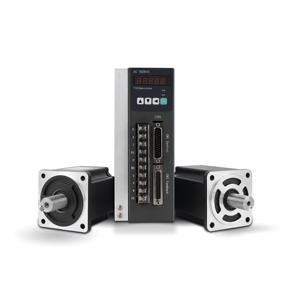
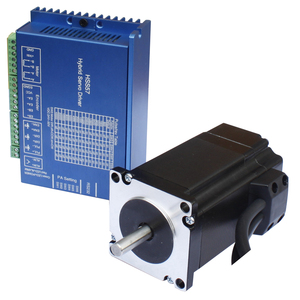
Conventional open-loop microstepping systems inevitably suffer from torque degradation at elevated RPM ranges due to dynamic Back-EMF (Electromotive Force) counter-currents. Leading Chinese stepper motor exporters have solved this engineering barrier through closed-loop field-oriented control (FOC) vector algorithms embedded directly into digital driver modules (such as the HSS60 series). By continuously sampling rotor angle via 1000-line to 17-bit absolute encoders, these integrated stepper solutions operate like high-pole AC servos—adjusting current dynamically according to load demand to prevent stalling completely while running up to 30% cooler.
To assist system integrators in specifying the exact motion component required for their machinery, our engineering teams evaluate motor performance across four fundamental operational vectors:

Constructed utilizing premium cold-rolled silicon steel laminations and high-purity copper windings, our stepper motors minimize iron and copper losses. This optimal copper-to-iron filling factor results in lower thermal rise during sustained torque holding cycles.

By pairing NEMA 17, 23, 24, and 34 frame hybrid steppers with DSP-driven microstepping drives, phase current is smoothly modulated via space vector PWM. Operating noise is restricted below 45dB with virtually zero low-speed resonance.

Modern export-grade stepper systems feature seamless support for bus communications, including CANopen, Modbus-RTU, RS485, and real-time EtherCAT fieldbuses, allowing direct plug-and-play setup with PLC and SCADA architectures.
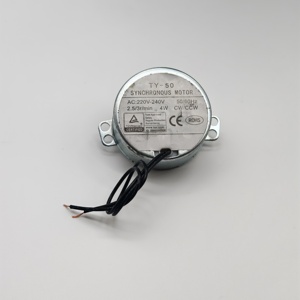
Understanding when to specify standard hybrid steppers, easy-servo (closed-loop) packages, or high-speed AC servo motors is vital for optimizing machine bill-of-materials (BOM) without compromising operational speed or positional accuracy.
| Performance Parameter | Standard Open-Loop Stepper | Easy-Servo (Closed-Loop Stepper) | High-Precision AC Servo |
|---|---|---|---|
| Positional Control | Pulse-Count (Open Loop) | Closed-Loop Encoder Feedback | Absolute / Incremental Encoder |
| Step-Loss Prevention | Risk at high RPM / Overload | 100% Staging Loss Prevention | Zero Step Loss (Torque Loops) |
| Low Speed Torque | Exceptionally High Holding Torque | Exceptionally High Holding Torque | Rated Constant Torque Output |
| High Speed Capability | 300 - 800 RPM (Torque Drops) | 800 - 1500 RPM (Extended Range) | 3000 - 6000 RPM (Full Spectrum) |
| Thermal Generation | Constant Full-Current Heat | Load-Adaptive Dynamic Current | Highly Efficient Dynamic Current |
| BOM Cost Profile | Most Economical | Optimal Price-Performance | Premium Investment |
As automation requirements transition toward smart factories and autonomous mobile robotics (AMRs), China’s premier motor exporters are at the forefront of driving key engineering innovations:

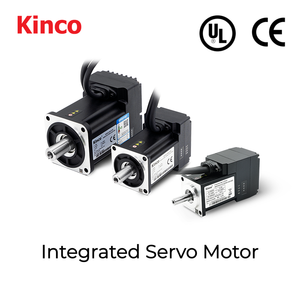
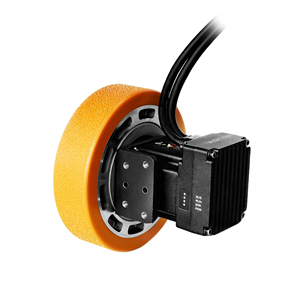
Traditional control architecture relied on decentralized panels housing separate drives, power supplies, and logic controllers connected through thick cable bundles to machine-mounted motors. The future of motion control belongs to fully integrated units—such as the Kinco ISMK and IWMC integrated wheel drive series—combining motor, high-resolution encoder, vector drive, and fieldbus node into a single compact housing. This eliminates electromagnetic interference (EMI) issues, reduces assembly labor by up to 60%, and drastically shrinks control panel footprints.

Next-generation microstepping drivers are replacing conventional MOSFET switches with Wide Bandgap (WBG) semiconductors like Gallium Nitride (GaN). This allows pulse-width modulation (PWM) switching frequencies to exceed 100 kHz without thermal breakdown, yielding whisper-quiet motor operation, near-perfect sine-wave current profiles, and virtually eliminating micro-vibrations in sensitive optics and semiconductor handling machinery.
Navigating the global supply chain requires overseas procurement directors to balance hardware pricing against supply resilience, international quality compliance, and technical co-development capabilities. Leading Chinese exporters are transforming vendor-buyer dynamics through three core strategic shifts:
Off-the-shelf motors rarely fit complex OEM enclosures perfectly. Modern Chinese exporters offer comprehensive OEM customization options—including shaft geometry modifications (flat-flats, keyways, helical pinions, hollow shafts), custom winding inductances for low-voltage battery power, integrated electromagnetic brakes, and specialized IP67 waterproof potting for outdoor or washdown environments.
Global buyers now demand verifiable quality assurance protocols prior to container dispatch. Top exporters maintain strict ISO 9001 quality management systems, executing 100% automated routine testing for insulation resistance, high-voltage breakdown, phase resistance balance, dynamic noise, and shaft runout tolerances. All products come backed by CE, RoHS, UL, and REACH certifications.
Beyond simple hardware supply, leading motion control vendors act as direct extensions of your design team. Providing full 3D CAD step models, motor sizing calculation tools, thermal modeling analysis, and remote debugging assistance via RS485/CAN bus software, top exporters ensure smooth integration from prototype development to mass assembly.
With over 25 years of factory-floor automation experience, state-of-the-art manufacturing facilities, and direct global logistics networks, our enterprise offers an unmatched balance of precision engineering and supply stability.

Every motor series, closed-loop driver set, and control assembly undergoes rigorous routine testing to conform strictly with international IEC standards. Our manufacturing plants near Gujarat/China hubs maintain complete batch traceability from raw magnet material to final packaged shipping carton.

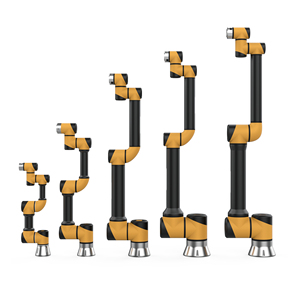
We don't just supply standalone motors—we design and deliver full motion control ecosystems including medium voltage drives, AC servo systems, PLCs, industrial HMIs, planetary gearboxes, and multi-axis collaborative robotic joint modules tailored specifically for your operational requirements.
Review authoritative responses to common technical, commercial, and logistics inquiries submitted by overseas procurement engineering managers:
Total required torque ($T_{total}$) consists of acceleration torque ($T_{acc}$) plus load friction torque ($T_{friction}$). Acceleration torque is determined by $T_{acc} = J \times \alpha$, where $J$ is total system moment of inertia (rotor inertia + reflected load inertia) and $\alpha$ is angular acceleration. We recommend selecting a motor with a safety margin of 1.3 to 1.5 times the calculated dynamic torque at your target operating RPM to avoid resonance stalling.
A standard 1.8° stepper motor requires 200 full steps per revolution, whereas a 0.9° motor requires 400 full steps. Selecting a 0.9° step angle motor delivers twice the fundamental microstepping resolution and significantly reduces low-speed resonant vibration. However, 1.8° motors generally deliver approximately 15% to 20% higher holding torque in the same NEMA frame size due to rotor tooth pitch geometry.
Yes. Customization is a core advantage. We supply complete wiring harness assemblies with specified industrial connectors (Molex, TE Connectivity, AMP, or M12 aviation plugs), custom cable lengths, protective braided sleeving, and internal shaft/housing sealing gaskets to meet IP65 dust-tight or IP67 temporary immersion standards for outdoor or food-grade washdown machinery.
Easy-servo systems mount an optical or magnetic rotary encoder (typically 1000 to 4000 counts/rev) directly to the rear shaft of a 2-phase hybrid stepper. The digital driver constantly compares commanded position against actual encoder feedback. If position deviation occurs, the vector algorithm increases motor current up to maximum peak rating to instantly correct position, bridging the gap between open-loop steppers and high-cost AC servos.
Standard product evaluation samples ship within 3 to 5 working days. Custom OEM shaft/winding prototypes are completed in 10 to 15 days. For standard catalog models, MOQs start as low as 10 units, while customized mass production orders carry flexible tier-based pricing starting from 50 to 100 units shipped via express air freight or consolidated ocean freight.
Looking to lower component cost, eliminate step-loss, or design a custom integrated stepper solution for your next-generation machinery? Connect directly with our application engineering team.