
China Best Temperature Transmitter Supplier & Exporters: Comprehensive Engineering Whitepaper
In modern industrial process automation, process monitoring, and closed-loop control systems, temperature transmitters serve as the critical foundation for operational safety, energy efficiency, and high-yield product quality. As China's leading exporter and premier manufacturer of industrial instrumentation and integrated automation systems, we deliver state-of-the-art temperature transceivers, head-mounted converters, DIN-rail signal isolators, and field-mounted smart transmitters tailored for global OEMs, system integrators, and EPC contractors.
Accurate temperature measurement is vital across industries ranging from oil and gas refining, chemical processing, pharmaceutical synthesis, power generation, and water treatment, to high-precision manufacturing, automated injection molding, and robotic thermal welding. Operating at the intersection of thermal sensing and precision control, our intelligent temperature transmitters translate weak signals from Resistance Temperature Detectors (RTDs, such as Pt100 and Pt1000) and Thermocouples (Types K, J, T, E, N, R, S, B) into standard, noise-immune 4-20mA DC current loops, HART® 7.5 digital signals, Modbus RTU, Foundation Fieldbus, or IO-Link protocol outputs.
Core Technical Value: Advanced temperature transmitters eliminate signal attenuation, cold-junction drift, and electromagnetic interference (EMI) over long cabling distances. By integrating galvanic isolation up to 2500V AC and SIL2/SIL3 Safety Integrity Level capabilities, our transmitter line guarantees plant uptime under extreme thermal fluctuation.
1. Architectural Engineering of Industrial Temperature Transmitters
Industrial temperature transmitters bridge the gap between primary temperature sensors (RTDs or Thermocouples installed inside thermowells) and plant-wide control architectures (DCS, PLC, SCADA, or cloud-based IIoT edge gateways). A raw sensor output, such as a millivolt signal from a thermocouple or a minute resistance shift in a Pt100 RTD element, is inherently susceptible to electrical noise, wire resistance drop, and ground loops when transmitted directly over standard copper wire. Our engineering team designs transmitters utilizing three core physical form factors:
- Head-Mounted Temperature Transmitters: Engineered to fit directly inside standard DIN Form B connection heads of thermowells. These transmitters reduce wiring complexity by converting micro-signals right at the sensor junction point.
- DIN-Rail Mounted Transmitters: Installed inside control panels, Motor Control Centers (MCC), or auxiliary control boxes. They provide ultra-dense multi-channel signal isolation, high packing density, and rapid rail snap-on deployment.
- Field-Mounted Dual-Chamber Transmitters: Encased in heavy-duty die-cast aluminum or 316L stainless steel explosion-proof housings (Ex d IIC T6, IP67/IP68). Designed for hazardous chemical plants, offshore oil rigs, and high-dust environments, complete with backlit graphical LCD displays for local process diagnostics.
| Technical Characteristic | Standard Smart Transmitter Specs | Advanced High-Precision Field Transmitter |
|---|---|---|
| Input Sensor Compatibility | Pt100 (2, 3, 4-wire), TC Types K, J, T, E | Universal (Pt100 to Pt1000, TC Types K/J/T/E/N/R/S/B, -10 to +100 mV, 0 to 2000 Ω) |
| Basic Accuracy | ±0.1% of span or ±0.1°C (Pt100) | ±0.05% of span or ±0.08°C (Pt100, 4-wire measurement) |
| Galvanic Isolation | 1500V AC (Input to Output) | 2500V AC (Input / Output / Power / Housing 4-way isolation) |
| Communication Protocols | 4-20mA Analog, Modbus RTU (RS485) | 4-20mA HART 7.5, Foundation Fieldbus, Profibus PA, IO-Link v1.1 |
| Long-Term Drift Stability | < 0.1°C / year | < 0.02°C / year (5-year continuous operation warranty) |
| Safety & Hazardous Approvals | CE, RoHS, ISO 9001:2015 | SIL2 / SIL3 (IEC 61508), ATEX Ex d IIC T6, IECEx, CSA Hazardous Area |
2. Signal Conditioning, Noise Suppression & Galvanic Isolation
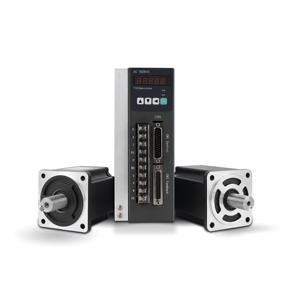
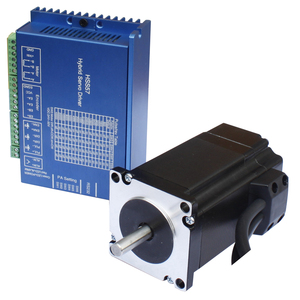
In heavy industrial facilities where large AC variable frequency drives (VFDs), medium-voltage motors, high-power servo drives (such as 750W to 1300W servo drives), and arc welders operate continuously, industrial cabling is subjected to extreme electromagnetic interference (EMI) and radio frequency interference (RFI). Raw sensor cables act as antennas, picking up high-frequency noise spikes that cause control loop instability, false alarms, or plant trips.
Our smart temperature transmitters incorporate 24-bit Sigma-Delta ADC architecture with active analog low-pass filtering and digital software filtering. With a Common-Mode Rejection Ratio (CMRR) exceeding 120 dB and Power Supply Rejection Ratio (PSRR) greater than 110 dB, our devices isolate the measurement loop from high-voltage transients. The integrated 2500V AC galvanic isolation prevents ground loop currents from damaging expensive PLC analog input modules or DCS I/O cards, ensuring rock-solid stability even in harsh industrial environments.
3. Synergistic Integration: Temperature Transmitters & Motion Control Automation
Modern Smart Factories (Industry 4.0) no longer treat process instrumentation and machine motion control as isolated systems. High-precision manufacturing—such as medical device assembly, multi-axis cobot laser welding, injection molding, and high-speed packaging—requires continuous thermal feedback to dynamically compensate for mechanical thermal expansion.
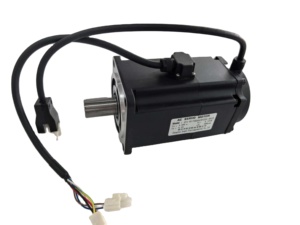
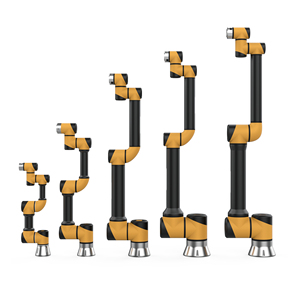
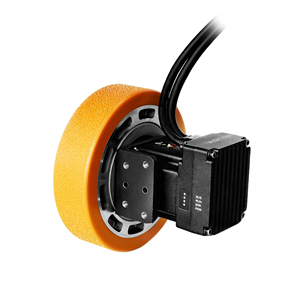
For instance, in precision CNC machining and robotic automation (e.g., using 6-axis collaborative robot arms with 0.02mm repeatability), thermal buildup in servo motor windings or gearbox friction can lead to physical micro-expansions, compromising sub-millimeter tolerances. By pairing our smart temperature transmitters with advanced motion controllers, AC servo motors, and integrated servo drive wheels, machine builders establish closed-loop thermal compensation algorithms. Real-time temperature data sent via HART or Modbus RS485 enables the motion controller to dynamically adjust torque limits, linear position offsets, and speed profiles, maintaining peak throughput without overheating equipment.