High-efficiency motion modules, precision AC servo systems, and integrated drives built for demanding industrial automation applications.
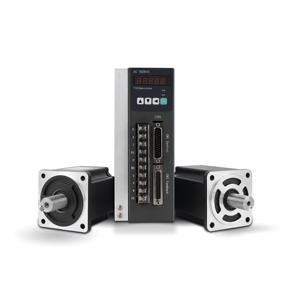
High precision, high efficiency AC servo featuring low noise operation, ideal for precision medical instrumentation and automated assembly.
Inquire Now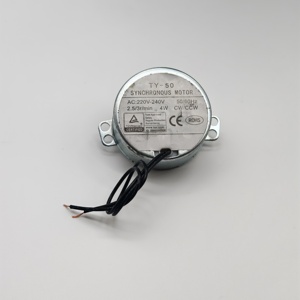
Custom engineered explosion-proof design with 100% pure copper windings for hazardous industrial chemical environments.
Inquire Now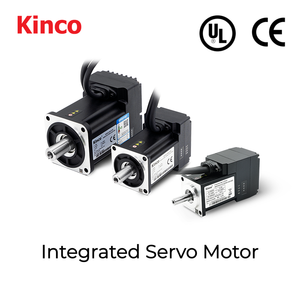
Compact integrated motion unit combining high-torque DC brushless motor and digital driver into a single unit to save cabinet space.
Inquire Now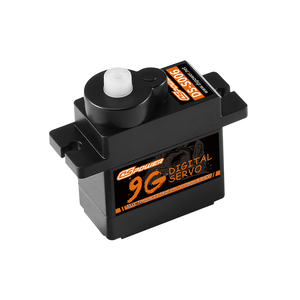
Full metal gear train high-speed micro servo providing robust torque for lightweight robotic arms and automated inspection tools.
Inquire Now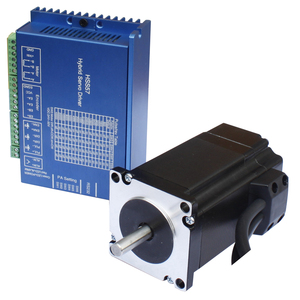
Closed-loop stepper bundle preventing step loss, offering dynamic response and high torque output for CNC and packaging machinery.
Inquire Now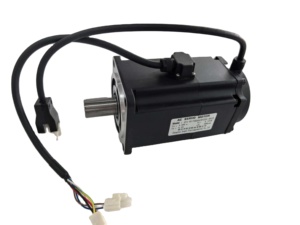
Industrial servo motor equipped with power-off holding brake, built for vertical axis lifting and automated position security.
Inquire Now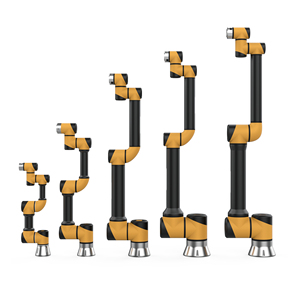
Advanced cobot featuring 0.02mm repeatability for automated laser welding, coffee barista, and precision palletizing lines.
Inquire Now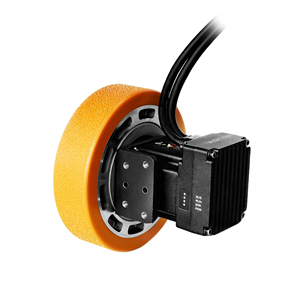
Heavy-duty integrated traction drive wheel tailored for autonomous mobile robots and intralogistics automated guided vehicles.
Inquire NowAn in-depth industrial engineering analysis on soft starter firing angle dynamics, bypass contactor topologies, and energy management for heavy three-phase induction motors.
In modern industrial manufacturing facilities, starting heavy-duty three-phase squirrel-cage induction motors directly across the line (Direct-On-Line or DOL) presents severe electrical and mechanical hazards. Direct online starting triggers an inrush current surge of 600% to 800% of full-load current (FLC), causing voltage dips on the plant distribution bus, tripping upstream breakers, and placing immense electrodynamic stress on motor windings. Furthermore, the sudden mechanical torque spike causes acceleration shocks that damage gearboxes, shear coupling pins, and induce severe water hammer effects in fluid pumping pipelines.
As a leading China Soft Starter Factory and global exporter, our low-voltage (220V–690V) and medium-voltage (3.3kV–11kV) soft starters utilize anti-parallel connected Silicon Controlled Rectifiers (SCRs) or thyristors in each phase. By precise phase-angle control—gradually shifting the firing angle of the SCRs during the starting interval—the soft starter regulates the applied root-mean-square (RMS) voltage to the motor terminals. This controlled voltage ramp results in a smooth, linear rise in motor stator current and acceleration torque, effectively mitigating mechanical wear and line transients.
Selecting the correct motor starting technology requires balancing operational flexibility, initial capital expense (CapEx), total cost of ownership (TCO), and system harmonics. The table below presents an engineering comparison of primary motor starting techniques:
| Motor Starting Method | Starting Current (% FLC) | Starting Torque (% FLT) | Harmonic Distortion (THDi) | Mechanical Shock / Water Hammer | CapEx Relative Index |
|---|---|---|---|---|---|
| Direct-On-Line (DOL) | 600% - 800% | 150% - 200% | Negligible | Severe High Shock | Lowest (1.0x) |
| Star-Delta (Y-Δ) | 300% - 400% | 33% - 50% | Negligible (Transient spikes) | Moderate (High transition torque) | Low (1.5x) |
| Solid-State Soft Starter | 150% - 450% (Adjustable) | 30% - 100% (Linear Ramp) | Low (Active only during startup) | Completely Eliminated | Optimal (2.5x - 3.5x) |
| Variable Frequency Drive (VFD) | 100% - 150% | 100% - 200% | High (Requires THDi filters) | Completely Eliminated | High (6.0x - 10.0x) |
While soft starting protects electrical networks during motor spin-up, the Soft Stop functionality is equally critical for industrial fluid transport and municipal wastewater systems. When a high-capacity water pump stops abruptly (as occurs with a DOL contactor opening), the fluid momentum collapses instantaneously. This generates reverse shockwaves known as water hammer, exceeding pipeline design pressures by up to 300% and causing pipe ruptures, valve failures, and joint leakage.
Our solid-state soft starters implement an advanced torque-control soft deceleration algorithm. Rather than dropping voltage to zero instantly, the micro-controller extends the thyristor firing angle over a user-configured stop ramp (0 to 120 seconds). This controlled torque reduction allows pump impellers to decelerate linearly, smoothly dissipating hydraulic pressure waves and guaranteeing pipework integrity without needing costly mechanical surge tanks.
During full-speed continuous operation, running motor current continuously through SCRs generates semiconductor conduction losses (approximately 1 watt per ampere per phase), resulting in heat accumulation inside the control panel. China top-tier soft starter factories solve this through Internal Integrated Bypass Contactors.
Once the motor achieves 100% full-rated speed and the phase angle reaches 0 degrees, the soft starter’s microprocessor automatically energizes an internal low-resistance bypass contactor. The motor load is seamlessly transferred from the SCR bank to the mechanical contactor, bypassing the thyristors during steady-state run. This engineered architecture reduces panel thermal dissipation by up to 98%, eliminates the requirement for heavy external cooling fans, prolongs component operational lifespan, and significantly optimizes plant energy efficiency.
Key technological transformations driving international buyer decisions when sourcing soft starters and AC drives from leading Chinese manufacturers.

Future industrial soft starters are evolving into intelligent edge-data nodes. Global buyers now demand integrated Modbus-TCP, PROFINET, and EtherNet/IP communications. Embedded sensors track motor insulation resistance, SCR temperature gradients, phase unbalance, and bearing vibration to trigger predictive maintenance warnings before critical breakdowns occur.

Global net-zero mandates require motor control systems to operate flawlessly with ultra-premium IE4 and IE5 permanent magnet synchronous motors (PMSM) and synchronous reluctance motors (SynRM). Next-generation soft starters integrate specialized mathematical algorithms to handle high initial magnetizing currents without unwanted nuisance tripping.

Factory floor space constraints are prioritizing ultra-compact DIN-rail and cabinet-mounted soft starters with built-in bypass and overload protection. International EPC contractors increasingly source fully Type-Tested Assemblies (TTA) complying strictly with IEC 61439-1/2 and IEC 60947-4-2 standards directly from certified OEM exporters.
Combining 25+ years of power electronics innovation, end-to-end manufacturing control, and rigorous quality assurance.

From precise Surface Mount Technology (SMT) PCB assembly and SCR substrate bonding to automated CNC sheet metal fabrication, our state-of-the-art manufacturing plants near Shanghai and Gujarat ensure complete quality control over every production step.

Our industrial control panels, medium voltage drives, and soft starters undergo extensive routine testing—including high-voltage insulation tests, full-load burn-in, thermal imaging, and short-circuit withstand tests—certified under ISO 9001, CE, and IEC compliance.

Our dedicated application engineering team assists overseas clients with system sizing, custom panel design drawings, Factory Acceptance Testing (FAT) video verification, and remote commissioning assistance across 30+ international service hubs.
Essential guidance on soft starter selection, sizing factors, harmonic management, and export logistics.
Soft starter selection must be based on motor full-load current (FLC) and operational duty cycle rather than nominal kilowatt (kW) ratings alone. For heavy-duty applications like crusher drives, ball mills, or high-inertia centrifugal fans (Class 20 or Class 30 trip duties), select a soft starter rated one frame size larger than the motor nameplate FLC to ensure adequate thermal capacity during extended ramp times.
A soft starter controls voltage magnitude to reduce inrush current and torque during startup and shutdown; once at nominal speed, it bypasses to line voltage. A VFD controls both voltage magnitude and output frequency, allowing continuous, dynamic motor speed control throughout operation. Soft starters are significantly more economical and compact for fixed-speed applications.
Soft starters generate minor phase-angle controlled harmonic distortion strictly during the brief acceleration phase (typically 5 to 30 seconds). Once the motor reaches full operating speed and the internal bypass contactor closes, the SCR thyristors are completely bypassed, resulting in zero steady-state harmonic distortion (0% THD) during normal operation.
Yes. Our industrial soft starter units feature conformal coated circuit boards (Class 3C2 standard, optional 3C3 for chemical environments), ambient working temperatures ranging from -20°C to +50°C (with appropriate derating above 40°C), and rugged IP20 to IP54 enclosure options suitable for dusty mining, water treatment, and marine sites.
Every exported soft starter unit and control panel comes complete with a Factory Test Certificate, Routine Electrical Insulation Test Report, Schematics & Wiring Diagrams (CAD/PDF), User Programming Manuals, and Certificate of Origin (CO). FAT video verification and third-party inspection (SGS/TÜV) are available upon request.
Standard off-the-shelf standalone soft starters and servo drives ship within 3 to 7 business days. Custom engineered Type-Tested control panels, medium voltage soft starter enclosures, or integrated OEM automation cabinets typical feature a lead time of 2 to 4 weeks depending on component specifications and FAT schedules.
Contact our senior application engineers today to discuss your motor load specifications, request detailed CAD schematics, or receive a fast direct factory quotation.
Inquire Now