Engineered for medium/low voltage switching, heavy industrial motor control, renewable energy integration, and electric vehicle power distribution.
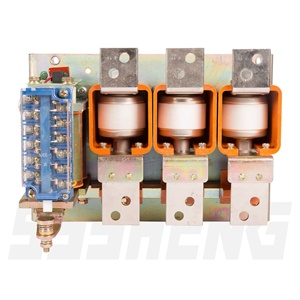
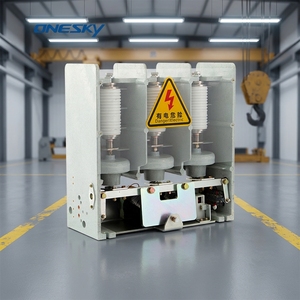
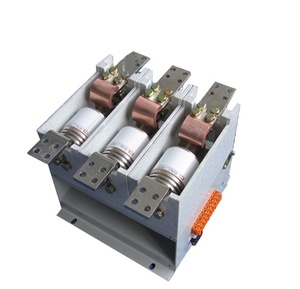
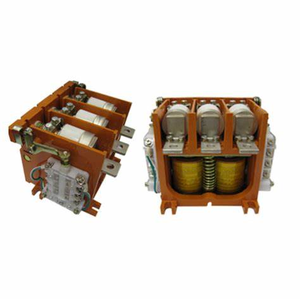
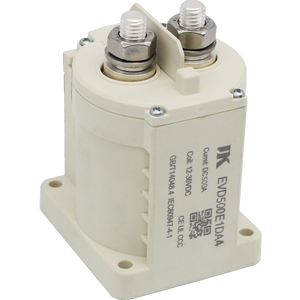
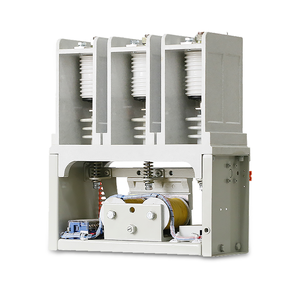
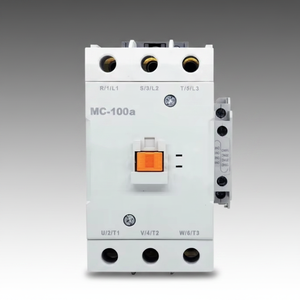
Consolidating over 25 years of industrial power equipment engineering, type-tested control panel manufacturing, and international export expertise.

Every vacuum contactor batch undergoes rigorous routine testing to meet IEC 60470, IEC 62271-106, and GB/T 14808 standards, ensuring zero dielectric breakdown under extreme high-voltage fault conditions.

Vacuum Interrupters (VIs) are encapsulated in Class-10,000 cleanrooms using state-of-the-art automatic brazing furnaces and helium leak detection systems, guaranteeing an ultra-high vacuum seal (<10⁻⁴ Pa).

Featuring dual-coil energy saving circuits and permanent magnetic latching options that reduce operational power consumption by up to 85% during sustained holding cycles.

Custom control voltage configurations (AC/DC 24V to 220V), tailored mounting dimensions, auxiliary contact arrangements, and specialized epoxy-resin encapsulation for high-dust or marine applications.
From component-level inspection to routine dielectric testing, complete test certificates (Routine Test Reports & Type Test Certificates) accompany every single dispatch. Our engineering network supports global OEMs with technical panel integration, short-circuit current calculation, and remote FAT testing.
Request Engineering Assistance
In modern industrial electrical distribution and medium-voltage motor control, the transition from conventional air-break or SF6 gas-insulated contactors to vacuum switching technology represents a fundamental leap in operational safety, contact longevity, and environmental sustainability. Vacuum contactors utilize a sealed ceramic or glass envelope housing metal contacts operating within a high-vacuum medium (typically pressurized below 10⁻⁴ Pa). When contacts separate under electrical load, an arc is initiated not by gas ionization (as seen in air or SF6 breaker switches), but by vaporized metallic particles emitted from the contact surfaces themselves.
The core performance metric of a vacuum contactor lies in its Vacuum Interrupter (VI). During current zero in an AC cycle, the metallic vapor arc rapidly diffuses toward the surrounding chamber walls at supersonic speeds. Because no ambient gas molecules exist to sustain thermal ionization, the dielectric strength of the contact gap recovers at rates exceeding 10 kV/μs—several orders of magnitude faster than air or oil media.
To prevent localized contact welding and minimize current chopping (which induces damaging Transient Overvoltages across inductive loads like high-voltage motors), modern Chinese manufacturers utilize advanced CuCr 75/25 or CuCr 50/50 sintered alloy contacts. The liquid-phase sintering of Copper-Chromium provides an optimal balance:
Electrical specification engineers evaluating medium-voltage switchgear must weigh capital expenditure against lifecycle operating costs and environmental compliance. Below is an authoritative technical comparison matrix across current switching topologies:
| Technical Parameter | Vacuum Contactor Technology | Air-Break Contactor | SF6 Gas Contactor |
|---|---|---|---|
| Dielectric Recovery Rate | Ultra-Fast (>10 kV/μs) | Slow (< 0.5 kV/μs) | Moderate (~2-5 kV/μs) |
| Mechanical Service Life | 1,000,000 - 3,000,000 Ops | 100,000 - 300,000 Ops | 500,000 Ops |
| Electrical Switching Frequency | Up to 1,200 Ops/Hour | Max 300 Ops/Hour | Max 600 Ops/Hour |
| Environmental Impact (GWP) | Zero GWP (Eco-Friendly) | Zero GWP | High (SF6 GWP = 23,500) |
| Contact Resistance Stability | Hermetically Sealed (Zero Oxidation) | Prone to Oxidation & Carbon Coating | Decomposition Product Risks |
| Maintenance Requirements | Maintenance-Free VI Envelope | Frequent Contact Cleaning/Dressing | Gas Leakage Monitoring Required |
As global industrial infrastructure accelerates toward net-zero targets and electrification, procurement directors are altering their sourcing strategies for medium- and high-voltage power components. China has emerged as the global epicenter for vacuum switching innovation, driven by massive domestic deployments in renewable microgrids, high-speed rail, and battery energy storage systems (BESS).
With stringently enforced environmental regulations (such as the EU F-Gas Regulation updates and global carbon neutrality directives), electrical equipment specifiers are rapidly banning SF6 gas from new installations. Vacuum contactors represent the primary eco-friendly substitute for MV motor control centers (MCCs) and capacitor switching units, offering zero greenhouse gas emissions and complete recyclability at end-of-life.
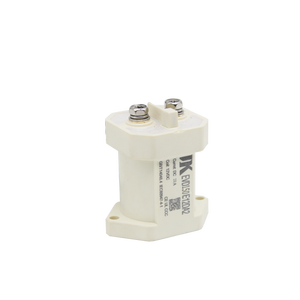
The rapid expansion of 800V+ ultra-fast EV charging networks, megawatt-scale battery energy storage facilities, and solar PV farms has spurred demand for high-current DC Vacuum Contactors (such as 150A to 500A epoxy-encapsulated models). Unlike traditional DC contactors that suffer from severe arc elongation and contact burning, vacuum DC contactors utilize high magnetic blowout systems to extinguish high-voltage DC arcs instantaneously within a sealed, oxygen-free vacuum chamber.
Modern industrial plants operating under Industry 4.0 guidelines require continuous predictive maintenance data. Emerging vacuum contactor designs incorporate built-in hall-effect sensors, contact wear indicators, and coil current signature analyzers. This allows facility engineers to monitor real-time contact erosion, ambient temperature rises, and mechanical latching speeds via SCADA or edge gateways, eliminating unplanned downtime.
As solar installations expand into high-altitude environments (such as South American mining regions or Tibetan plateaus above 3,000 meters above sea level), thermal dissipation and external creepage distances become limiting factors. Chinese tier-1 manufacturers are redesigning outer resin housings with extended insulation fins and boosted impulse withstand voltages (up to 75kV BIL) to eliminate atmospheric altitude derating issues.
Vacuum contactors are designed for frequent switching operations where overload or short-circuit breaking is managed in combination with backed-up high-interrupting fuses (such as DIN-standard MV fuses). Key operational domains include:
Used in 1.14kV to 3.3kV underground coal mining machinery, ball mills, and crushers. High resistance to explosive atmospheres, dust, and continuous vibration.
Deployed in 7.2kV and 12kV indoor switchgear panels (e.g., KYN28 series) for controlling soft starters, transformer primary windings, and reactive power capacitor banks.
Ideal for multi-megawatt high-pressure water pump stations requiring up to 1,200 start/stop cycles per day without contact degradation or maintenance intervention.
Essential for pitch control systems, generator stator switching, and grid-connection panels where harmonic distortion and transient voltage spikes are frequent.
Detailed technical responses to common questions raised during global OEM procurement, panel integration, and quality compliance audits.
While both utilize vacuum interrupters, a Vacuum Contactor is optimized for extremely high mechanical switching frequencies (up to 1,000,000 to 3,000,000 operations) to control operational load currents (AC-3 / AC-4 duty). However, its short-circuit breaking capability is limited (typically 5kA to 10kA). Conversely, a Vacuum Circuit Breaker (VCB) is designed to interrupt massive short-circuit fault currents (up to 25kA - 50kA) but has a lower mechanical endurance (typically 10,000 to 30,000 operations). In medium-voltage motor control centers, contactors are combined with current-limiting fuses to handle short-circuit protection.
An electrically held contactor requires continuous coil excitation power to keep the main contacts closed. If control voltage drops or fails, the contacts automatically open. A mechanically latched contactor uses an electromagnetic pulse to close the contacts, which are then mechanically locked by a latch mechanism. Opening requires an energized trip pulse. Mechanically latched units eliminate continuous coil power consumption and prevent accidental opening during control system voltage sags.
Current chopping occurs when an alternating current arc is extinguished before reaching natural current zero. This abrupt cessation of current induces high inductive voltage transients ($V = L \cdot \frac{di}{dt}$) across motor windings. Modern Chinese manufacturers suppress chopping by using specialized Copper-Chromium (CuCr) contact metallurgy and optimized axial magnetic field geometries, restricting chop levels to below 0.5A, which is safe for standard motor insulation.
Top manufacturers design and test vacuum contactors in compliance with IEC 60470 (High-voltage alternating current contactors and contactor-based motor-starters), IEC 62271-106, UL 347, CE directives, and Chinese national standard GB/T 14808. Full type-test certificates from accredited third-party laboratories (such as KEMA, TUV, or CNAS-certified test centers) can be provided upon technical request.
For installations above 1,000 meters altitude, atmospheric air density decreases, lowering external dielectric withstand voltage. In such cases, contactors must be specified with higher impulse withstand ratings or custom epoxy phase barriers. Operating ambient temperature ranges typically span -25°C to +40°C. For tropical or marine environments, anti-corrosion plated hardware and tropicalized auxiliary contact blocks are integrated.
Every production unit undergoes: (1) Power-frequency withstand voltage test across open contacts and between phases, (2) Vacuum interrupter pressure check via magnetron vacuum testers, (3) Main circuit contact resistance measurement (micro-ohmmeter), (4) Mechanical operating characteristic timing (opening time, closing time, bounce duration), and (5) Coil pull-in and drop-out voltage threshold verification.
When selecting a manufacturing partner in China for medium-voltage switching components, procurement teams should evaluate suppliers against six critical criteria to ensure long-term supply chain resilience and zero field failures:
Need customized vacuum contactor solutions, technical drawings, or direct factory pricing for your upcoming electrical distribution project?
Get a Quote