Engineered for harsh industrial environments, high-yield photovoltaic tracking, and ultra-precise automated process control.
The global shift toward decentralized renewable energy and ultra-efficient power conversion requires a paradigm shift in photovoltaic (PV) inverter design. As a premier Custom OEM PV Inverter Manufacturer & Exporters, our engineering philosophy bridges advanced power electronics with industrial-grade reliability. Modern utility-scale, commercial, and residential solar installations demand power conversion hardware capable of operating under extreme ambient variations while preserving maximal power point tracking (MPPT) performance.
Solar inverters serve as the neural center of any photovoltaic infrastructure. Beyond converting direct current (DC) generated by solar arrays into grid-compliant alternating current (AC), high-performance OEM inverters manage grid stability, reactive power compensation, real-time dynamic voltage regulation, and harmonic mitigation. Integrating silicon carbide (SiC) MOSFET switches and advanced digital signal processors (DSPs) enables power densities exceeding 3.5 kW/kg, drastically minimizing thermal overhead and system volume.
To address diverse commercial, utility, and hybrid microgrid applications, our OEM manufacturing lines support multi-tiered topologies configured to client specifications:
Designed for commercial rooftops and complex ground-mount trackers. Features up to 10 independent MPPT channels, suppressing mismatch losses caused by partial shading, module orientation, or panel degradation.
Integrated DC-coupled and AC-coupled energy storage interfaces supporting lithium iron phosphate (LFP) chemistry with ultra-fast sub-10ms automatic grid-to-island switching capability.
Containerized 1500V DC high-power conversion stations engineered for utility solar farms, offering integrated medium-voltage transformers and outdoor IP66 protection enclosures.
By offering end-to-end custom original equipment manufacturing (OEM) and original design manufacturing (ODM), we allow international distributors, EPC contractors, and brand owners to deploy white-label inverter solutions customized down to PCB layout, thermal management channels, communication protocols (SunSpec Modbus, CANopen, IEC 61850), and customized enclosure aesthetics.
Building upon 25+ years of industrial automation and control panel heritage to deliver unmatched power electronics reliability.
Equipped with high-speed surface-mount technology (SMT) lines, automated optical inspection (AOI), and Type-Tested Assembly (TTA) testing facilities near Ahmedabad, Gujarat. Every unit undergoes rigorous full-load burn-in testing prior to shipment.
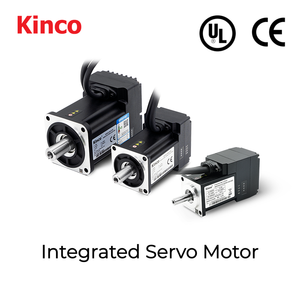
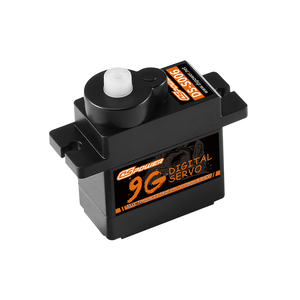
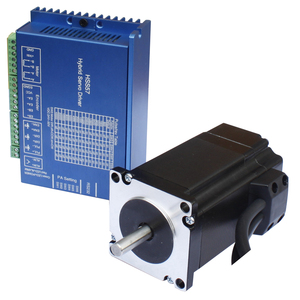
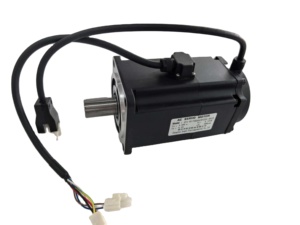
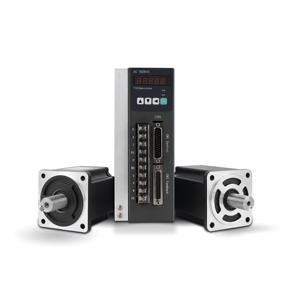
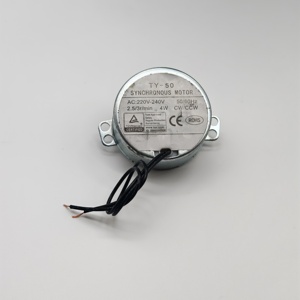
Uniquely positioned to integrate precision motion components—including AC servo systems, stepper drivers, and single/three-phase motors—directly with solar tracker positioning algorithms for maximized diurnal energy yield.
Engineered to satisfy stringent global grid-code requirements including IEC 62109-1/2, IEC 61727, IEEE 1547, UL 1741 SA, and VDE-AR-N 4105. Fully documented FAT/SAT traceability for seamless international deployment.
As photovoltaic penetration increases worldwide, procurement specifications are shifting rapidly from basic capital expenditure (CAPEX) evaluations to total cost of ownership (TCO) and advanced grid support capabilities. Procurement directors and engineering teams must account for four major technological transitions when specifying OEM PV inverters over the next decade:
Traditional solar inverters operate in grid-following (GFL) modes, relying on an established AC grid voltage reference. With the retirement of legacy synchronous thermal plants, modern grids demand Grid-Forming Inverters (GFM) capable of synthesizing internal voltage waveforms, providing virtual inertia, and establishing black-start capabilities during catastrophic grid outages.
System voltage elevation from 1000V DC to 1500V DC reduces BOS (Balance of System) cabling costs, combiner box requirements, and transmission line losses by up to 20%. Concurrently, replacing conventional Silicon IGBTs with Silicon Carbide (SiC) MOSFETs allows higher switching frequencies (>50 kHz), dramatically shrinking passive magnetics and raising peak efficiency above 99.4%.
Safety regulations now require advanced DC arc fault protection. Next-generation OEM inverters embed deep-learning neural network algorithms directly onto onboard DSP chips, analyzing high-frequency noise profiles to detect micro-arcing events within 2.5 milliseconds—preventing thermal runaway and solar array fires with zero false trips.
The convergence of inverter power management and precise motion tracking is altering project yield economics. Utilizing integrated servo drives (such as multi-axis AC servo systems and hybrid stepper drivers) allows astronomical solar tracking algorithms to maintain panel orientation within 0.1° of accuracy, boosting overall plant capacity factors by up to 25% compared to fixed-tilt installations.
Selecting between standard off-the-shelf catalog inverters and tailor-made OEM solutions directly impacts installation longevity, grid code compliance, and brand equity. Below is a engineering evaluation matrix:
| Technical Parameter | Standard Off-the-Shelf Inverter | Custom OEM PV Inverter Solution |
|---|---|---|
| MPPT Topology | Fixed MPPT channels, limited scaling | Customized multi-MPPT channels (2 to 12 channels) |
| Switching Technology | Standard Silicon IGBTs (16-20 kHz) | Wide-Bandgap SiC/GaN Switches (>50 kHz) |
| Communication Protocols | Fixed Modbus RTU / Ethernet | Multi-Protocol Support (CANopen, SunSpec, IEC 61850, MQTT) |
| Enclosure Protection | Generic IP65 Enclosure | Heavy-Duty IP66 / IP67 NEMA 4X Marine-Grade Aluminum |
| Firmware & Branding | Manufacturer locked firmware | 100% White-Label, Custom UI/UX, Customized Grid Codes |
| Motion System Integration | External standalone tracking controller | Direct integrated CAN bus link to AC/DC Servo Motors |
Technical responses tailored for enterprise procurement officers, system integrators, and EPC contractors.
Consult with our senior application engineers to review your electrical single-line diagrams, system specifications, or custom white-label manufacturing requirements.
Get a Quote