Explore our high-performance inductive and capacitive proximity sensor series engineered for global industrial automation, OEM integration, and severe environments.
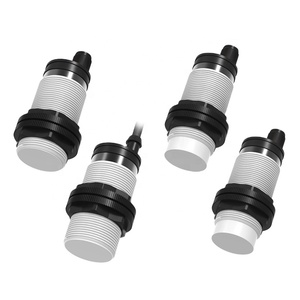
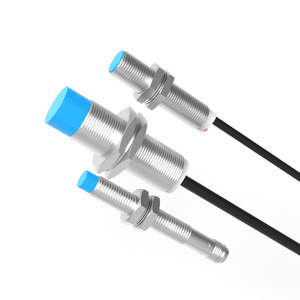
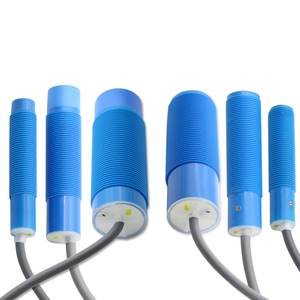
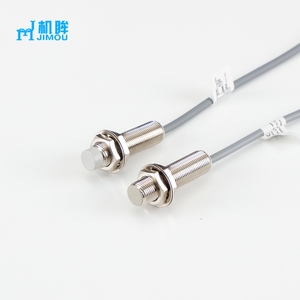
Comprehensive Analysis of Sourcing Paradigms, ASIC Integration, and High-Reliability Sensing Technologies for Industrial Automation Builders
In modern industrial automation, automotive robotics, semiconductor handling, and renewable energy infrastructure, proximity sensors act as the critical peripheral sensory organs of programmable logic controllers (PLCs) and distributed control systems (DCS). As factory floors transition toward Industry 4.0 architecture, global equipment manufacturers (OEMs) and system integrators face escalating demands for non-contact object detection with millimetric repeatability, immunity to electromagnetic interference (EMI), extended operating temperature spans (-40°C to +120°C), and intelligent bidirectional communication capabilities via IO-Link protocols.
Selecting a verified OEM/ODM proximity sensor factory is no longer merely a procurement exercise in unit-cost reduction; it is a strategic technology partnership. Off-the-shelf industrial components often fail to address specific mechanical constraints, custom output switching logic, extreme ingress conditions, or specialized high-frequency switching requirements. Direct contract manufacturing with established sensor foundries empowers engineering teams to co-develop tailored sensor micro-architectures, optimized coil topologies, custom application-specific integrated circuits (ASICs), and customized outer housings engineered from stainless steel 316L, nickel-plated brass, or PTFE fluoropolymer coatings.
Standard proximity switches usually carry fixed sensing distances (e.g., 2mm for flush M12 inductive sensors). Partnering directly with an OEM factory enables extended-range tuning (up to 3x standard distances) using specialized high-Q coil assemblies, active thermal compensation circuits, and potted ASIC modules that maintain thermal stability under high thermal shock environments.
Key technological disruptions reshaping proximity sensor manufacturing, custom procurement, and automated manufacturing systems.
Future proximity sensor procurement is shifting rapidly toward IO-Link-enabled smart devices. Beyond simple binary switching (ON/OFF), IO-Link sensors provide real-time diagnostic parameters, including internal operating temperature, operating hour counters, coil vibration analysis, and switching cycle degradation warnings. OEM buyers can implement remote parameterization, eliminating manual potentiometer adjustments and drastically cutting commissioning times on complex multi-axis machinery.
As industrial robotics and micro-assembly stations downsize, demand for sub-miniature proximity sensors (Q08, Ø3mm, Ø4mm, and M5 cylindrical bodies) has surged. OEM factories are utilizing high-density surface-mount technology (SMT) and automated micro-wire bonding to achieve switching frequencies exceeding 3,000 Hz, allowing precision position sensing on high-speed CNC spindle shafts and semiconductor pick-and-place grippers.
Modern process industries—such as food and beverage washdown lines, chemical processing, and mobile off-highway hydraulics—require sensors capable of enduring high-pressure steam cleaning (100 bar at 80°C) and aggressive corrosive reagents. Leading OEM factories utilize fully potted vacuum-injection epoxy resin, laser-welded stainless steel 316L shells, and specialized O-ring seal seals to achieve IP68 and IP69K ratings without mechanical drift.
Traditional inductive sensors suffer from reduced sensing distance when detecting non-ferrous metals like aluminum, copper, or brass (derating factor down to 0.3). Next-generation OEM sensor designs incorporate dual-coil micro-architectures and microcontroller-driven algorithms to achieve "Factor 1" performance—maintaining identical sensing distances across both ferrous and non-ferrous targets without attenuation.
Compare fundamental technology performance parameters across primary proximity sensor categories for OEM application engineering.
| Sensor Technology | Target Material Spectrum | Typical Sensing Distance | Key Industrial Advantage | Primary Industrial Applications |
|---|---|---|---|---|
| Inductive Proximity Sensors | Ferrous & Non-Ferrous Metals (Steel, Aluminum, Brass) | 0.8 mm – 40 mm | Immune to water, oil, dirt, non-metallic debris; ultra-high lifecycle | Automotive stamping, CNC tool changers, conveyor position tracking |
| Capacitive Proximity Sensors | Liquids, Granules, Plastics, Wood, Metal, Glass | 1 mm – 25 mm (Adjustable) | Detects non-metallic media through non-metallic tank walls | Silo level monitoring, pharmaceutical pill counting, liquid level control |
| High-Temperature Inductive | Metals (Operates up to +230°C) | 2 mm – 15 mm | Specialized high-temp fluoropolymer cable & hybrid ceramic potting | Steel rolling mills, industrial baking ovens, glass bottle manufacturing |
| Analog / Linear Distance Sensors | Conductive Metal Targets | 0 mm – 20 mm (0-10V / 4-20mA) | Continuous linear displacement feedback with sub-micron resolution | Vibration measurement, shaft eccentricity, thickness measurement |
| Namur (Intrinsically Safe) | Metallic Targets in Hazardous Zones | 1 mm – 10 mm | Ex-proof rated for Zone 0/1/2; minimal current switching logic | Oil & gas refineries, chemical processing, powder milling facilities |
Built upon 25+ years of factory-floor automation engineering, vertically integrated manufacturing, and rigorous quality auditing.
Our state-of-the-art manufacturing facility houses high-speed Yamaha and Panasonic SMT assembly lines capable of placing 0201 micro-components with 10-micron precision. Optical Inspection (AOI) and 3D X-ray inspection ensure zero-defect solder joint integrity prior to sensor encapsulation.
To withstand extreme shock (50g) and continuous industrial vibration (20g), internal sensor electronics are fully encapsulated using automated two-component polyurethane or silicone vacuum potting units. Thermal shock chambers cycle components between -45°C and +125°C to eliminate infant mortality failures.
Equipped with specialized EMC testing chambers, our production lines validate immunity against Electrostatic Discharge (ESD), Electrical Fast Transients (EFT/Burst up to 4kV), and high-frequency radiated fields generated by nearby Variable Frequency Drives (VFDs) and high-voltage motor control panels.
From initial CAD modeling and ASIC prototyping to mass manufacturing and global distribution.
Target material, sensing distance, voltage range & connector specs.
Custom PCB layout, coil winding simulation & ASIC selection.
Functional samples dispatched within 7–14 business days.
Automated SMT, potting, 100% routine testing & laser branding.
Direct technical answers addressing sensor selection, OEM customization capabilities, electrical wiring, and quality assurances.