
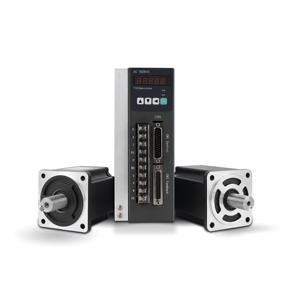
Engineered for high payload tolerance, millimeter-level repeatability, and continuous operating duty cycle requirements across advanced automated production lines.
In an era defined by aggressive industrial digitisation, shortening product lifecycles, and structural labor shortages, industrial enterprises are forced to re-evaluate their production automation paradigms. Selecting an authentic OEM/ODM robotic arm factory is no longer merely a transactional procurement exercise—it is a foundational strategic decision that shapes an enterprise’s long-term operational resilience, margin sustainability, and technological agility.
Global manufacturing ecosystems demand robotic manipulators tailored to rigorous domain-specific kinematic configurations. Whether deploying high-density articulated 6-axis arms for automotive spot welding, ultra-compact SCARA units for semiconductor pick-and-place tasks, or collaborative cobot arrays for flexible pharmaceutical packaging, original equipment manufacturers (OEMs) and original design manufacturers (ODMs) offer the deep customization capability needed to achieve optimal total cost of ownership (TCO).
Analyzing the shifts in kinematic engineering, motion control integration, and global supply chain strategies over the next decade.
Traditional robotic architectures relied on centralized control cabinets connected to arm joints via heavy, failure-prone cabling harnesses. The industry is rapidly shifting toward integrated servo wheel drives and frameless brushless motors embedded directly inside the arm articulation points. This reduces electrical noise, cuts cabinet space by up to 60%, and improves joint dynamic response.
Proprietary industrial communications are giving way to unified real-time Ethernet protocols (EtherCAT, PROFINET IRT, Ethernet/IP) alongside TSN (Time-Sensitive Networking). Systems integrators now demand that OEM suppliers offer flexible servo controller driver sets compatible with third-party PLC platforms like Omron, Siemens, Schneider Electric, and Delta.
Human-robot collaboration is evolving from niche applications to main-line manufacturing processes. Future procurement contracts explicitly require dynamic power and force limiting (PFL) mechanisms, dual-channel safety torque off (STO), and integrated safety light curtain interfaces built directly into the joint controller electronics.
| Specification Feature | Legacy Systems (Gen-2) | Current OEM Standard (Gen-3) | Next-Gen ODM Frontier (Gen-4) |
|---|---|---|---|
| Joint Actuation | External Servo + Long Cabling | Integrated Servo + Harmonic Drive | Direct Drive Frameless Motor + RV Reducer |
| Positioning Repeatability | ±0.08 mm to ±0.1 mm | ±0.02 mm to ±0.05 mm | < ±0.01 mm (Multi-axis Optical Feedback) |
| Communication Protocol | Analog Pulse / RS-232 / Modbus | RS485 / CANopen / EtherCAT | TSN / Wireless Industrial 5G / OPC UA |
| Ingress Protection | IP40 – IP54 | IP54 – IP65 Standard | IP67 / IP69K (Hygienic Cleanroom Washdown) |
| Maintenance Architecture | Scheduled Time-based Service | Fault-code Diagnostics | AI-based Predictive Vibration Monitoring |
Founded on a heritage of rigorous control engineering, our enterprise infrastructure has expanded from component assembly into full-scale robotic arm research, kinematic optimization, and turnkey plant automation.
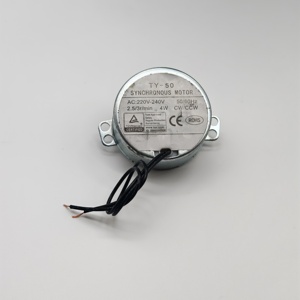
Operating out of state-of-the-art facilities equipped with modern SMT lines, automated sheet metal fabrication centers, and type-tested assembly (TTA) lines, we maintain complete control over every stage of the production value chain. From high-torque AC servo motors and explosion-proof synchronous drives to 6-axis collaborative robot arms, our products are engineered to withstand the harshest industrial operating environments.
Engineering Excellence Since
Global Service & Support Hubs
Global Strategic Brand Partners
Certified Ingress Protection Rating
From conceptual kinematic modeling to mass production dispatch, our factory floor adheres to strict industrial quality controls.
Defines arm reach, axis count (3 to 6-axis), payload dynamics, center of gravity offsets, and structural deflection limits under high acceleration.
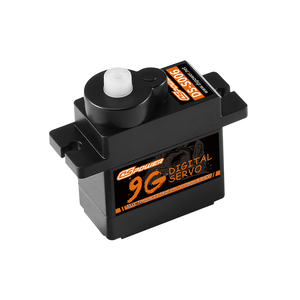
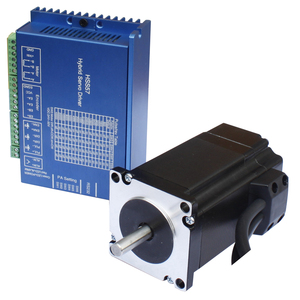
Pairing precise AC servo motors, stepper actuators, harmonic drives, and brake systems with custom motor driver sets for optimized thermal stability.
Factory Acceptance Testing includes full-load thermal imaging, continuous trajectory cycle testing (over 72 consecutive hours), and laser tracker calibration.
Secure export packaging with shock logging, complete documentation packs (wiring schematics, CAD models), and long-term spare part availability.
Our OEM/ODM robotic arms and servo systems are actively operating across demanding industrial production environments worldwide.
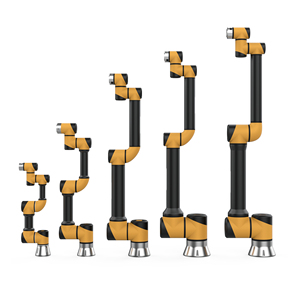
High-speed pick-and-place, continuous laser seam welding, dynamic screw driving, and lithium-ion pouch cell sorting using multi-axis articulated cobot arms integrated with vision feedback systems.
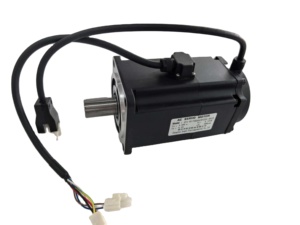
Utilizing high-precision 1300W 220V AC servo motors with pulse/RS485 interfaces for ultra-sterile pharmaceutical dispensing, syringe assembly, and surgical tool packaging lines requiring IP54/IP65 ingress sealing.
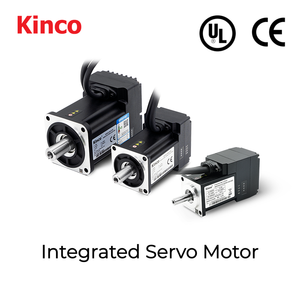
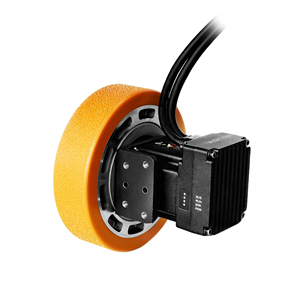
Mobilizing autonomous warehouses using compact, high-torque integrated servo wheel drive modules (Kinco IWMC Series) for automated guided vehicles, mobile manipulators, and sorting shuttles.
Addressing core technical, quality, and commercial inquiries from industrial buyers, machine builders, and system integrators.
An OEM (Original Equipment Manufacturer) agreement involves producing robotic arm assemblies according to your pre-existing, fully engineered technical blueprints and bill of materials (BOM). An ODM (Original Design Manufacturer) contract leverages our in-house R&D team to co-develop, design, prototype, and manufacture custom kinematic structures, joint control electronics, and firmware tailored to your specific application payload and envelope requirements.
Our robotic arm factories utilize zero-backlash strain wave gearheads (harmonic drives) or precision RV planetary reducers matched with high-resolution absolute magnetic/optical encoders (up to 24-bit multi-turn resolution). Every joint assembly undergoes laser interferometer tracking and dynamic calibration prior to final factory dispatch to guarantee positioning repeatability down to ±0.02 mm.
Yes. Our integrated motion control platforms support major open industrial networks including EtherCAT, CANopen, RS485 (Modbus-RTU), and Ethernet/IP protocols. They integrate directly into third-party control architectures (such as Siemens S7, Omron Sysmac, Beckhoff, and Rockwell Automation) without requiring proprietary closed-loop hardware gateways.
Our manufacturing plants adhere to rigorous quality management regimes certified under ISO 9001:2015. Individual robotic manipulators and control panels comply with CE markings, IEC 60204-1 safety of machinery standards, ISO 10218-1 for industrial robots, and ISO 13849-1 (PLd/PLe) functional safety frameworks for collaborative operational environments.
Typical ODM development cycles run between 6 to 10 weeks from initial functional specification freeze. This includes 3D CAD kinematic simulation, FEA structural stress analysis, PCB layout for joint drive electronics, rapid prototyping of cast/machined arm links, and preliminary Factory Acceptance Testing (FAT).
Whether you require standard high-precision AC servo motors, integrated AGV drive modules, or custom-engineered 6-axis collaborative robot arms, our application engineering team is prepared to assist with payload calculations, CAD integration, and formal quotation packages.