Explore our certified inventory of forced-guided safety relays, emergency stop monitoring modules, and heavy-duty industrial control units tailored for global OEMs, system integrators, and panel builders.
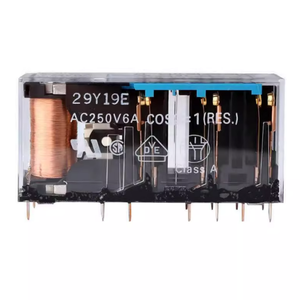
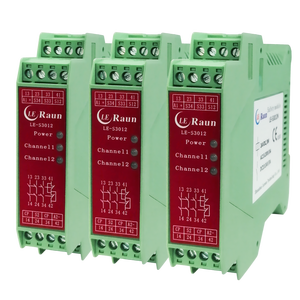
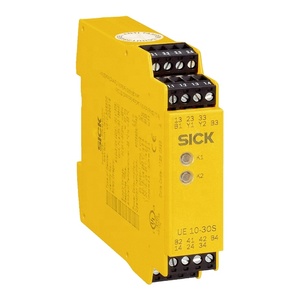
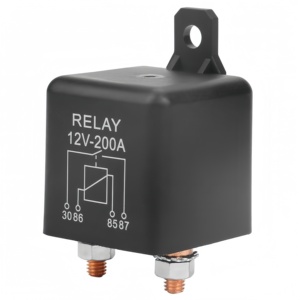
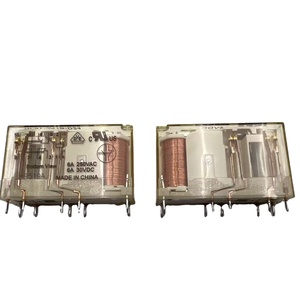
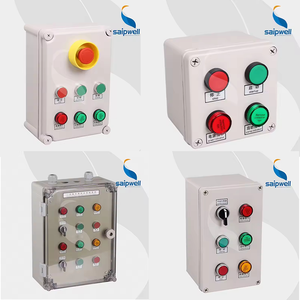
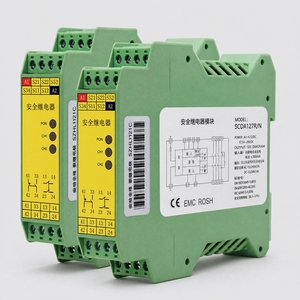
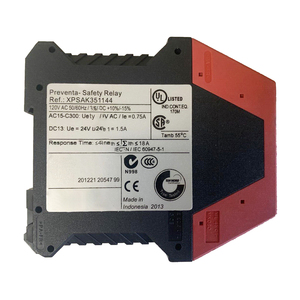
As modern industrial manufacturing transitions toward smart automation and zero-harm operational goals, functional safety engineering has evolved from a regulatory requirement into a baseline operational imperative. A single failure in an industrial safety loop can lead to severe personnel injury, expensive machinery downtime, and costly compliance fines. Safe isolation of power, real-time diagnostic monitoring, and redundant switching circuits are non-negotiable parameters for machine builders and control panel assembly plants worldwide.
Our comprehensive OEM and ODM manufacturing services are tailored specifically for equipment vendors, switchgear assemblers, and automation integrators requiring tailor-made safety relay modules. From custom printed circuit board assembly (PCBA) and mechanical enclosure design to algorithm programming for multi-functional safety controllers, we deliver turn-key manufacturing backed by strict ISO 9001 and ISO 13849-1 quality management systems.
Our production facilities utilize modern automated SMT pick-and-place assembly lines, surface-mount soldering stations, and automated optical inspection (AOI) units to maintain pristine component alignment. Every manufactured relay module undergoes mandatory routine screening:
We partner with machinery manufacturers to supply white-label safety modules and specialized contact configurations:
Custom Form Factors & Enclosures:
Slimline 17.5mm DIN-rail modules, IP67 field-mount junction boxes, and ultra-compact PCB-mountable relays.
Voltage & Terminal Flexibility:
12VDC, 24VDC, 110VAC, 230VAC power supply variants with push-in spring terminals or traditional screw clamps.
Bespoke Functional Logic:
Multi-functional safety delay timers, two-hand control logic (EN 574 Type IIIC), light curtain muting, and zero-speed sensing.
The industrial landscape is undergoing a massive shift towards Industry 4.0 connectivity, intelligent diagnostics, and modular safety control architectures. Functional safety components are transitioning from isolated electromechanical switches to interconnected smart devices.
Traditional electromechanical relays suffer from contact erosion and mechanical wear over millions of switching cycles. Next-generation OEM safety relays incorporate semiconductor switching (solid-state MOSFET/IGBT paths) for safety outputs, eliminating arcing while achieving virtually unlimited electrical switching life without degrading contact resistance.
Modern machine builders demand real-time status reporting without cluttering control panels with redundant wiring. Future-ready safety relays integrate IO-Link Safety communication interfaces, transmitting field diagnostics—such as switching cycle counts, internal thermal levels, wire-break flags, and supply voltage fluctuations—directly to upper-level PLCs and SCADA dashboards.
Unplanned machine downtime directly impacts bottom-line profitability. Advanced safety relay modules now embed microprocessors capable of tracking cumulative mechanical contact operations against the rated B10d value. The relay alerts maintenance teams well before reaching the statistical end-of-life threshold, enabling proactive component replacement during planned downtime windows.
Replacing multiple single-function safety relays with one configurable modular unit is a growing trend among OEM panel builders. Modular safety controllers allow software-configurable input mapping (E-Stops, interlocks, light curtains, mats) via drag-and-drop logic software, significantly shrinking panel footprints and cutting enclosure wiring labor by up to 60%.
Automation is expanding into harsh outdoor environments, cold-storage logistics, and high-heat process facilities. Contemporary safety relay specifications demand extended operating ranges from -40°C to +70°C, conformal coating protection against corrosive atmospheric gases (H2S, SO2), and enhanced vibration resistance up to 5g compliant with IEC 60068 standards.
Exporting machinery across international boundaries requires strict compliance with overlapping safety norms. Modern safety relays comply with universal functional safety benchmarks—ISO 13849-1 (up to Performance Level e), IEC 62061 (SIL CL 3), IEC 61508, UL 508, and CE directives—simplifying global market compliance for machine builders.
Understanding the mathematical correlation between Safety Integrity Levels (IEC 61508 / IEC 62061) and Performance Levels (ISO 13849-1) is critical when engineering safe stop circuits for industrial automation.
| Performance Level (ISO 13849-1) | Safety Integrity Level (IEC 61508 / 62061) | Average Probability of Dangerous Failure / Hour (PFHd) | System Architecture Category | Typical OEM Relay Application |
|---|---|---|---|---|
| PL a | No Special Requirement | ≥ 10-5 to < 10-4 | Category B or 1 | Basic process control switching without safety trip functions |
| PL b / PL c | SIL 1 | ≥ 3 × 10⁻⁶ to < 10-5 | Category 1 or 2 | Low-risk auxiliary guarding, basic conveyor interlocks |
| PL d | SIL 2 | ≥ 10-7 to < 10-6 | Category 2 or 3 | Material handling doors, perimeter fencing monitoring |
| PL e | SIL 3 | ≥ 10-8 to < 10-7 | Category 3 or 4 | Emergency Stop buttons, Safety Light Curtains, Robotic Cells, High-Speed Power Presses |
* Note: Achieving SIL 3 / PL e compliance requires dual-channel cross-monitored safety relays featuring forced-guided contacts, high diagnostic coverage (DC ≥ 99%), and high MTTFd values.
Global component shortages, shifting supply chain dynamics, and stringent regulatory oversight have changed how procurement managers source electromechanical components. Below are key trends defining industrial safety relay purchasing:
Procurement teams are reducing reliance on single-brand legacy suppliers by establishing partnerships with agile OEM manufacturers. Sourcing direct-replacement safety relays (compatible with Omron G7SA, Phoenix Contact PSR, Schneider XPS, IDEC RF1V, and SICK UE series in terminal layout, coil voltage, and contact logic) ensures unbroken line assembly during global supply disruptions.
To reduce factory floor wiring labor costs, OEMs are moving toward pre-wired terminal block configurations and push-in spring-cage connectors. Ordering custom OEM safety modules pre-fitted with specialized wire harnesses or pluggable screw terminals cuts panel wiring time by over 40% while preventing field wiring errors.
Global market access requires strict compliance with environmental regulations. Sourcing strategies emphasize REACH, RoHS 3, and Conflict-Free Mineral compliance. Lead-free contact materials (such as AgSnO2 alloy instead of AgCdO) are mandatory for European and North American industrial machinery exports.
High-reliability sectors—such as automotive, aerospace, and pharmaceutical manufacturing—demand complete supply chain transparency. Tier-1 buyers require unique batch QR coding on individual relay cases, providing instant digital access to factory routine test logs, insulation test reports, and raw material mill certificates.
Answers to crucial technical and commercial questions routinely posed by industrial buyers, electrical designers, and OEM procurement engineers.
A standard industrial relay uses unlinked spring contacts where contacts may weld together due to overcurrent without detection. A safety relay incorporates forcibly guided (linked) contacts compliant with EN 50205. If a Normally Open (NO) safety contact welds shut, the Normally Closed (NC) diagnostic contact cannot close when the coil is de-energized. This mechanical linkage enables diagnostic circuits to detect contact failure and prevent machine restart.
Yes. Our in-house research, engineering, and tooling departments provide comprehensive ODM services. We design custom PCB layout geometries, specialized terminal block orientations, custom coil operating voltages (12VDC, 24VDC, 48VDC, 110VAC, 230VAC), and customized plastic enclosures featuring your brand artwork and part numbering.
To determine the functional Safety Performance Level according to ISO 13849-1, electrical engineers require four main metrics: 1) System Architecture Category (Cat B, 1, 2, 3, or 4); 2) MTTFd (Mean Time to Dangerous Failure calculated from relay B10d data and operating cycles); 3) Diagnostic Coverage (DC%); and 4) Common Cause Failure (CCF) mitigation measures.
Yes. We engineer pin-to-pin functional equivalents for major industry series including Omron G7SA / P7SA, SICK UE series, Phoenix Contact PSR, IDEC RF1V, and Schneider Electric XPS modules. Our drop-in replacements match mechanical mounting dimensions, pin spacing, coil ratings, and contact safety ratings exactly.
Every dispatch includes full factory test documentation: Routine Dielectric Voltage Test Reports, Contact Resistance Logs, EN 50205 Forced-Guided Mechanical Function Verification Reports, Certificate of Conformance (RoHS/REACH), and ISO 9001 quality sign-offs. Additional FAT (Factory Acceptance Test) support is available upon request.
Dual-channel safety relays utilize two separate input paths (Channel 1 and Channel 2) driven by opposite voltage signals or pulsed test outputs. Cross-fault monitoring logic continuously verifies that short circuits between channels or grounds are instantly detected, tripping the safety outputs to a safe de-energized state prior to machine movement.
Standard catalog safety relays and stock brand modules have no strict minimum order limits. Custom OEM production runs (featuring custom branded housing, specialized circuit designs, or non-standard contact configurations) typically carry a low initial MOQ starting from 100 to 500 units depending on plastic tooling requirements.
Silver Tin Oxide (AgSnO2) contacts provide superior resistance to contact welding and material migration caused by high inrush capacitive or inductive loads (motor starters, solenoid valves). Silver Nickel (AgNi) offers lower contact resistance for micro-load signal switching. We offer tailored contact metallurgy based on your specific load characteristics.
With over 25 years of field-proven industrial automation, control panel building, and functional safety experience, our engineering enterprise serves as a single accountable manufacturing source for global OEMs and machinery exporters.
We combine component-level precision manufacturing with system-level control expertise. Whether delivering type-tested switchgear assemblies, custom SMT safety board manufacturing, or functional safety engineering support, our team ensures your machinery meets international safety compliance with zero delivery delays.
All OEM safety relay modules and custom panel assemblies undergo 100% full-function testing, insulation resistance verification, and high-pot dielectric screening before leaving our facility.
Consult with our functional safety application engineers today. Send us your schematic drawings, load parameters, or brand cross-reference requirements for a fast quote and technical assessment.