Executive Whitepaper: The Paradigm Shift to N-Type TopCon Photovoltaic Manufacturing
The global solar energy landscape is undergoing a monumental technological transition. As traditional P-type Mono PERC (Passivated Emitter and Rear Cell) technology rapidly approaches its theoretical physical efficiency limit of ~24.5%, the photovoltaic industry has overwhelmingly selected N-type Tunnel Oxide Passivated Contact (TopCon) as the mainstream commercial architecture for the next decade of solar utility and commercial deployment.
As a leading OEM/ODM TopCon module factory and global exporter backed by over 25 years of industrial engineering excellence, we operate at the intersection of cutting-edge solar cell physics and high-precision automated manufacturing. TopCon technology utilizes an ultra-thin (1-2 nm) tunnel silicon oxide layer combined with an amorphous/polycrystalline silicon layer on the rear surface of an N-type silicon substrate. This elegant passivated contact architecture drastically reduces carrier recombination, lowers contact resistance, and unlocks module power outputs exceeding 700W+ in modern 182mm (M10) and 210mm (G12) rectangular cell formats.
Because N-type silicon substrates are doped with phosphorus rather than boron, TopCon solar modules completely eliminate Boron-Oxygen complex formation. This results in zero Light Induced Degradation (LID) and Light- and elevated Temperature Induced Degradation (LeTID).
TopCon architecture inherently delivers a bifaciality factor between 80% and 85%, significantly outperforming traditional PERC modules (70%). This delivers up to 10%–30% additional electricity yield from ground albedo reflectance.
TopCon cells maintain exceptionally high efficiency under low-light conditions, such as early morning, late evening, and overcast skies, extending daily operational power production windows by up to 45 minutes.
TopCon vs. Legacy Solar Module Technologies: Comprehensive Technical Comparison
For international EPC contractors, project developers, and wholesale distributors, choosing the right cell architecture directly impacts the Levelized Cost of Energy (LCOE) and Internal Rate of Return (IRR). Below is an engineering comparison illustrating why global buyers are transitioning their custom OEM/ODM module manufacturing contracts to N-Type TopCon platform factories.
| Electrical & Physical Parameters |
N-Type TopCon (Current Standard) |
P-Type Mono PERC (Legacy) |
N-Type HJT (Heterojunction) |
| Mass Production Cell Efficiency |
25.2% – 25.8% |
23.2% – 23.6% |
25.4% – 26.0% |
| Theoretical Efficiency Limit |
28.7% |
24.5% |
28.5% |
| Temperature Coefficient (Pmax) |
-0.30% / °C |
-0.35% / °C |
-0.26% / °C |
| Bifaciality Factor |
80% – 85% |
70% – 75% |
85% – 95% |
| First-Year Power Degradation |
≤ 1.0% |
≤ 2.0% |
≤ 1.0% |
| Annual Linear Degradation (Y2-Y30) |
≤ 0.40% |
≤ 0.55% |
≤ 0.35% |
| Manufacturing CAPEX / Cost Ratio |
Optimal (High Yield / Compatibility) |
Lowest (Phasing Out) |
High (Expensive Equipment) |
| LCOE Reduction Potential |
4.5% – 7.2% Reduction |
Baseline Reference |
3.8% – 5.5% Reduction |
Global Photovoltaic Procurement Trends & Future Technological Roadmap
1. The Rise of Rectangular Wafer Standards (182mm x 210mm / M10 & G12R)
Global module procurement is rapidly moving away from standard square wafers toward optimized rectangular wafer dimensions (such as 182.2mm x 191.6mm and 182mm x 210mm). By maximizing shipping container volume utilization (achieving over 98.5% space efficiency inside standard 40ft High Cube containers), rectangular TopCon modules allow overseas buyers to save up to $0.005 to $0.008 per watt in international ocean freight costs. OEM/ODM contract specifications now standardly incorporate 66-cell and 72-cell rectangular TopCon formats.
2. 0BB (Zero Busbar) and SMBB (Super Multi-Busbar) Metallization Solutions
To reduce silver paste consumption—which accounts for nearly 16% of total cell manufacturing costs—leading TopCon OEM factories are adopting 0BB (Zero Busbar) film-interconnection technology. By replacing printed silver busbars with ultra-fine copper wires applied during module lamination, 0BB technology eliminates high-temperature soldering stress, reduces micro-cracking risk, and improves module power output by 5W–10W while offering enhanced mechanical load durability (5400 Pa snow / 2400 Pa wind load ratings).
3. Integration of Industrial Robotics & Automated Motion Control in Module Assembly
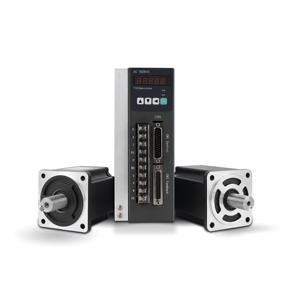
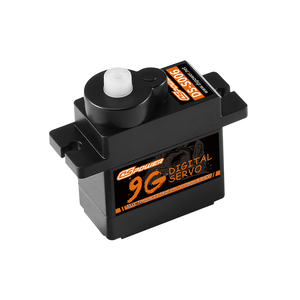
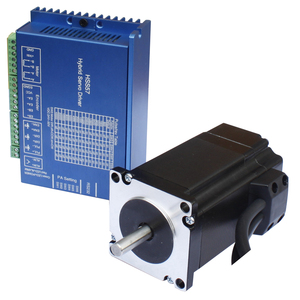
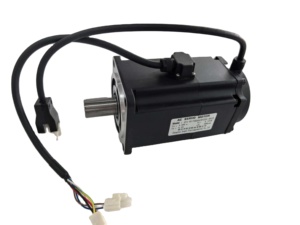
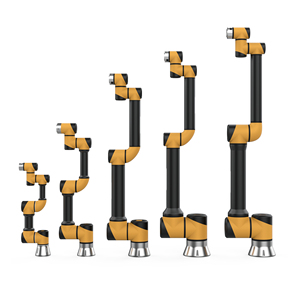
Modern TopCon module quality depends entirely on high-speed precision automation. The fabrication of high-density TopCon modules requires micro-precision stringers driven by high-speed AC Servo Motors (such as our 1300W and 750W precision servo series) and 6-Axis Collaborative Robotic Arms (IIMT Series) for string handling, glass layup, and automatic EL (Electroluminescence) defect detection. Automated motion control ensures sub-millimeter ribbon placement accuracy, avoiding micro-shading and hot-spot risks during 30-year operational lifetimes.
Shift towards 2.0mm + 2.0mm thermally toughened dual glass with POE (Polyolefin Elastomer) encapsulant, preventing PID (Potential Induced Degradation) and moisture ingress in high-humidity or coastal solar plants.
Global buyers now require full supply chain auditability, certified low-carbon manufacturing credentials, ISO 14064 footprint verification, and compliance with European and North American import regulations.
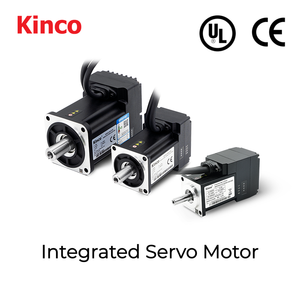
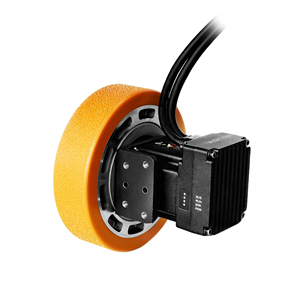
Incorporation of Kinco AGV/AMR servo wheel drives for automated wafer transport, coupled with SCADA systems to provide 100% digital MES traceability for every serial number manufactured.
Why Partner With Us: Our Integrated Manufacturing & Engineering Heritage
With over 25 years of field-tested industrial engineering experience, our enterprise group stands out as a unique full-spectrum manufacturer. Unlike pure-play module assemblers, we possess deep root-level expertise across industrial automation, type-tested control panel manufacturing, medium-voltage motor control, and solar module production located near Ahmedabad, Gujarat, India.
25+ Years Industrial Automation Expertise
Founded on rigorous industrial engineering, we build and integrate our own automated production lines, ensuring our TopCon module stringers, soldering equipment, and inspection stations operate at peak yield (>99.8%).
In-House Type-Tested Assemblies (TTA)
We manufacture IEC-compliant Type-Tested LT/HT control panels, pump control systems, and switchgear, enabling turnkey balance-of-plant solutions for massive solar farms and industrial microgrids.
Flexible OEM / ODM Customization Capabilities
From customized frame dimensions, anodized black finishes, and ultra-smooth junction box configurations to customized brand labeling, junction box wire lengths, and personalized pallet packaging.
Triple EL Quality Assurance & Flash Testing
Every single TopCon module undergoes 100% triple Electroluminescence (EL) inspection (Pre-lamination, Post-lamination, and Final Packaging) to guarantee zero micro-cracks, dark spots, or soldering anomalies.
Global Logistics & Engineering Support
With over 30+ regional sales and service hubs, we offer international export assistance, IEC 61215 / IEC 61730 documentation packs, FAT (Factory Acceptance Testing) support, and remote technical commissioning.
Tier-1 Grade Reliability Warranties
Backing our TopCon solar modules with a robust 12-Year to 15-Year Workmanship Product Warranty and a 30-Year Linear Power Performance Warranty guaranteeing ≥ 87.4% output at Year 30.
Frequently Asked Questions (FAQ) for B2B Buyers & EPC Contractors
Below are authoritative technical and commercial answers tailored for global procurement managers, solar distributors, and OEM project developers evaluating TopCon module supply contracts.
Q1: What is the Minimum Order Quantity (MOQ) for OEM/ODM TopCon Module customization?
+
Our baseline Minimum Order Quantity (MOQ) for standard OEM custom-branded TopCon modules is one 40ft High Cube container (approximately 620 to 720 pieces depending on module dimensions and frame thickness). For specialized ODM projects requiring customized frame tooling, customized cell interconnect layouts, or specialized glass coatings, our engineering team can accommodate sample batch runs starting at 100 kW.
Q2: How does N-Type TopCon compare to Heterojunction (HJT) in long-term ROI?
+
While N-Type HJT offers slightly higher bifaciality (~90%), it carries significantly higher capital manufacturing costs and silver consumption, resulting in a higher premium per watt. N-Type TopCon currently offers the absolute sweet spot in solar economics: providing ~25.5% cell efficiency, superior low-light response, and excellent temperature coefficients (-0.30%/°C) at a price point nearly equal to legacy PERC. This delivers the lowest Levelized Cost of Electricity (LCOE) and fastest pay-back period for utility and commercial installations.
Q3: What international certifications do your TopCon solar modules carry?
+
Our TopCon modules are fully certified according to international standards, including IEC 61215 (Design qualification and type approval), IEC 61730 (Module safety qualification), CE certification, ISO 9001 (Quality Management), ISO 14001 (Environmental Management), and ISO 45001 (Occupational Health & Safety). Specific regional certifications (such as UL 61730, BIS, and Salt Mist/Ammonia Corrosion resistance certifications) are available upon request.
Q4: How do you guarantee the quality and prevention of micro-cracks during export shipping?
+
We utilize heavy-duty vertical pallet packaging reinforced with protective corner caps, high-tensile PET strapping, and fully enclosed moisture-proof stretch wrapping. Every panel undergoes 300% EL testing (before lamination, after lamination, and right before boxing). Furthermore, our module frames incorporate high-strength anodized aluminum alloys capable of handling up to 5400 Pa front snow loads and 2400 Pa rear wind pressure during transit and operation.
Q5: Can you supply complete Balance of System (BOS) automation and control panels alongside modules?
+
Yes! As a complete industrial automation and engineering manufacturer, we supply type-tested LT/HT power control panels, SCADA energy management software, variable speed AC drives, integrated servo motor controllers, and automated solar tracker motor controls. This provides overseas EPC contractors with one single accountable engineering partner for both solar generation and electrical control equipment.
Q6: What is the typical lead time for an export container order?
+
Standard OEM production lead time is typically 15 to 25 calendar days from artwork/BOM approval and deposit confirmation. For custom ODM orders involving specialized bill-of-materials (such as anti-soiling glass, specific connector brands, or unique frame colors), lead times range between 25 and 35 days. Express production dispatch schedules can be negotiated for urgent utility-scale project deadlines.
Partner With a Trusted OEM/ODM TopCon Module Factory Exporter
Whether you require custom-branded TopCon solar modules for regional distribution, high-efficiency panels for commercial rooftop projects, or precision industrial servo motors to automate your assembly lines—our engineering team is ready to assist.