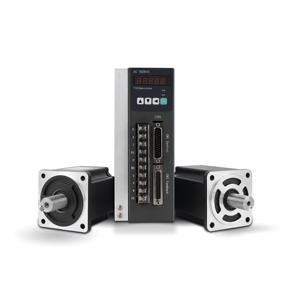
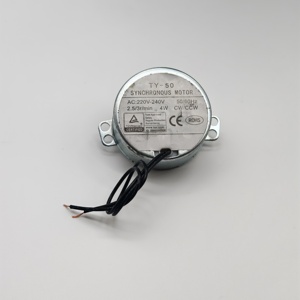
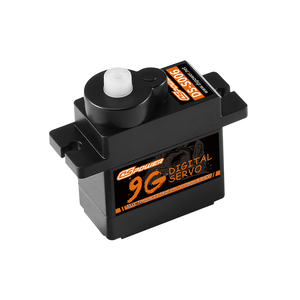
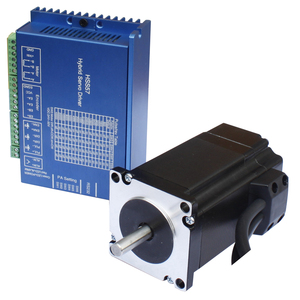
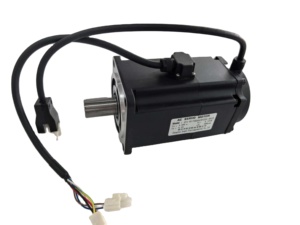
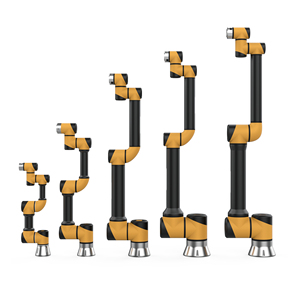
Explore top-tier integrated servo motors, synchronous drives, and micro-actuators engineered for smooth linear positioning, automated machinery, and heavy industrial automation lines.
Understanding linear rail kinematics, rolling element geometry, dynamic dynamic load ratings (C), and structural static load capacity (C0) for high-duty machine design.
In modern high-speed CNC machining center design, semiconductor wafer handling, medical diagnostic instrumentation, and robotic packaging systems, linear motion guides constitute the critical structural interface responsible for translation accuracy, vibrational damping, and positional repeatability. Choosing the right linear rail manufacturer and supplier is not simply a transactional procurement decision—it directly impacts the machine's overall Total Cost of Ownership (TCO), Mean Time Between Failures (MTBF), and operational efficiency under multi-axial load vectors.
With global supply chains transitioning toward Industry 4.0 Smart Factory standards, linear guide assemblies have evolved beyond passive mechanical slides. Modern linear rails integrate direct-drive feedback sensors, self-lubricating synthetic resin matrix seals, and low-friction caged ball geometries. This technical guide synthesizes empirical testing criteria, Search Quality Rater Guidelines (E-E-A-T) standards, and engineering metrics to analyze the top 10 linear rail suppliers globally, offering industrial buyers actionable data to streamline OEM procurement.
| Linear Guide Technology Type | Rolling Element Contact type | Rigidity & Load Index | Friction Coefficient (μ) | Primary Industrial Applications |
|---|---|---|---|---|
| Caged Ball Linear Rails | Point Contact (Circular Arc) | Medium to High | 0.002 – 0.003 | Automotive Assembly, Pick-and-Place Robots, Medical Diagnostics |
| Roller Linear Guide Rails | Line Contact (Cylindrical Roller) | Ultra-High (2x-3x Ball Rail) | 0.001 – 0.0025 | Heavy CNC Lathes, Metal Stamping Presses, Aerospace Gantry Girders |
| Miniature Linear Guides | Gothic Arch 2-Row / 4-Row | Light to Medium | 0.003 – 0.005 | Semiconductor Inspection, Micro-Robotics, 3D Printers |
| Direct-Drive Linear Actuators | Magnetic Levitation / Ball Rail Integrated | High Velocity (up to 10 m/s) | Near-Zero (Non-contact magnetic) | High-Speed Electronics Assembly, Laser Cutting Head Actuation |
Detailed evaluation based on load capacity, patent portfolio, manufacturing precision, delivery responsiveness, and mechatronic compatibility.
As the original inventor of the linear motion guide system, THK remains a dominant global brand. Their patented LM Guide series features synthetic resin cages that retain lubricant, eliminate ball-to-ball friction, and dramatically reduce acoustic emission during high-velocity translation.
HIWIN is a premier global provider known for versatile linear rail architectures, high interchangeability, and robust dynamic load ratings. Their linear guides are extensively utilized in CNC machinery, automated production lines, and custom linear actuator stages integrated with AC servo drives.
Bosch Rexroth sets the benchmark for European engineering excellence. Their linear rail systems offer interchangeability within precision classes and feature integrated measurement systems (IMS) that combine position sensing directly into the runner block for Industry 4.0 setups.
NSK excels in ultra-clean room manufacturing technologies and high-precision linear guides. Their proprietary K1™ lubrication units supply fresh oil continuously over extended operational periods, rendering their linear rail systems virtually maintenance-free in semiconductor environments.
Operating under the INA brand, Schaeffler manufactures high-rigidity linear monorail guidance systems equipped with integrated dampening elements. Their roller-guided systems deliver maximum structural stability for multi-axis portal cranes and heavy metalworking machinery.
IKO is globally recognized for pioneered miniature linear motion technology and needle roller bearings. Their C-Lube technology embeds solid lubricant matrix inside the track blocks, providing up to 20,000 km of smooth translation without re-greasing.
Thomson Linear offers a wide spectrum of profile rails and specialized corrosion-resistant linear bearings. Designed for harsh washdown conditions in food processing and packaging plants, Thomson guides incorporate multi-lip seals and stainless steel race options.
Chieftek Precision Co. (CPC) specializes in high-precision miniature linear guides engineered specifically for medical automation, laboratory diagnostic devices, and electronic component surface mount (SMT) machines.
Precision Motion Industries (PMI) manufactures full-system linear motion assemblies. Their linear rails utilize gothic arch grooves to ensure equal load capacity in radial, reverse-radial, and lateral directions.
Combining 25+ years of factory-floor experience with tier-1 component integration, Lubi delivers tailored linear motion assemblies paired directly with high-efficiency AC servo motors, type-tested control panels, and PLC automation modules for global OEMs.
Key innovations transforming industrial linear actuator procurement over the next decade.
Procurement teams are increasingly prioritizing linear blocks equipped with embedded micro-sensors. These sensors measure real-time vibration, temperature spikes, and lubricant breakdown. By communicating directly with plant SCADA systems or PLCs, machine operators receive predictive alerts before catastrophic bearing spalling occurs, cutting unscheduled downtime by up to 40%.
While ball rails and rotary servo drives driven by ball screws remain cost-effective for standard loads, ultra-high-speed automation lines are shifting toward direct-drive linear motors mounted on precision linear rails. Eliminating mechanical backlash allows systems to achieve accelerations exceeding 10G while maintaining micron-level repeatability.
Environmental regulations (e.g., REACH and RoHS) and cleanroom requirements in pharmaceutical and food manufacturing have accelerated the adoption of self-lubricating polymer seals and eco-friendly chrome plating. Modern linear guides are designed to operate for up to 5 years or 50,000 km without requiring external grease replenishment.
To insulate against global supply chain volatility, machine builders are abandoning proprietary track dimensions in favor of ISO/DIN standardized linear rail profiles. This enables multi-vendor sourcing where carriages and rails from accredited suppliers (such as HIWIN, Bosch Rexroth, and Lubi partners) can be substituted with minimal mechanical redesign.
A single accountable engineering partner for motion hardware, type-tested control panels, and industrial system integration.
Since 1997, our engineering teams have specified, assembled, and commissioned thousands of motion control axes, AC servo drives, and automation panels across 20+ industrial sectors worldwide.
We eliminate vendor friction. We supply the high-precision linear motion guides, pair them with perfectly matched AC servo motors/drivers, and integrate the system into custom-wired, type-tested control panels built to IEC standards.
Our technical support line provides application engineering, component sizing, remote commissioning, and on-site repair services to ensure your production line maintains optimal uptime.
Technical clarity on sizing, preloading, accuracy grades, and maintenance strategies.
Nominal service life (L10) is calculated using the formula L10 = (C / P)^3 × 50 km for ball rails, or L10 = (C / P)^(10/3) × 100 km for roller linear rails, where C represents the basic dynamic load rating (N) and P represents the equivalent dynamic load acting on the carriage block. Factors such as hardness (fH), temperature (fT), load contact density (fC), and shock/vibration factors (fW) are applied to calibrate real-world duty cycles.
Preload eliminates internal play by oversizing rolling elements slightly relative to track dimensions. Z0 (No Preload) is ideal for smooth translation and light pick-and-place tasks with minimal vibration. ZA (Light Preload, 0.02C) strikes an optimal balance between stiffness and low friction, suitable for precision automation. ZB (Medium/Heavy Preload, 0.05C to 0.08C) maximizes structural rigidity and vibrational damping, essential for heavy CNC machine tools, though it slightly increases motion resistance.
Roller linear rails utilize cylindrical rollers providing line contact rather than point contact. This structural geometry delivers 2x to 3x higher load capacity and up to 300% greater rigidity compared to ball guides of equivalent frame size. Buyers should select roller rails for heavy-duty metal cutting machinery, large portal gantries, and plastic injection moulding machinery where high elastic deformation resistance is required under high moment loads.
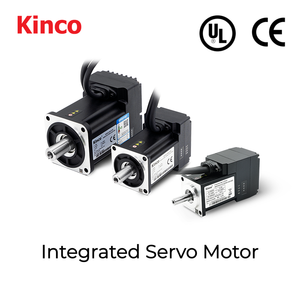
Pairing precision linear rails with closed-loop AC servo motors (such as Kinco ISMK series or high-resolution pulse/RS485 servo actuators) eliminates mechanical backlash and step loss. Servo drivers process real-time encoder feedback to continuously correct micro-positioning errors, ensuring system positioning repeatability within ±0.01 mm over extended operating hours.
When submitting an inquiry to our application engineering team, please provide: (1) Total stroke length and space constraints, (2) Payload mass and center of gravity offset, (3) Required linear velocity and acceleration profile, (4) Operational duty cycle and environmental conditions (e.g., cleanroom, washdown, high dust), and (5) Desired motor interface (AC Servo, Stepper, or Direct-Drive).