Engineered for ultra-precise kinematics, high-duty cycle picking, and industrial automation integration across medical, automotive, and logistics lines.
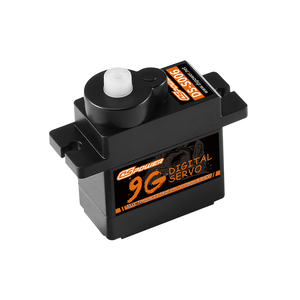
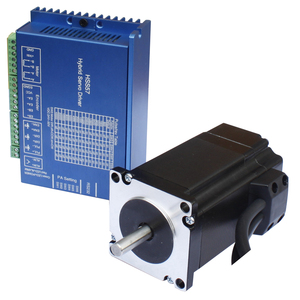
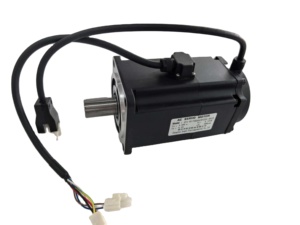
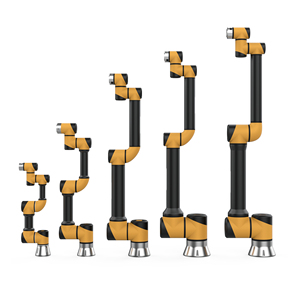
In the landscape of modern manufacturing, Selective Compliance Assembly Robot Arm (SCARA) systems represent the gold standard for high-speed, 4-axis motion control. Optimized for planar assembly, rapid pick-and-place, precision screwdriving, dispensing, and automated optical inspection (AOI), SCARA manipulators deliver unmatched rigidity in the horizontal XY plane while maintaining compliance along the vertical Z axis. As global supply chains demand higher throughput, tighter tolerances (under ±0.01mm), and seamless Industry 4.0 connectivity, evaluating top SCARA robot manufacturers and exporters has become a critical procurement decision for systems integrators, OEMs, and plant directors worldwide.
Key Procurement Takeaway: Sourcing high-performance SCARA systems requires evaluating total cost of ownership (TCO), harmonic drive durability, absolute encoder resolution, dynamic bus protocol compatibility (EtherCAT/Profinet), and local engineering field support.
This technical whitepaper provides an engineering-grade evaluation framework for identifying top-tier SCARA robotics OEMs and exporters. By analyzing kinematic structures, servo motor response times, payload-to-weight ratios, and controller bus communications, procurement teams can make data-backed choices that maximize line efficiency and lower operational downtime.
When shortlisting global manufacturers and exporters, enterprise buyers must look beyond basic payload numbers and inspect internal component architecture. A robust SCARA system hinges on four fundamental engineering pillars:
Zero-backlash strain wave gearing ensures sub-micron angular precision during rapid deceleration and high-inertia load orientation.
23-bit to 25-bit multi-turn absolute optical encoders eliminate homing routines upon power cycle and ensure dead-reckoning accuracy.
Real-time Fieldbus communication (EtherCAT sub-millisecond sync) allowing synchronization with conveyor tracking and vision systems.
Understanding kinematics and application fit is vital for optimizing machine footprints and power consumption across specialized manufacturing tasks.
| Kinematic Specification | Standard SCARA (4-Axis) | High-Speed Inverted SCARA | 6-Axis Articulated Robot |
|---|---|---|---|
| Primary Workspace Motion | Planar XY + Linear Z + Theta Rz | Ceiling Mount 360° Planar Envelope | Full 3D Spatial Spherical Range |
| Repeatability Tolerances | ±0.008 mm to ±0.020 mm | ±0.005 mm to ±0.015 mm | ±0.020 mm to ±0.050 mm |
| Standard Cycle Time (Adeppt) | 0.28 s – 0.45 s | 0.22 s – 0.35 s | 0.65 s – 1.10 s |
| Payload Range | 1 kg – 20 kg | 1 kg – 10 kg | 3 kg – 1000+ kg |
| Optimal Applications | PCB Assembly, Screwdriving, Pick & Place | Wafer Handling, High-Density Solar Cells | Heavy Welding, Palletizing, Paint Spraying |
As industry standards shift toward flexible manufacturing and low-batch, high-mix production lines, several key technological developments are reshaping global procurement requirements.
Future-proof factories are phasing out traditional belt-driven Z-axis mechanisms in favor of direct-drive linear motors and hollow-shaft rotary actuators. This eliminates belt wear, reduces mechanical vibration, and allows pneumatic and electrical cabling to pass cleanly through the center of the arm, reducing wire fatigue failure rates by over 70%.
Procurement managers are increasingly demanding SCARA controllers equipped with embedded NPU (Neural Processing Unit) chips. Rather than routing visual data to an external IPC, edge-vision enabled controllers execute deep-learning defect identification, part localization, and dynamic pick-on-fly operations within single-digit millisecond latency windows.
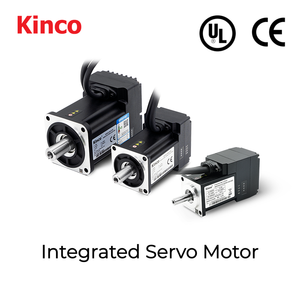
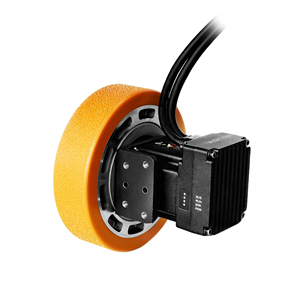
Cabinet-less automation design is accelerating. Machine builders favor integrated servo motors (such as the Kinco ISMK and IWMC series) that merge driver, motor, and multi-turn encoder into a single compact housing. This eliminates external drive cabinets, slashes cabling expenses by 40%, and vastly simplifies field maintenance.
Backed by over 25 years of end-to-end industrial automation mastery, we deliver complete turn-key solutions spanning motion control hardware, custom panel integration, and global field support.
State-of-the-art manufacturing plants near Ahmedabad, Gujarat produce IEC-standard Type-Tested Assemblies (TTA), MCC, PCC, and custom drive panels with complete routine test documentation.
Full support for overseas machine builders and OEMs: technical sizing, schema design, Factory Acceptance Testing (FAT), remote commissioning assistance, and ready-to-ship spare parts.
From micro metal gear servos to 6-axis collaborative robots, medium voltage drives (3.3kV-11kV), and integrated AGV/AMR wheel drives—providing single-source accountability.
Detailed answers to critical technical and logistical queries encountered by enterprise buyers when sourcing SCARA systems and servo motion controllers.
Choose a SCARA robot if your process operates within a flat horizontal plane (XY axes) and requires ultra-fast cycle times (under 0.4 seconds) and high repeatability (±0.01mm) at a lower investment cost. SCARA arms feature high structural rigidity along the Z-axis, making them ideal for pressing, insertion, and high-speed sorting. Select a 6-axis robot only when your payload must be rotated in 3D space, pitched at complex angles, or when working in non-planar environments.
For Industry 4.0 compliance, the controller should support deterministic real-time Fieldbus networks such as EtherCAT, Profinet IRT, or Ethernet/IP. These protocols allow sub-millisecond synchronization between the robot controller, vision sensors, linear indexing tables, and plant SCADA systems. Legacy protocols like Modbus-RTU or RS-485 are acceptable for auxiliary parameter configuration but are insufficient for dynamic trajectory interpolation.
Encoder resolution directly dictates the smallest rotational increment the motor drive can detect and correct. Modern industrial SCARA arms utilize 23-bit to 25-bit absolute encoders, dividing a single shaft rotation into over 8 million to 33 million pulses. High-resolution absolute encoders prevent micro-oscillations at the end-effector, eliminate the need for mechanical limit switches, and retain spatial coordinates during sudden loss of power.
Yes. Integrated servo products (such as the Kinco ISMK and IWMC integrated drives) feature IP54 to IP65 sealed enclosures, robust thermal dissipation fins, and vibration-resistant SMT electronics. They excel in AGV/AMR platforms, conveyor diverters, and localized packaging heads by removing cabinet wiring clutter while maintaining reliable continuous operation.
Export customers receive complete engineering documentation packages including full CAD electrical schematics, IEC/CE compliance declarations, Factory Acceptance Test (FAT) inspection reports, routine test certificates for panels, and step-by-step remote video commissioning guidance backed by local service engineers.
Consult with our senior application engineers to receive custom kinematic sizing, CAD panel designs, or competitive quotation packs tailored to your factory layout.
Contact Us