
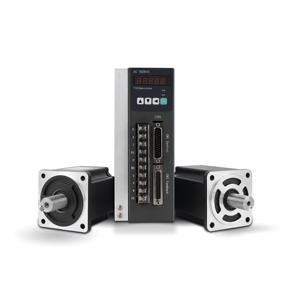
Engineered for high positioning accuracy, zero-backlash direct-drive integration, and industrial-duty thermal efficiency across robotics, CNC machinery, and medical systems.
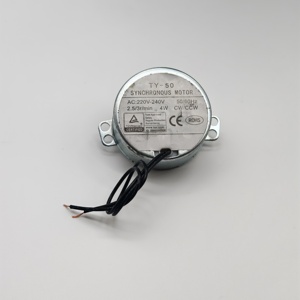
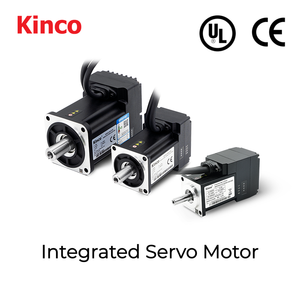
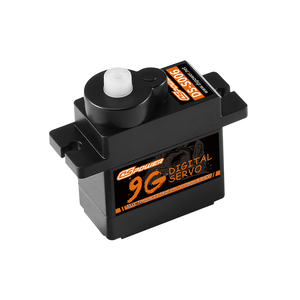
Transitioning from basic motor supply to complete electromechanical system integration requires proven technical rigor, international standard compliance, and end-to-end component traceability.

Motor topologies are mathematically matched to your actual operating cycle, continuous vs. peak torque profiles, and thermal dissipate limits to ensure maximum mean time between failures (MTBF).

Direct support for EtherCAT, PROFINET, Modbus-RTU over RS485, and CANopen protocols, allowing seamless integration with PLCs, IPCs, and SCADA monitoring networks.

High-slot fill rates, premium neodymium permanent magnets (NdFeB), and high-grade silicon steel laminations minimize cogging torque, iron losses, and harmonic heating.
Torque motors represent a specialized subset of direct-drive synchronous permanent magnet motors (PMM) optimized for high torque output at zero or low rotational speeds. Unlike traditional motor-gearbox combinations, direct-drive torque motors eliminate intermediate mechanical transmission elements such as planetary gearboxes, timing belts, and ball screws. This architecture completely removes mechanical backlash, backlash hysteresis, and torsional compliance, resulting in unmatched dynamic bandwidth and sub-arcsecond positioning accuracy.
Leading Chinese torque motor manufacturers utilize advanced Frameless (Rotor/Stator kit) and Housed configurations. Stator assemblies incorporate high-density copper windings utilizing concentrated winding technologies that yield slot fill factors exceeding 65%. Coupled with segmented stator core geometries and ultra-thin electrical steel laminations (0.2mm to 0.35mm), these designs dramatically suppress eddy current losses and harmonic distortion during high-frequency pulse-width modulation (PWM) inverter driving.
When evaluating China torque motor factories, procurement teams must look beyond nominal power ratings. Direct-drive selection requires rigorous evaluation of continuous torque ($T_c$), peak torque ($T_p$), motor constant ($K_m$), thermal resistance ($R_{th}$), and cogging torque percentage. Below is a comparative specification matrix reflecting current Tier-1 Chinese factory manufacturing capabilities:
| Motor Topology / Type | Frame Size Range (mm) | Continuous Torque (Nm) | Peak Torque (Nm) | Encoder Feedback Compatibility | Primary Application Target |
|---|---|---|---|---|---|
| Frameless Torque Motor Kits | Ø 50 - Ø 800 | 1.2 - 2,400 Nm | 3.5 - 6,000 Nm | BiSS-C, EnDat 2.2, Absolute Optical | 5-Axis CNC Rotary Tables, Gimbals |
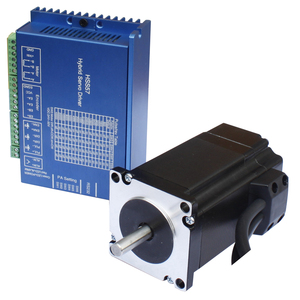
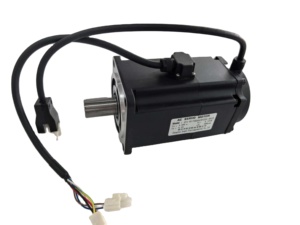
| Housed High-Torque AC Servo | 60 - 180 Frame | 1.27 - 27.0 Nm | 3.8 - 81.0 Nm | 2500 PPR Incremental / 23-bit Magnetic | Factory Automation, Packaging Lines |
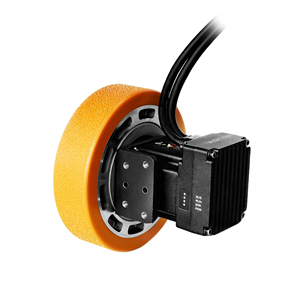
| Integrated Servo Wheel Drives | 130 - 200 Wheel Dia | 5.0 - 45.0 Nm | 15.0 - 135.0 Nm | Dual Absolute Magnetic Encoders | AMR / AGV Automated Logistics |
| Micro Precision Servo Motors | Micro (9g - 40mm) | 0.01 - 0.8 Nm | 0.03 - 2.4 Nm | Potentiometer / Digital Hall Sensors | Medical Actuators, Micro Robotics |
| Hybrid Closed-Loop Stepper/Servo | NEMA 17 - NEMA 34 | 0.4 - 12.0 Nm | 0.6 - 15.0 Nm | 1000 - 4096 Line Quadrature | Textile, Semiconductor Handling |
The global motion control industry is undergoing a structural transition toward higher integration, energy efficiency, and decentralized control architectures. Overseas OEMs sourcing from China must align their technical procurement with the following emerging industry vectors:
A. Decentralized & Integrated Smart Servos: Traditional centralized control systems requiring long, noise-sensitive encoder and power cables from a central cabinet are being replaced by integrated motor-driver solutions (such as the Kinco ISMK and IWMC series). By mounting the drive electronics directly onto the motor housing, OEMs reduce cabinet footprint by up to 70%, eliminate EMI cable noise, and cut assembly labor costs significantly.
B. Transition from Rare-Earth Dependency to Enhanced Magnetic Circuit Design: Due to volatility in Neodymium (NdFeB) material markets, top Chinese research factories are developing Halbach array permanent magnet configurations. Halbach magnetization focuses magnetic flux strictly on the working air gap side while suppressing stray flux on the back-iron side, achieving up to 15% higher torque density without increasing magnetic mass.
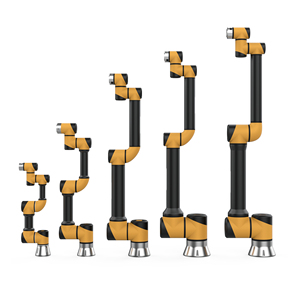
C. Collaborative Robotics & Joint Module Standardisation: The rapid growth of cobot applications requires ultra-compact frameless torque motors combined with dual absolute encoders, high-ratio harmonic drive reducers, and safety torque off (STO) drive circuits inside a single modular joint actuator. Sourcing joint modules directly from integrated manufacturers dramatically reduces robotic development cycles from years to months.
Achieving operational reliability in demanding production environments requires strict adherence to international quality management systems. Modern Chinese motor factories operate under ISO 9001:2015 quality management and ISO 14001 environmental frameworks. Precision motor components undergo rigorous in-line quality controls:
Direct technical answers addressing engineering evaluation, customization, export logistics, and quality assurance.