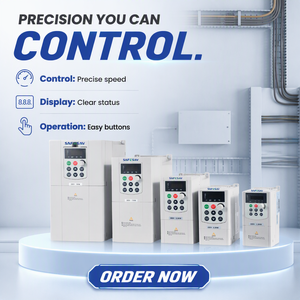
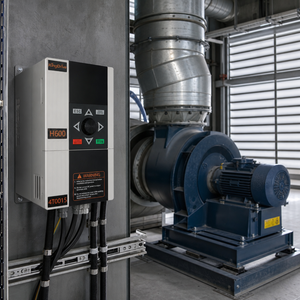
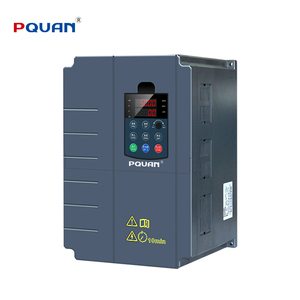
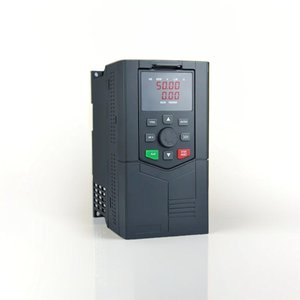
From component selection to full factory panel integration, our engineering house guarantees international compliance, rigorous QA, and global lifecycle support.
In-House Manufacturing & TTA Standards
We produce Type-Tested Assemblies (TTA), industrial power cabinets, and AC drive panels in ISO-certified facilities under strict IEC standards, ensuring plug-and-play compliance for global installation.
Custom Voltage & Phase Conversion Engineering
Specialized topologies converting single-phase 110V/220V inputs into high-torque 3-phase 380V outputs, allowing complex industrial machines to operate on non-standard localized grids seamless.
Advanced Vector Control & Sensorless Algorithms
Equipped with dual-core DSP chips supporting Field Oriented Control (FOC), Sensorless Vector Control (SVC), and V/f control for maximum low-frequency torque output (150% torque at 0.5Hz).
Optimized Energy Savings & Decarbonization
Intelligent energy-saving logic automatically reduces motor excitation current under partial-load conditions, lowering facility energy consumption by 20% to 50% in pump and fan systems.
Traceable Quality & Full Documentation
Every exported unit undergoes rigorous full-load burn-in testing, thermal imaging check, and EMC screening, accompanied by localized schematics, manual packs, and test reports.
Global Application Engineering Support
Our dedicated technical team assists overseas machine builders and plant engineers with drive sizing, harmonic filter calculations, multi-drive bus setups, and remote FAT commissioning.
Industry Technical Whitepaper
Comprehensive Engineering Guide to Frequency Converters & Global Procurement Strategy
1. Architectural Overview of Modern Frequency Converters (VFDs)
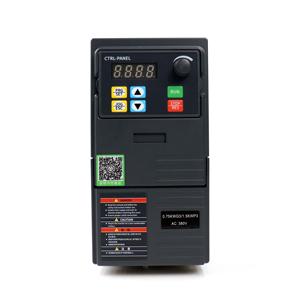
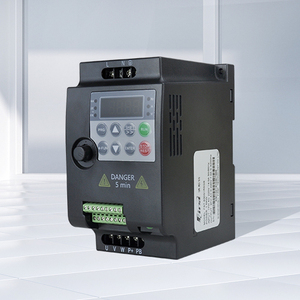
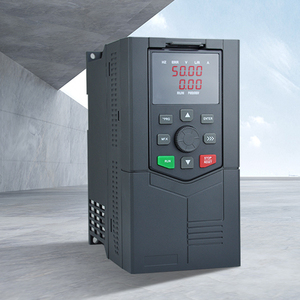
A Frequency Converter (commonly referred to as a Variable Frequency Drive, VFD, or AC Inverter) serves as the core electronic speed control element in modern industrial automation networks. By converting incoming fixed-frequency, fixed-voltage AC electric power into variable-frequency, variable-voltage AC output, a frequency converter precise controls the rotational speed, torque, acceleration, and deceleration profiles of three-phase AC induction motors, permanent magnet synchronous motors (PMSM), and synchronous reluctance motors (SynRM).
As a leading frequency converter exporter, our product architectures are built upon three core power electronic stages designed to maintain peak electrical efficiency across harsh grid environments:
AC-to-DC Rectification Stage: Utilizes heavy-duty diode bridge rectifiers or active front-end (AFE) IGBT topologies to transform incoming 50Hz/60Hz AC voltage into smoothed direct current. Integrated surge suppressors and MOV networks protect internal components against grid transients and lightning strikes.
DC Bus Filtering & Storage Link: Employs high-capacitance, low-ESR industrial electrolytic or film capacitors paired with integrated DC bus chokes. This link buffers voltage fluctuations, absorbs regenerative energy during motor deceleration, and mitigates input line harmonics.
DC-to-AC Inverter Stage (PWM Modulation): Leverages state-of-the-art insulated-gate bipolar transistors (IGBTs) controlled by 32-bit digital signal processors (DSPs). Utilizing high-speed Pulse Width Modulation (PWM) algorithms, the drive reconstructs precise sine-wave current output ranging from 0.00 Hz to over 600.00 Hz.
Information Gain Insight: Modern industrial motor systems account for over 65% of all electrical energy consumed in heavy manufacturing. Deploying high-efficiency vector-controlled VFDs reduces facility power demand while extending motor bearing lifespan by eliminating mechanical start-up shocks.
2. Control Methodologies: V/f Control vs. Sensorless Vector vs. Closed-Loop Vector
Selecting the optimal control algorithm is paramount when procuring frequency converters for export projects. Industrial applications vary widely in their torque dynamics, velocity precision, and dynamic responsiveness.
Control Mode
Speed Accuracy
Low-Freq Torque
Dynamic Response
Typical Applications
Scalar Control (V/f)
±0.5% of max speed
100% at 3.0 Hz
Slow (>100 ms)
Centrifugal Pumps, HVAC Fans, Simple Conveyors
Sensorless Vector (SVC)
±0.2% of max speed
150% at 0.5 Hz
Medium (<20 ms)
Extruders, Mixers, Compressors, Cutting Machines
Closed-Loop Vector (CLV)
±0.02% with Encoder
200% at 0.0 Hz
Fast (<5 ms)
Hoists, Cranes, CNC Spindles, Winding Machinery
Torque Control (DTC)
Direct Torque Estimation
Full Torque at Zero Speed
Ultra-Fast (<2 ms)
Heavy Metal Rolling Mills, Marine Winches
Scalar (V/f) Control Topology
V/f control maintains a linear ratio between voltage and frequency. It is the most economical solution when multiple motors are connected in parallel to a single drive (e.g., multi-fan cooling towers or continuous roller tables). However, V/f mode cannot compensate for slip variations under heavy transient loads.
Sensorless Vector Control (SVC / FOC)
SVC decouples the motor stator current mathematically into excitation current (flux producing) and active current (torque producing). By continually calculating motor equivalent circuit models in real time, our 630 Series and 650L Series frequency converters deliver high breakaway torque at near-zero speeds without requiring expensive physical encoder feedback packages.
3. Special Topology: Phase & Voltage Conversion Flexibility
Global equipment exporters face a significant engineering challenge: regional power grids differ drastically across continents. North America operates primarily on 110V-230V single-phase or 480V 3-phase at 60Hz, whereas Europe and Asia operate on 220V-240V single-phase or 380V-415V 3-phase at 50Hz. Rural installations often lack access to 3-phase utility distribution lines altogether.
To solve this global friction point, our custom export lineups feature specialized power conversion drives:
Single-Phase 110V/220V Input to 3-Phase 220V Output: Enables small machine builders (lathes, packaging machines, food processing equipment) to run standardized 3-phase motors from standard domestic wall outlets.
Single-Phase 220V Input to 3-Phase 380V Output (Internal Step-Up Boost Topology): Integrates an active DC bus boost circuit that elevates incoming 220V single-phase AC to over 540V DC, allowing standard 380V 3-phase industrial motors to deliver full rated horsepower without external transformers.
4. Future B2B Procurement Trends in Frequency Converters (2025–2030)
Industrial procurement executives and machine builders must align their sourcing strategies with evolving technological trajectories. Below are the five dominant trends reshaping the global frequency converter export market:
Transitioning from traditional Silicon IGBTs to Wide Bandgap (WBG) SiC MOSFETs elevates switching frequencies beyond 20kHz while drastically reducing thermal losses. This enables 40% smaller drive footprints and noise-free motor operation.
Future frequency converters are no longer isolated motor controllers; they serve as IIoT edge gateways. Embedded sensors monitor motor vibration, current harmonics, and bearing temperature, transmitting telemetry via Modbus-TCP, PROFINET, or MQTT directly to cloud dashboards.
03
Ultra-High Efficiency Pairing with IE4 / IE5 Motors
Global energy regulations (such as EU Ecodesign Directive IEC 60034-30-2) demand ultra-high system efficiency. Advanced VFD software algorithms now feature auto-tuning routines specifically optimized for Permanent Magnet Synchronous Motors (PMSM) and Synchronous Reluctance Motors (SynRM).
04
Common DC Bus & Regenerative Microgrids
In multi-axis manufacturing lines (such as paper mills, textile machines, and unwinding stations), multi-drive configurations sharing a centralized DC bus allow braking energy generated by decel axes to power acceleration axes directly, slashing net facility utility bills by up to 35%.
05
Functional Safety Integration (STO / SIL3 / PDe)
Modern machine safety compliance requires rapid emergency shutdown. Export-grade VFDs now incorporate integrated Safe Torque Off (STO) hardware inputs compliant with SIL3 / PL e, eliminating external mechanical contactors and simplifying control cabinet wiring.
When selecting a frequency converter for export equipment, sizing strictly by motor nameplate kilowatt (kW) or horsepower (HP) rating can lead to premature drive failure. Experienced application engineers evaluate full-load amperage (FLA), overload requirements, and environmental derating factors.
Key Sizing & Operating Criteria
Continuous & Peak Amperage Sizing: Always match the VFD’s continuous rated output current ($I_{out}$) against the motor’s max continuous operating current. For heavy-duty machinery (crusher, punch press), select drives with 150% overload capacity for 60 seconds.
Ambient Temperature Derating: Standard drives are rated for continuous operation at 40°C (104°F). Operating in high-ambient environments (e.g., Middle East industrial zones at 50°C) requires derating drive output current by 1.5% to 2.5% for every 1°C above 40°C.
Altitude Derating: At altitudes exceeding 1,000 meters (3,300 feet) above sea level, thinner air reduces heatsink cooling effectiveness and dielectric insulation strength. Derate drive current capacity by 1% per 100 meters of elevation gain above 1,000m.
Output Cable Length & dV/dt Filters: Fast IGBT switching spikes ($dV/dt$) over long motor cables (>50 meters) cause voltage ringing that can break down motor winding insulation. Install output reactors or sine-wave filters to protect motor insulation integrity.
6. Global Compliance, EMI/EMC Mitigation, and Cabinet Engineering
Exporting industrial automation equipment to North America, the European Union, or Asia requires strict adherence to electromagnetic compatibility standards. Unfiltered VFD switching generates both conducted and radiated radio-frequency interference (RFI) that can disrupt nearby PLCs, sensors, and communication lines.
Our complete drive panel solutions incorporate:
Built-In Class C2 / C3 EMC Filters: Conforming to IEC/EN 61800-3 standards to attenuate conducted emissions on input power cables.
Conformal Coated Circuit Boards: All internal PCBs feature 3C3-grade conformal coating against corrosive gases ($H_2S, SO_2$), high humidity, and conductive industrial dust.
Expert answers to the most common questions raised by international buyers, OEMs, and plant maintenance directors.
What sets a trusted frequency converter exporter apart from standard trading distributors?
A specialized engineering exporter provides end-to-end technical accountability. Beyond simple hardware supply, we deliver application sizing verification, localized voltage customizing, comprehensive factory acceptance testing (FAT), complete IEC documentation packs, and international technical support for system integration.
Can a 220V single-phase input VFD really run a 380V 3-phase industrial motor?
Yes. Our specialized step-up frequency converter series utilizes an internal voltage boost circuit within the DC bus stage. It converts incoming single-phase 220V AC into high-voltage DC, which is then inverted into a balanced 3-phase 380V AC output, allowing standard heavy machinery to operate without installing high-cost 3-phase utility service lines.
What power range of frequency converters do you export?
We manufacture and export low-voltage AC drives ranging from compact 0.4kW (0.5 HP) micro-drives up to 710kW (950 HP) heavy-duty industrial cabinet drives. We also engineer Medium Voltage Drives (MVD) ranging from 3.3 kV to 11 kV for heavy industry applications.
How do you handle warranty, spare parts, and global after-sales support?
All exported VFD products carry a standard 18 to 24-month warranty. We supply modular spare parts (main control boards, power IGBT modules, cooling fans) with fast global dispatch, backed by remote video engineering diagnostics and local service partner hubs worldwide.
Do your frequency converters support international communication protocols?
Yes. RS485 Modbus-RTU is integrated as standard on all models. Optional communication expansion cards support Ethernet/IP, PROFINET, EtherCAT, CANopen, and DeviceNet, enabling effortless integration into Siemens, Rockwell, Omron, Schneider, or Delta automation systems.
What is the lead time for volume OEM export orders?
Standard models (0.75kW to 22kW) are maintained in high-capacity buffer stock and ship within 3 to 5 business days. Customized OEM configurations, special voltage designs, or high-power drives (above 110kW) typically ship within 2 to 3 weeks.
Partner With a Premier Frequency Converter Exporter
Ready to optimize your production efficiency, reduce energy costs, or engineer custom OEM drive configurations? Contact our senior application engineering team today for technical consultation, product specifications, and direct export quotes.