Explore high-torque, high-resolution integrated feedback motion solutions engineered for harsh industrial environments, robotics, medical devices, and automated machinery.
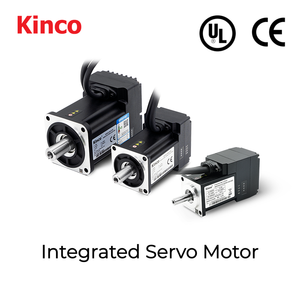
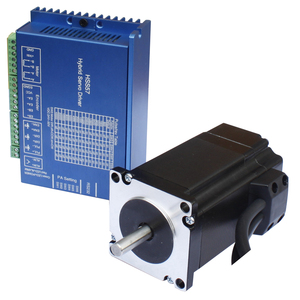
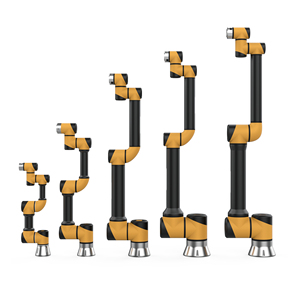
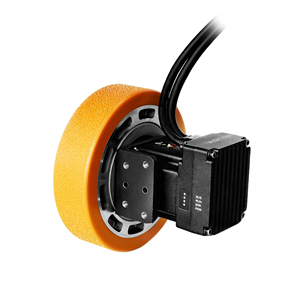
In modern high-speed industrial automation, robotics, multi-axis CNC machinery, and medical technology, precise position feedback is non-negotiable. Rotary encoders serve as the sensory bedrock of closed-loop motion control systems, translating angular shaft displacement into high-resolution digital or analog signal bursts. Selecting the right rotary encoder manufacturer requires an exhaustive audit of signal integrity, optical versus magnetic sensing topologies, environmental IP ratings, thermal drift tolerances, and communication protocol compatibility (BiSS-C, EnDat 2.2, SSI, CANopen, and RS485).
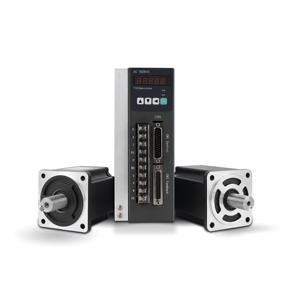
As industrial automation shifts toward smart manufacturing and Industry 4.0 architectures, engineers can no longer view rotary encoders as isolated components. Encoders must function seamlessly alongside AC servo motors, medium-voltage variable frequency drives (VFDs), programmable logic controllers (PLCs), and central SCADA dashboards. Sourcing integrated feedback solutions from experienced engineering partners guarantees system-level accountability, eliminating component mismatch, jitter, and unexpected line downtime.
Understanding the fundamental physics and operational tradeoffs between optical, magnetic, and inductive sensing modalities.
Utilize a high-precision glass or code disc passed between an LED light source and a photodetector array. Delivers ultra-high resolution (up to 23-bit absolute / 8,388,608 counts per turn) and extreme sub-arcsecond accuracy, making optical encoders ideal for semiconductor fabrication, medical robotics, and precision CNC spindles.
Depend on a magnetized target disc paired with Hall effect sensor ICs or Magnetoresistive (AMR/TMR) arrays. Highly impervious to dust, moisture, grease, and extreme mechanical shock. Essential for heavy industrial AGVs/AMRs, construction equipment, pump control panels, and outdoor solar tracking arrays.
Operate via electromagnetic induction between printed circuit coils. Combines the ruggedness of a resolver with the digital output convenience of an absolute encoder. Immune to stray magnetic fields generated by large brake AC servo motors and high-voltage power lines.
When specifying motion control feedback for automated machinery, choosing between Incremental (A, B, Z quadrature signals) and Absolute (Single-turn / Multi-turn digital protocol) encoders dictates system homing behavior and power-loss recovery capabilities.
Modern industrial rotary encoder manufacturers integrate open and proprietary digital protocols to ensure high-speed, noise-immune data transfer across automated factory floors. The table below outlines core technical parameters standard across premium motion feedback devices.
| Protocol / Interface | Max Transmission Speed | Data Architecture | Noise Immunity Level | Primary Industrial Applications |
|---|---|---|---|---|
| BiSS-C (Bidirectional Synchronous) | Up to 10 Mbit/s | Serial, Fully Open Source | Very High (Differential RS422) | Robotics, Servo Drives, CNC Motors |
| EnDat 2.2 (Heidenhain) | Up to 16 Mbit/s | Serial, Bidirectional Data | Extreme (Automated Error Check) | High-End Machine Tools, Direct Drives |
| SSI (Synchronous Serial Interface) | 100 kHz - 2 MHz | Unidirectional Point-to-Point | High (Shielded Twisted Pair) | Factory Automation, Process Control |
| Modbus RS485 / CANopen | 1 Mbps (CAN) / 115.2k (RS485) | Fieldbus Bus Architecture | High (Industrial Noise Filtering) | AGV Wheel Drives, Solar Trackers, Pumps |
| Pulse / Direction (Quadrature) | Up to 1 MHz Pulse Rate | Analog/Square Wave Signals | Moderate (Requires Differential Line) | Legacy Steppers, Basic AC Servo Systems |
Procurement directors and chief technology officers evaluating rotary encoder manufacturers face a rapidly evolving technical landscape. Sourcing strategies are moving away from piecemeal component buying toward single-source integrated motion ecosystems. Key trends driving the market include:
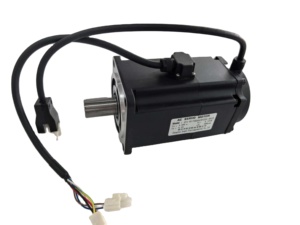
Standalone encoders are increasingly replaced by integrated servo wheel drives (such as the Kinco IWMC series) and all-in-one DC servo motors. Integrating the encoder, drive power electronics, and planetary gearbox directly onto the motor housing reduces panel space by 40% and eliminates long, noise-sensitive external feedback cabling.
Next-generation optical and magnetic encoders feature embedded microcontrollers capable of real-time diagnostics. Encoders continuously monitor ambient operating temperatures, vibration spikes, LED light degradation, and disc contamination—transmitting condition-based maintenance alerts over SCADA networks before catastrophic breakdown occurs.
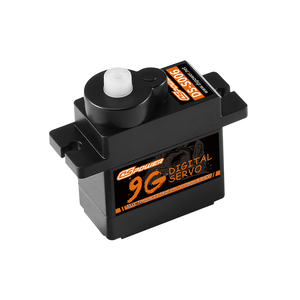
As collaborative robots (cobots), medical devices, and sub-micro grippers grow smaller, demand has surged for ultra-compact micro metal gear servos (such as the MG90S class) and hollow-shaft kit encoders. These systems deliver high-resolution position feedback within sub-30mm frame sizes without compromising mechanical stiffness.
Selecting a rotary encoder manufacturer or automation provider requires verified manufacturing credentials, stringent compliance certifications, and deep field experience. Backed by over 25 years of industrial engineering excellence since founding in 1997, Lubi Electronics delivers complete, end-to-end industrial automation hardware, engineered control panels, and clean energy solutions.
Rather than functioning strictly as a component supplier, our engineering team evaluates duty cycles, thermal loads, mechanical backlash, and network topologies to recommend optimal hardware solutions. Operating from state-of-the-art manufacturing infrastructure near Ahmedabad, Gujarat, India, our production facilities yield IEC type-tested assemblies (TTA), low-voltage and medium-voltage control panels, switch-mode power supplies (SMPS), and high-efficiency TopCon solar modules.
We combine in-house manufacturing with strategic technical distribution of world-class global motion and sensing brands.












Direct answers from application engineers regarding custom specifications, global support, and quality assurance protocols.
Our plants near Ahmedabad, Gujarat produce IEC type-tested control panels (MCC, PCC, HT/LT assemblies), custom switch-mode power supplies (SMPS), and TopCon solar modules. We design and assemble complete enclosures integrating AC servo drives, PLC controllers, and high-resolution encoder interfaces under ISO-certified quality protocols.
Export clients receive dedicated application engineering support, CAD panel drawings compliant with IEC/EN standards, detailed FAT (Factory Acceptance Test) video/data documentation, and remote or on-site commissioning assistance. We maintain spare part inventories to guarantee rapid global turnaround times.
Select optical encoders when your application demands sub-arcsecond accuracy, supreme line counts, and ultra-low noise (e.g., semiconductor inspection, CNC optical grinding, high-speed robotics). Choose magnetic encoders when operating in dusty, high-vibration, humid, or oil-splattered environments like mobile AGVs, steel mills, or outdoor pump stations.
Our technical portfolio spans AC Servo Motors & Drives, Medium Voltage Drives (3.3 kV to 11 kV), Stepper & Linear Motion units, PLCs, HMIs, Motion Controllers, SCADA platforms, Machine Vision Systems, 6-Axis Industrial Robots, SCARA Robots, and Integrated AGV Drive Wheels.
Yes. Modern absolute multi-turn encoders utilize energy-harvesting Wiegand sensor technology. The mechanical revolution count is powered inductively by the rotation of the magnetic shaft itself, recording turns permanently without requiring auxiliary lithium battery packs.
We maintain a centralized technical inquiry desk backed by over 30 sales and service locations. Application engineers evaluate your shaft dimensions, electrical interfaces, and duty cycles to provide technical proposals within 24 business hours.
Speak directly with our senior application engineers. Whether you require custom encoder pinouts, complete servo driver matching, or type-tested control panel fabrication, we deliver fully audited solutions tailored to your operational budget.