Explore our Tier-1 certified N-Type TOPCon and HJT bifacial photovoltaic panels engineered for high albedo winter reflection and sub-zero operational stability.
An engineering analysis of N-Type TOPCon and Heterojunction (HJT) module architectures under extreme thermal fluctuations, high wind loads, and ground albedo amplification.
Kazakhstan represents one of the most promising yet demanding solar energy frontiers in Eurasia. Regions such as Karaganda, Turkestan, Zhambyl, and Kyzylorda enjoy exceptional solar irradiation levels, ranging between 1,300 kWh/m² and 1,800 kWh/m² annually. However, the country’s continental climate introduces unprecedented engineering challenges: ambient temperature swings ranging from +42°C in summer to below -40°C in winter, accompanied by heavy snow accumulation and gale-force steppe winds.
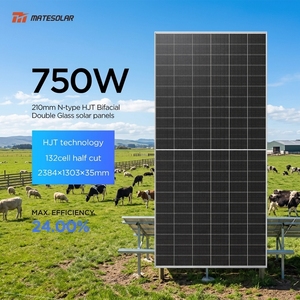
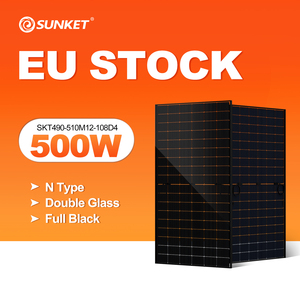
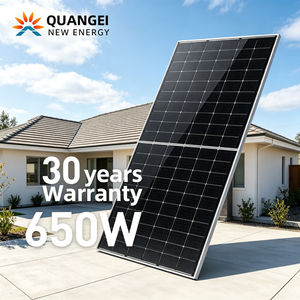
Standard P-Type PERC modules suffer severe efficiency degradation under these conditions due to high temperature coefficients and structural vulnerability to micro-cracking caused by freeze-thaw cycles. As an experienced bifacial panel factory and exporter to Kazakhstan, our engineering team manufactures advanced N-Type TOPCon (Tunnel Oxide Passivated Contact) and HJT (Heterojunction) double-glass modules specifically ruggedized for Central Asian environmental dynamics.
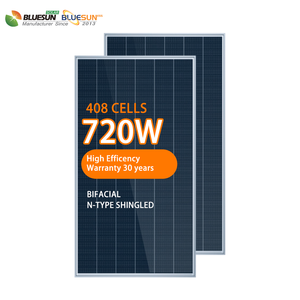
One of Kazakhstan’s primary natural advantages for photovoltaic generation is its prolonged winter snow cover. High-latitude steppe snow provides a surface albedo reflectivity of 70% to 85%. While traditional single-sided modules lose significant operational capability when partially covered by snow, dual-glass bifacial modules turn snow-covered ground into an active energy booster.
The rear side of our dual-glass bifacial panels absorbs diffuse reflected light from the surrounding snow deck, generating up to an additional 30% yield boost. Furthermore, the rear-side thermal absorption accelerates snow melt on the front glass surface, clearing the module faster than conventional single-glass panels and significantly raising winter capacity factors for utility-scale solar plants.
Comparative field performance matrix under Kazakh environmental and operational parameters.
| Engineering Parameter | Legacy P-Type PERC | N-Type TOPCon 2.0 (Our Factory) | N-Type HJT Bifacial (Our Factory) |
|---|---|---|---|
| Cell Efficiency Range | 22.8% - 23.2% | 25.5% - 26.2% | 26.0% - 26.8% |
| Bifaciality Factor | 65% ± 5% | 80% ± 5% | 88% ± 5% |
| Temperature Coefficient (Pmax) | -0.35% / °C | -0.30% / °C | -0.26% / °C |
| First-Year Power Degradation | 2.0% | 1.0% | 0.5% |
| Annual Linear Degradation | 0.55% | 0.40% | 0.25% |
| Encapsulation Standard | EVA / EVA | POE / EPE (PID Free) | POE / POE (Dual Glass) |
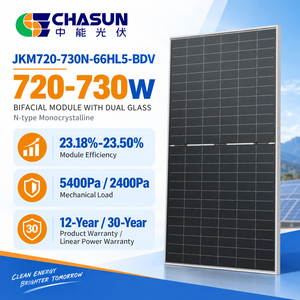
| Mechanical Load Rating | 5400Pa Front / 2400Pa Rear | 5400Pa Front / 2400Pa Rear | 6000Pa Front / 3000Pa Rear |
| 30-Year Yield Guarantee | 84.8% Remaining | 87.4% Remaining | 92.2% Remaining |
From animal husbandry to extreme mining camps, discover how our exported bifacial panels drive localized operational profitability.
Kazakhstan’s vast pastoral lands in Almaty and Akmola regions require dual land-use concepts. Elevated bifacial solar structures (2.5m+ clearance) create shelter and shade for livestock grazing while producing utility electricity. The semi-reflective terrain under pasture conditions increases rear-side output by 12% to 18%.
Off-grid mining complexes in Zhezkazgan, Karaganda, and Mangystau rely heavily on expensive diesel generators. Integrating our high-wattage 700W+ HJT bifacial modules with battery energy storage systems (BESS) drops localized LCOE dramatically. Double-glass construction resists corrosive dust and extreme thermal cycles.
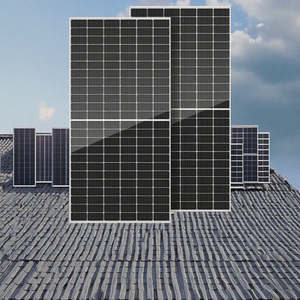
With Kazakhstan serving as the principal overland bridge between Asia and Europe (Khorgos Gateway & Western Europe-Western China Corridor), massive logistics facilities in Almaty and Shymkent offer expansive flat roofs. White TPO/PVC membrane roofing combined with bifacial panels delivers maximum energy yield per square meter.
Understanding policy dynamics, auction mechanisms, and supply chain logistics for smooth project execution.
Under the national strategy Kazakhstan 2050 and the target of achieving Carbon Neutrality by 2060, the Ministry of Energy of Kazakhstan has set binding targets to reach a 15% share of renewable energy in total electricity generation by 2030. Annual international auctions managed by KOREM (Kazakhstan Market Operator of Electric Power and Energy) have spurred utility-scale projects.
To win competitive tariff bids, EPC contractors and project developers must reduce Balance of System (BOS) costs while maximizing long-term kWh output. Utilizing 700W+ high-density bifacial N-Type modules lowers mounting structure requirements, cable length, and land area per megawatt, providing developers with a critical bidding edge.
Exporting heavy photovoltaic equipment into landlocked Central Asia demands total supply chain reliability. Our manufacturing facilities maintain direct rail access via the China-Europe Cargo Railway network (Xi'an/Lianyungang to Almaty, Tashkent, and Nur-Sultan via Khorgos and Dostyk ports).
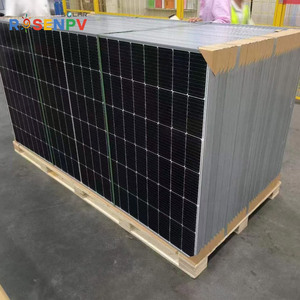
We provide turnkey export documentation compliance including EAEU EAC Certificates, Certificates of Origin (Form A / Form EC), IEC 61215/61730 certifications, and specialized anti-vibration packaging to prevent cell micro-cracking during long-distance transit across rail routes.
As a global photovoltaic exporter and automated control engineering innovator with over 25 years of industrial precision heritage, our manufacturing facilities integrate fully automated SMT lines, 3D optical inspections, and multi-stage EL (Electroluminescence) testing to ensure zero-defect delivery.
Stringent robotically guided laser cutting & soldering to prevent micro-fractures.
100% pre-lamination, post-lamination, and final dispatch EL image logging for complete traceability.
Custom framing, voltage configurations, and glass thicknesses tuned to local Kazakh snow loads.
Addressing crucial technical, legal, and operational inquiries regarding importing solar modules into Kazakhstan.
Partner directly with an established bifacial panel factory and international exporter. Request our technical datasheets, full EAEU compliance dossiers, and direct factory pricing today.