Engineered for ultra-fast pick-and-place, food packaging lines, medical robotics, and heavy industrial automation in Osaka.
An engineering analysis of parallel manipulator architectures, high-speed sorting dynamics, and localized system integration across Kansai’s manufacturing landscape.
The Osaka metropolitan region—spanning the broader Keihanshin industrial corridor including Sakai, Higashiosaka, and Amagasaki—stands as one of East Asia’s most sophisticated epicenters for high-density manufacturing. As factories across Osaka accelerate transitioning toward ultra-automated operations under Japan’s Society 5.0 and Industry 4.0 initiatives, the demand for parallel kinematic manipulators, commonly referred to as Delta Robots, has hit an unprecedented peak. Driven by severe demographic labor contraction and demanding throughput expectations in food processing, pharmaceutical packaging, micro-electronics, and semiconductor sub-assembly, modern Osaka factories require picking systems that combine sub-millimeter precision with extreme cycle dynamics.
Unlike serial articulated robot arms (where each successive link carries the mass and inertia of subsequent actuators), Delta robots utilize a parallel kinematic structure. Three or four independent spatial legs are mounted to a stationary top platform and connected to a central tool head (the end-effector). Because all heavy high-torque AC servo motors are mounted in the overhead stationary base plate, the moving mass of the robot is confined almost entirely to lightweight carbon-fiber composite arms.
This structural arrangement yields exceptional mechanical rigidity, minimal operational inertia, and extraordinary structural resonant frequencies. Key technical dynamic metrics implemented in modern Osaka factory installations include:
Osaka industrial plants face tight floor space constraints. Delta robots mount inverted directly over conveyor networks, freeing up 100% of usable plant floor real estate.
High-speed line tracking synchronized with 2D array and 3D time-of-flight vision systems allows instant identification of randomly oriented objects on moving belts.
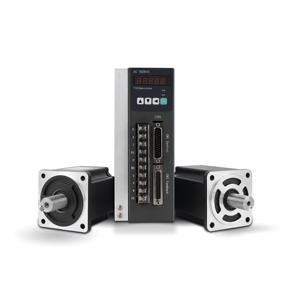
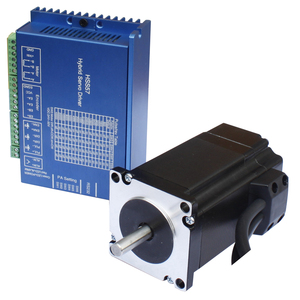
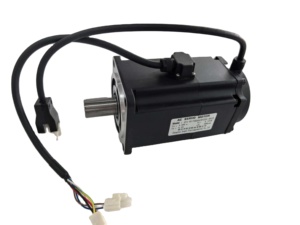
By utilizing centralized high-efficiency AC servo drives (such as 750W and 1300W synchronous systems), power consumption is reduced by up to 35% compared to Cartesian systems.
To assist factory plant managers, systems integrators, and procurement directors in Osaka when specifying automation machinery, the following comparative engineering matrix outlines the technical tradeoffs between Delta parallel robots, traditional 6-axis articulated arms, and SCARA robots:
| Kinematic Metric | Delta Parallel Kinematic | SCARA Manipulator | 6-Axis Articulated Arm |
|---|---|---|---|
| Primary Application | Ultra-High Speed Pick & Place / Sorting | High-Speed Horizontal Assembly | Complex 3D Pathing & Heavy Payload |
| Payload Capability | 0.5 kg – 10 kg (Optimized < 3 kg) | 1 kg – 20 kg | 3 kg – 1000+ kg |
| Maximum Pick Speed | Up to 220 Picks/Min | Up to 100 Picks/Min | Up to 50 Picks/Min |
| Positional Repeatability | ±0.01 mm to ±0.03 mm | ±0.015 mm to ±0.025 mm | ±0.02 mm to ±0.08 mm |
| Workspace Density | Overhead Ceiling Mount (Zero Footprint) | Floor / Pedestal Mount | Floor / Inverted / Wall Mount |
| Servomotor Configuration | Overhead Stationary AC Servos (e.g., 750W–1.3kW) | Joint-Integrated Moving Motors | Distributed Heavy Arm Servo Motors |
Osaka’s manufacturing landscape possesses unique sub-sector concentrations. Delta robot system deployment must be specifically tailored to the thermal, mechanical, and regulatory demands of these localized industrial clusters:
Osaka is famous for its massive food processing industry, ranging from retort pouch food manufacturing to high-volume confectionery production. Delta robot cells equipped with soft silicone pneumatic grippers or vacuum arrays are deployed to sort items like Okonomiyaki kits, pre-packaged snack foods, and ready-to-eat bento components. Line-tracking software syncs Delta arms with continuous sanitary conveyor belts operating at 40 meters/minute, ensuring zero product bruising while operating under strict washdown sanitation protocols.
High-precision assembly of medical devices, diagnostic kit sorting, and blister pack loading require high cleanroom ratings (ISO Class 5 / Class 100). Utilizing integrated 1300W AC Servo Motors with high-resolution RS485 communication protocols and micro-step hybrid actuators, Delta robots place delicate ampoules and syringe components with sub-hundredth-millimeter accuracy, maintaining compliance with Japanese PMDA and ISO 13485 standards.
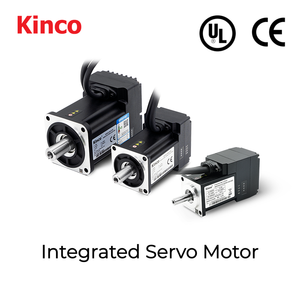
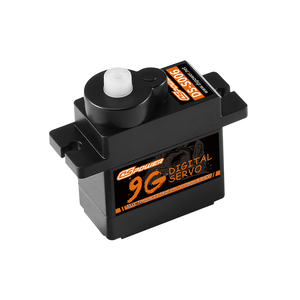
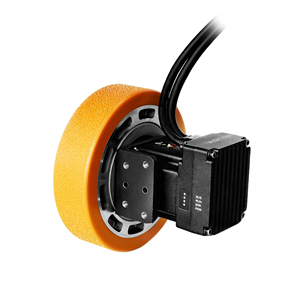
Modern flat-panel displays, printed circuit board (PCB) component insertion, and power electronics assembly demand rapid handling of lightweight SMD parts. Integrated servo wheel drives (such as Kinco IWMC series) and sub-micro metal-gear servos power specialized high-speed micro-placement grippers on Delta tool plates, reducing component rejection rates to near zero.
Over 25 years of end-to-end industrial automation experience, standard-compliant panel manufacturing, and direct engineering collaboration.
From complete factory process design to field motion control, our engineering team brings decades of practical experience across 20+ industrial sectors worldwide.
In-house manufacturing of Type-Tested Assemblies (TTA), LT power panels, motor control centers (MCC), and custom industrial switchgear built strictly to IEC and JIS standards.
Full hardware and software synchronization—combining medium voltage drives, AC servo motors, PLCs, HMIs, and SCADA monitoring under one unified architecture.
Clear technical answers covering voltage specifications, local compliance standards, delivery protocols, and system integration assistance.
Yes. All standard AC Servo Systems, including 750W and 1300W series, support 3-phase 200V–240V AC as well as single-phase 110V/220V inputs operating at both 50Hz and 60Hz (the standard power frequency for Western Japan / Osaka). Optional step-down transformers and EMI noise filters compliant with Japanese industrial EMC directives are pre-integrated into our control enclosures.
Our servo motion drivers and integrated controllers support all major industry-standard industrial communication protocols, including EtherCAT, CANopen, RS485 (Modbus-RTU), and Pulse/Direction commands. This enables seamless connection with legacy and modern Japanese PLCs (such as Mitsubishi MELSEC, Omron Sysmac, and Keyence series controllers).
We offer full FAT execution before dispatch, including live video inspection, cycle-rate validation, thermal dynamic logging, and comprehensive test documentation packs. For international and export clients in Osaka, we provide application engineering, remote commissioning support, complete circuit diagrams, and rapid dispatch of replacement components.
Absolutely. For food processing facilities in Kansai, Delta robot mechanisms can be supplied with IP67 stainless steel tool plates, anodized aluminum or titanium-composite parallel links, FDA/NSF-H1 compliant food-grade greases, and enclosed servo motor housings to withstand aggressive caustic CIP (Clean-In-Place) washdown cycles.
Under continuous S1 duty cycles (24/7 industrial production), our heavy-duty AC servo motors are engineered for an operational lifespan exceeding 40,000 operational hours. Bearings and precision optical encoders are sealed against industrial airborne dust, oil mist, and humidity typical of heavy industrial zones in Osaka.
Looking to deploy high-speed Delta robots, integrated servo drives, or custom control panel systems tailored to your specific plant footprint? Speak directly with our senior application engineering team.
Contact Us