Explore engineered hardware solution sets optimized for high-speed machinery safeguarding, compliant automation integration, and precise dynamic positioning in Brazilian industrial factories.
Brazil represents Latin America’s largest industrial powerhouse, driven by dense manufacturing clusters across São Paulo (ABC Paulista), Rio Grande do Sul (Caxias do Sul), Paraná (Curitiba), and the Manaus Free Trade Zone (Zona Franca de Manaus). However, deploying industrial machinery in Brazil requires navigating one of the world's most rigorous functional safety frameworks: Norma Regulamentadora 12 (NR-12).
Enforced by the Brazilian Ministry of Labour and Employment (MTE), NR-12 establishes strict legal parameters governing machinery safety, requiring mandatory electro-sensitive protective equipment (ESPE) on hazardous equipment such as hydraulic presses, metal stamping cells, plastic injection molding units, and automated packaging lines. For original equipment manufacturers (OEMs), factory automation integrators, and plant maintenance directors sourcing safety light curtains, understanding localized compliance, physical resolution requirements, and optical response safety formulas is paramount to passing ABNT NBR ISO 13855 audits without incurring severe operational shut-downs or regulatory fines.
Full architectural alignment with ABNT NBR ISO 13855 / 13849-1 (PL e / Category 4) and IEC 61496-1/2 (Type 4 ESPE) ensuring 100% legal compliance across all 26 Brazilian states.
Dual-channel infrared emitter/receiver arrays featuring ultra-fast response times (<10ms to 15ms) designed to trigger safety relays and halt high-inertia drives instantaneously.
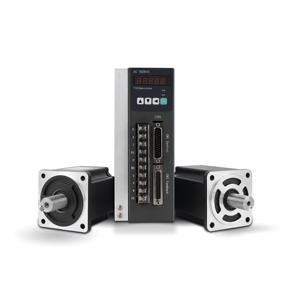
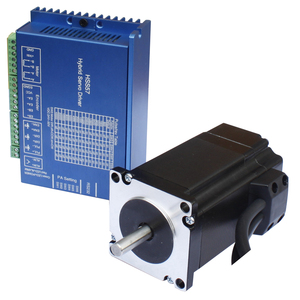
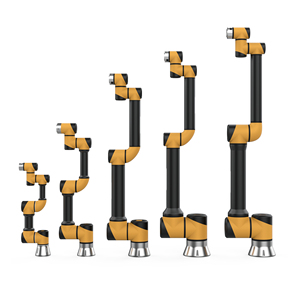
Seamless interlocking compatibility with AC servo drives, integrated motor units, and multi-axis collaborative robotic arms for dynamic muted safety zones.
Achieving certified machine safety in Brazilian plants involves calculating the exact minimum safety distance ($S$) between the optical sensing field of the safety light curtain and the hazardous zone. Per Brazilian standard ABNT NBR ISO 13855 (derived from EN ISO 13855), the mandatory safety distance formula is expressed as:
Selecting the correct optical resolution determines whether the light curtain acts as a finger detection safeguard, hand detection barrier, or full-body access control perimeter curtain:
| Detection Classification | Optical Resolution (d) | Protected Object | Max Sensing Distance | Typical Brazilian Application (NR-12) |
|---|---|---|---|---|
| Finger Detection | 14 mm | Fingers / Small Tools | Up to 6.0 Meters | Hydraulic Presses, Medical Assembly, Micro-Stamping |
| Hand Detection | 30 mm | Hands / Wrists | Up to 15.0 Meters | Plastic Injection Molding, CNC Machining, Packaging |
| Arm / Body Detection | 40 mm – 50 mm | Limbs / Arms | Up to 20.0 Meters | Automotive Weld Cells, Palletizers, Conveyor Transfer |
| Perimeter Control | 2, 3, 4 Beam Arrays | Full Human Presence | Up to 50.0 Meters | Robotic Workcells, AGV/AMR Zones, Manaus Logistics Hubs |
Our specialized optical safeguarding systems and high-precision servo motion drives are tailor-engineered to thrive under Brazil’s varied ambient and operational industrial environments:
In the dense automotive manufacturing belt of São Paulo and Paraná, high-tonnage mechanical and hydraulic presses require Type 4 (SIL 3 / PL e) safety light curtains rated for extreme vibration. Features include dual-loop EDM (External Device Monitoring), anti-vibration shock absorbers, and instant integration with 750W–1.3kW high-torque AC servo motors driving auxiliary feed mechanisms.
Southern Brazil’s polymer processing factories require heat-resistant optical enclosures with IP65/IP67 ingress protection. Safety light curtains equipped with integrated muting arms allow automated take-out robots (such as 6-Axis Collaborative Arms) to extract molded parts while preventing human access to high-temperature clamping units during the injection cycle.
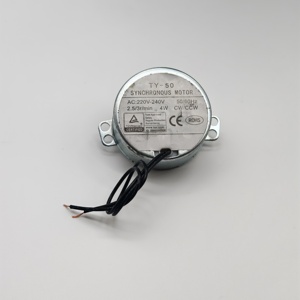
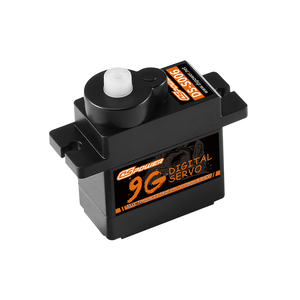
High-speed micro-assembly lines in Amazonia’s tax-free industrial district demand 14mm ultra-fine resolution light curtains paired with micro metal-gear servos and integrated DC servo drives. This ensures pin-point component insertion speed with maximum ergonomic operator safety during manual board loading.
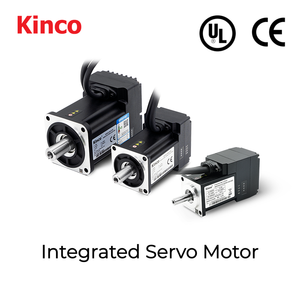
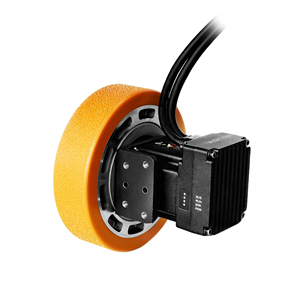
Logistics distribution centers servicing Brazil’s e-commerce hubs utilize integrated servo wheel drives (Kinco IWMC series) operating in tandem with side-mounted safety light curtains and LiDAR scanners to create 360-degree dynamic collision-avoidance fields for autonomous mobile robots.
The Latin American industrial sector is rapidly undergoing digital transformation. Safety light curtains are no longer standalone "pass/fail" emergency stop devices; they have evolved into intelligent Industry 4.0 sensor nodes.
Modern safety light curtains deployed across Brazilian plants now feature IO-Link Safety protocols and Bluetooth Smart Diagnostic interface tools. Key technology trends shaping buyer decisions in Brazil include:
Backed by over 25 years of industrial engineering excellence, Lubi Electronics brings world-class manufacturing, type-tested control panel assembly, and deep automation hardware expertise to international machine builders and Brazilian factory operators.
State-of-the-art production facilities executing SMT PCB assembly, precision sheet metal fabrication, and 100% automated routine optical calibration testing prior to international export.
Export orders delivered to Brazilian ports (Santos, Paranaguá, Manaus) include complete electrical schematics, IEC test certificates, and INMETRO-ready documentation for hassle-free customs clearance.
Eliminate vendor finger-pointing. We supply safety light curtains, match them with precise AC/DC servo systems, custom control panels, and collaborative robotics under one engineering roof.
Key technical, regulatory, and purchasing answers for plant managers, system integrators, and safety engineers operating within Brazil.
Our safety light curtains are designed and certified to meet IEC 61496-1/2 (Type 4 ESPE) and ISO 13849-1 (PL e / Category 4) international standards. NR-12 explicitly mandates compliance with ABNT NBR ISO 13855 / 13849 for electro-sensitive protective equipment. By providing dual-channel PNP/NPN self-checking outputs, external device monitoring (EDM), and fail-safe architecture, our curtains satisfy all ABNT safety auditor requirements across Brazil.
Type 2 light curtains (IEC 61496-2) achieve Performance Level c (PL c / SIL 1) with a wider optical field angle (5°), making them suitable for lower-risk applications. Type 4 light curtains achieve Performance Level e (PL e / SIL 3) with a narrow beam angle (2.5°) and continuous internal fault checks. Under NR-12 guidelines, high-risk machinery such as mechanical power presses, guillotines, and robotic cells strictly require Type 4 safety light curtains.
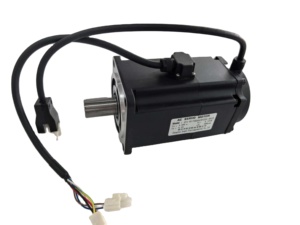
Yes. Our safety light curtains feature dual OSSD (Output Signal Switching Device) outputs that interface directly with the Safe Torque Off (STO) input terminals of our AC Servo Drives (e.g., 750W 220V Servo Motor Sets or Kinco Integrated Servos). When an optical beam is broken, the drive cuts power to the motor torque generation stage within milliseconds, achieving hardware-level safety stopping without needing an intermediary safety relay in simpler cell designs.
We work closely with Brazilian importers and system integrators under standard Incoterms (FOB, CIF, or DDP Santos/Paranaguá). All shipments are packed in tropicalized, anti-moisture export crates accompanied by complete commercial invoices, HS code classifications (NCM codes), and technical datasheets required for Brazilian customs clearance. Remote technical engineering support and wiring consultations are provided in English by senior automation specialists.
For point-of-operation safeguarding where an operator’s hands work close to the pinch point (distance < 300 mm), a 14 mm finger-detection resolution is required to minimize the required safety distance. For area guarding or secondary perimeter barriers set further back (> 500 mm), a 30 mm hand-detection resolution is optimal, providing cost savings while maintaining full NR-12 compliance.
Yes. Our advanced safety light curtain series supports parallel and cross-muting sensor configurations. Muting allows pallet loads, AGV chassis, or workpieces to pass through the light curtain field without stopping the process, while still triggering an emergency shutdown if a human operator attempts to enter the cell alongside the material.
For tropical, high-humidity, or washdown environments, we supply safety light curtains enclosed in IP65/IP67 rated aluminum housings with sealed polycarbonate lens covers. These units resist condensation, industrial oil mist, and dust accumulation, ensuring stable long-term optical beam transmission.
Absolutely. Protective heights range from 100 mm up to 2000 mm in incremental steps of 50 mm or 100 mm. Custom beam pitch spacings, specialized mounting brackets, and tailored cable lengths (M12 quick-disconnect connectors) are readily manufactured in-house to fit specific OEM machinery footprints.
Consult with our senior application engineers to specify the exact optical resolution, safety distance, and integrated motion control system for your Brazilian production facility.