Explore our export-ready, globally certified safety relays engineered for machinery safety, emergency stop loops, and hazardous area isolation across Philippine manufacturing plants.
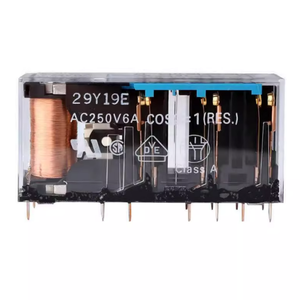
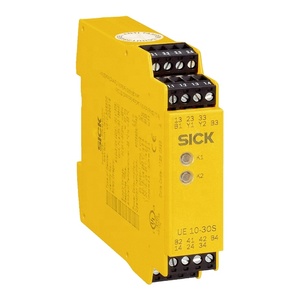
As the Republic of the Philippines undergoes rapid industrial modernization across key economic hubs—such as the CALABARZON corridor (Cavite, Laguna, Batangas), Clark Freeport Zone, and Metro Cebu—manufacturing facilities are facing unprecedented stringency regarding operational safety, worker protection, and automated fault detection. The Department of Labor and Employment (DOLE) through its Occupational Safety and Health Standards (OSHS), alongside international OEM mandates, now strictly enforces compliance with functional safety frameworks governed by ISO 13849-1 (Performance Levels) and IEC 62061 / IEC 61508 (Safety Integrity Levels).
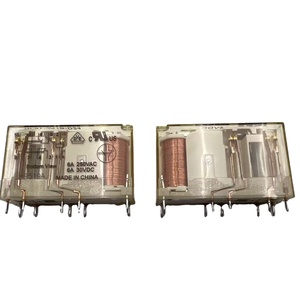
Central to achieving robust functional safety in automated production lines is the deployment of certified Industrial Safety Relays. Unlike standard general-purpose relays, safety relays utilize force-guided (positively driven) contact mechanisms (EN 50205). This specialized engineering ensures that if a Normally Open (NO) contact welds together due to an electrical surge or overcurrent, the Normally Closed (NC) contact cannot close when the coil is de-energized. This structural constraint enables safety monitoring circuits to instantly detect contact failure, preventing machinery from restarting in a hazardous state.
Standard relays rely on spring-return systems where contact welding leads to undetected unsafe conditions. In contrast, force-guided safety relays maintain a mechanical linkage guarantee: a minimum contact gap of 0.5mm is preserved across opposing contacts even during fault states, permitting internal diagnostic loops to lock out machine operation until manual reset and inspection occur.
When engineering safety instrumented systems (SIS) for Philippine export processing zones (PEZA-registered firms), procurement managers and automation engineers must evaluate switching hardware against rigid failure metrics. Below is an engineering selection matrix highlighting the functional operational differences between switching devices:
| Safety Category | Standard General Relay | Force-Guided Safety Relay | Multifunctional Safety Module |
|---|---|---|---|
| Primary Mechanism | Standard Electromagnetic Coil & Armature | Positively Driven Contacts (EN 50205 Type A) | Microprocessor + Dual Redundant Safety Logic |
| Safety Target Level | Unrated (Not permitted for safety functions) | Up to Category 2 / PLc (ISO 13849-1) | Up to SIL 3 (IEC 61508) / PLe (ISO 13849-1) |
| Fault Detection | None (Requires external sensors) | Mechanical Interlocking Contact Monitoring | Cross-Fault, Short-Circuit & Feedback Loop Monitoring |
| Response Time | 20ms to 50ms (Uncontrolled) | < 15ms (Deterministic) | < 10ms (High-Speed Electronic Shutdown) |
| Primary PH Application | Auxiliary Signal Isolation, Lighting Controls | Machine Interlocks, Safety Door Switches | E-Stop Press, Light Curtains, Robot Cells |
Our direct export and engineering supply channels serve critical industrial sectors across the Philippine archipelago with tailored safety switching solutions.
Deployed extensively in Laguna Technopark and First Philippine Industrial Park (FPIP). Integrated into high-speed SMT pick-and-place lines, cleanroom handling robots, and automated optical inspection (AOI) units requiring SIL3 emergency stop isolation and light curtain monitoring.
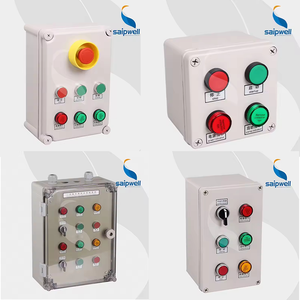
Installed across food processing facilities in Bulacan, Pampanga, and Batangas. Sealed IP66 control enclosures housing safety relays protect operators against hazardous rotating machinery, high-speed capping units, and automated stretch wrappers operating in washdown environments.
Equipping mechanical presses and metal forming machinery in Santa Rosa and Cavite Economic Zones. Dual-channel safety relays continuously monitor two-hand control switches and safety mats to prevent press initiation when operators are in danger zones.
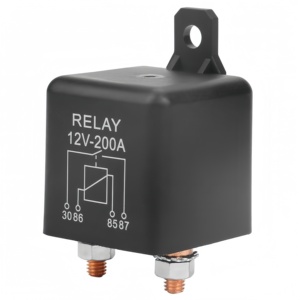
Supporting solar farm EPC contractors across Luzon and Visayas. Heavy-duty 200A battery isolator relays and emergency DC disconnect switching units ensure safe maintenance shutoff and remote trip capability for utility-scale energy storage system (ESS) projects.
Serving municipal water pumping stations and industrial effluent plants in Metro Manila (Maynilad/Manila Water hubs). Controls pump motor starters, telemetry control panels, and high-voltage drive isolation loops with integrated short-circuit monitoring.
Exporting pre-wired, type-tested control enclosures and modular safety assemblies directly to Philippine system integrators. Fully documented with electrical schematics, compliance reports, and CE/UL certificates.
Industrial automation in the Philippines is undergoing a structural shift from basic machine isolation toward integrated, smart functional safety architectures. Driven by global supply chain standards, tier-1 suppliers and multinational manufacturing subsidiaries operating within the country can no longer rely on legacy relay wiring. The primary drivers behind this modernization include:
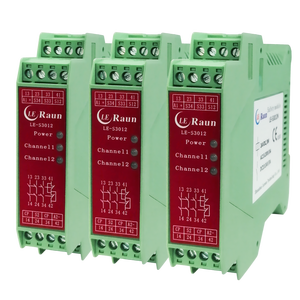
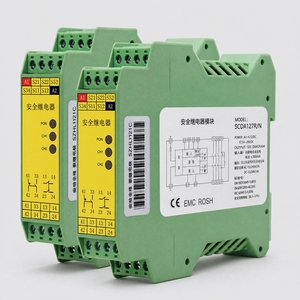
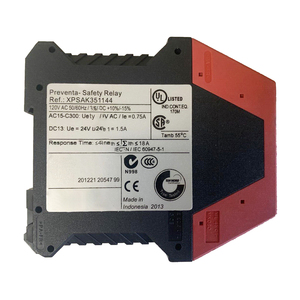
Single-channel safety circuits are inherently vulnerable to single-point failures. If a single wire shorts to ground or a switch contact welds, safety protection is lost without the operator's knowledge. Modern Philippine engineering specifications increasingly require Dual-Channel (Category 3 / Category 4) configurations. In a dual-channel safety relay module (such as the LE-S3012 or Omron G7SA series with socket assemblies), two independent safety circuits monitor input devices (e.g., E-stop buttons, safety gate switches). The internal micro-controller or mechanical linkage verifies that both channels open and close simultaneously. Any discrepancy (such as one channel failing to open within a predefined window) triggers an instant lockout state.
In humid tropical industrial environments typical of Luzon and Mindanao, insulation degradation and wire chafing can cause short circuits between input channels. Advanced safety control relays continuously supply pulsing test signals across input lines. If a cross-fault occurs between Channel 1 and Channel 2, the module detects the waveform phase imbalance and immediately cuts supply power to the final switching elements, ensuring fail-safe protection even under severe cable damage.
Safety hardware is expanding beyond control cabinet interiors. Plant engineers are deploying rugged IP66/IP67 rated emergency start/stop control boxes directly on machinery frames. When paired with heavy-duty safety relays, these peripheral stations provide operators with instant physical stop control while resisting airborne oil mist, moisture ingress, and ambient temperature fluctuations ranging from -40°C to +70°C.
All imported safety relays supplied through our global distribution channels comply strictly with IEC 60947-5-1, EN 50205, UL 508, and RoHS directives. We provide complete factory test certificates (FAT documentation), CAD circuit macros, and step-by-step wiring guides to ensure seamless audit clearance by Philippine regulatory agencies and international safety inspectors.
With over 25 years of specialized experience in industrial automation, control panel manufacturing, and export-grade power distribution solutions, our engineering group bridges the gap between hardware supply and application engineering. We do not merely ship components; we provide comprehensive functional safety consultation:
Technical, logistical, and operational answers for engineers and import managers sourcing safety relays for Philippine installations.
Consult with our functional safety engineering specialists. Receive complete product specification catalogs, CAD drawings, and competitive export pricing tailored for the Philippine market.