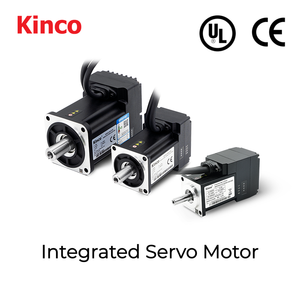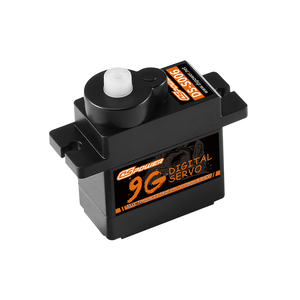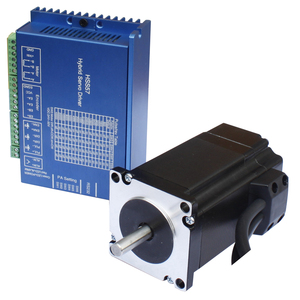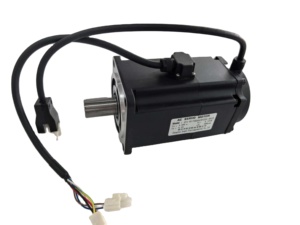
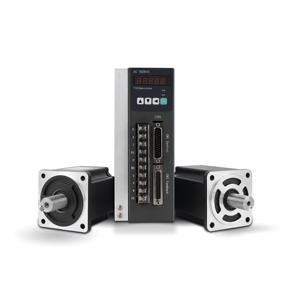
AC Servo Motor 1300W 220V Support Pulse / RS485 Control for Medical Devices
- Power Output: 1300W / 220V Single-Phase
- Protocol: Pulse / RS485 Modbus Protocol
- Application: High Precision Medical Automation
Engineered for low-latency feedback, multi-axis synchronization, high torque density, and seamless protocol integration across North American manufacturing operations.
A comprehensive engineering guide covering electrical compliance, real-time fieldbus networking, thermal rating, and dynamic torque stability in North American industrial environments.
Industrial machinery deployed across the United States must strictly conform to UL 61800-5-1, NFPA 79 safety standards, and IEEE 519 harmonic distortion limits. Premium servo drive manufacturers engineer units with integrated EMC line filters, overvoltage clamping circuits, and wide AC input capabilities (110V/220V/480V) to withstand voltage sags and harsh utility grids commonly found in heavy-duty US manufacturing plants.
Modern US automated production lines rely on real-time deterministic Ethernet backbones. Leading servo drives feature multi-protocol flexibility supporting EtherCAT (sub-millisecond cycle times), EtherNet/IP (CIP Motion), CANopen, and legacy Pulse/Direction / RS485 interfaces. This enables direct interoperability with Allen-Bradley ControlLogix, Beckhoff TwinCAT, Siemens S7-1500, and Omron NJ controllers.
To reduce safety relay footprint and comply with OSHA and ISO 13849-1 standards, modern servo drives integrate hardware-based Safe Torque Off (STO) rated up to SIL3/PLe. Paired with 23-bit absolute multi-turn optical or magnetic encoders, these systems maintain absolute sub-micron machine positioning without requiring battery backup or home-sensor routines following emergency stop events.
How customized servo drive architectures power critical manufacturing, medical, automotive, and logistics infrastructure across major United States regional economies.
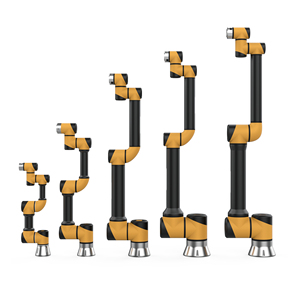
In high-speed automotive stamping, robotic spot welding, and EV battery cell stacking lines across Michigan and Ohio, servo drive controllers deliver rapid acceleration curves and zero-backlash torque loops. Utilizing 6-axis cobot actuators and high-torque AC servo drives ensures consistent cycle times under 2.5 seconds with tight repeatability during heavy payload tool manipulation.
Life-science hubs in Boston, San Diego, and the Bay Area demand ultra-smooth, low-vibration motion control. Compact 1300W AC servo systems and submicro MG90S metal-gear actuators power micro-fluidic dosing pumps, automated blood analyzer carousels, and surgical robot arms—operating with whisper-quiet acoustics and high thermal efficiency in cleanroom environments.
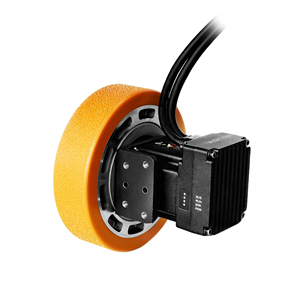
Massive distribution centers across Texas, Illinois, and Pennsylvania require continuous duty motion hardware. Integrated servo wheel drives (like the Kinco IWMC series) combine planetary gearing, high-efficiency DC brush/brushless motors, and CANopen communication into a single wheel assembly—optimizing AGV/AMR battery life while supporting dynamic vector steering and fleet synchronization.
Fab expansion projects in Phoenix and Oregon rely on linear and hybrid rotary servo systems for silicon wafer transfer chamber robots and automated surface-mount technology (SMT) pick-and-place nozzles. Servo drives equipped with high-bandwidth current loop response (> 2.5 kHz) prevent micro-chatter, guarding fragile 300mm wafers against micro-fractures.
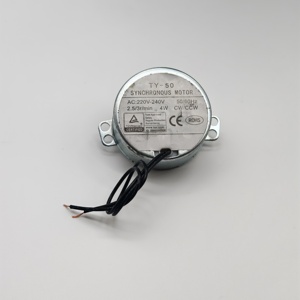
Chemical processing in Texas and dairy/food processing in Wisconsin require ruggedized motion components. Single-phase 110V/220V copper-wire explosion-proof synchronous motors and IP67-rated stainless steel servo actuators withstand aggressive caustic cleanings and hazardous airborne vapors without degrading internal winding insulation.
US manufacturers upgrading legacy hydraulic injection molding machines and open-loop NEMA stepper axes to hybrid easy-servo drive systems (e.g., NEMA 24 with HSS60 drivers) achieve up to 50% reduction in plant KWh energy draw, complete elimination of lost step errors, and substantial acoustic noise abatement.
Key economic, technological, and regulatory vectors shaping the adoption of advanced motion control systems in North American factories.
Driven by supply chain security legislation (CHIPS Act, Inflation Reduction Act), U.S. OEMs are building automated greenfield plants. Demand has shifted heavily toward standard modular servo architectures that can be quickly drop-in integrated into standardized NEMA enclosures with minimal field wiring time.
Cabinet space on factory floors comes at a premium price. The market adoption of integrated motor-driver solutions (such as the ISMK series) is accelerating because it eliminates long shielded motor cables, lowers total cabinet heat dissipation, and drastically reduces electromagnetic interference (EMI) radiated emissions.
Modern US facility managers require real-time visibility into machine health. Next-generation servo drives transmit high-frequency telemetry—such as bus voltage ripple, winding temperature trends, peak torque saturation, and bearing vibration signatures—directly to edge controllers or cloud SCADA platforms via MQTT/OPC-UA.
Leveraging 25+ years of factory-floor automation experience, comprehensive in-house manufacturing, and an established international technical support network.
Lubi Electronics engineers complete industrial automation ecosystems—from AC Servo Systems, Medium Voltage Drives (3.3 kV to 11 kV), and PLC/HMI motion controllers to type-tested LT/HT control panels and solar EPC solutions. By maintaining total quality control over hardware assembly, SMT circuit board manufacturing, and firmware testing, we eliminate vendor finger-pointing and guarantee seamless operation for US-bound machinery.
Control panels and power units built and routinely tested in compliance with stringent IEC and NEMA guidelines prior to international dispatch.
Official integration partnerships with global technology leaders including Omron, Panasonic, Nidec, Delta, Schneider Electric, Cognex, and Advantech.
From initial motor sizing and torque-speed curve analysis to FAT (Factory Acceptance Testing) and remote live commissioning assistance for US engineering teams.
Direct answers regarding protocol compatibility, North American certifications, supply chain lead times, and application sizing.
Our servo drives support standard industrial communications including EtherNet/IP (with EDS files for seamless Studio 5000 integration), EtherCAT (with XML device description files), CANopen, and Modbus RTU/TCP. This allows US control engineers to perform plug-and-play mapping of cyclic I/O data, motion profiles, and alarm diagnostics directly inside their native PLC programming environment.
We provide servo drive systems designed for standard US plant mains, including single-phase 110V/120V AC for light automation, 220V/240V single/three-phase, and 480V 3-phase units for heavy industrial duty. All drives feature wide input voltage tolerance ranges (±15%) to prevent nuisance tripping during industrial grid sags.
Yes. Upgrading pneumatic cylinders or open-loop steppers to our easy-servo or integrated DC servo drives (such as the ISMK or NEMA 24 closed-loop set) delivers instant position confirmation, eliminates missed steps, dramatically lowers operating noise, and cuts electrical energy consumption by up to 50% through dynamic demand-based current control.
We specialize in custom OEM engineering. We offer tailored motor shaft dimensions (keyway, flat, or helical), customized NEMA or metric mounting flanges, custom cable harness lengths with IP67 military-spec quick-disconnect connectors, and specialized electromagnetic brake options tailored to your specific mechanical layout.
All exported machinery and servo equipment ship with comprehensive documentation packages, including schematic CAD drawings, 3D STEP models, parameter setup manuals, and full routine test certificates. Component-level repair, spare parts stock, and rapid diagnostic support are backed by our global service infrastructure and dedicated technical hotlines.