High-precision servo drives, isolated controllers, and heavy-duty motor assemblies engineered for rigorous industrial control environments across North America and global markets.
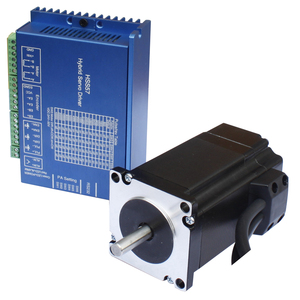
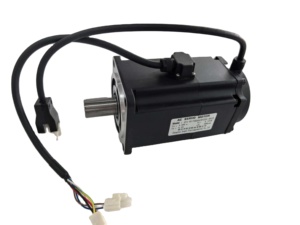
A Technical Whitepaper on Eliminating Ground Loops, Attenuating Electro-Magnetic Interference (EMI), and Protecting Sensitive PLC/DCS Architectures.
In modern industrial manufacturing hubs like Los Angeles, where advanced aerospace assembly, pharmaceutical processing, municipal water reclamation, and automated logistics interact, electrical signal integrity is non-negotiable. Modern industrial control panels house a dense concentration of variable frequency drives (VFDs), high-speed AC servo motors, switch-mode power supplies (SMPS), and programmable logic controllers (PLCs). Operating in such electromagnetically noisy environments exposes sensitive analog sensor channels (4-20mA, 0-10V, thermocouple, RTD) to high-voltage transients, stray ground potential differences, and common-mode noise.
When measuring analog signals over long physical distances—such as across automated shipping terminals at the Port of Los Angeles or sprawling chemical processing plants—the reference ground potentials at the sensor location and the control system receiving terminal are rarely identical. Even a minute potential difference of 0.5V DC or a few millivolts of AC ripple between two ground points causes stray current to flow through signal shielding and ground return wires. This phenomenon, known as a Ground Loop, introduces measurement drift, erratic feedback spikes, control loop instability, and in severe cases, catastrophic thermal destruction of sensitive analog-to-digital converter (ADC) channels.
Engineered signal isolators solve ground loop problems by utilizing high-frequency transformer coupling or optoelectronic isolation barriers. The input signal modulates a carrier frequency, crosses an isolated magnetic or dielectric barrier, and is demodulated into a pristine, high-fidelity output signal completely uncoupled from field ground variations.
Complete physical isolation between input signal, output channel, and operational power source. Prevents cross-channel interference and protects control room equipment against high-voltage surges up to 3kV AC.
Rapid response times (<10ms) combined with integrated TVS diodes suppress steep voltage spikes caused by heavy inductive load switching, lightning strikes, and servo motor braking regen energy.
Bi-directional communication transparency allows digital HART signals, RS485 Modbus, and smart transmitter diagnostics to pass seamlessly through the isolation barrier without signal attenuation.
| Performance Characteristic | Industrial Grade Galvanic Isolator | Standard Non-Isolated Signal Transmitter | Impact on Industrial Operations |
|---|---|---|---|
| Galvanic Isolation Breakdown Rating | 3,000V AC RMS (1 min) / 4,000V DC | None (Direct Electrical Pass-Through) | Prevents high-voltage line surges from destroying control PLCs. |
| Common-Mode Rejection Ratio (CMRR) | > 120 dB (50/60 Hz) | < 40 dB | Eliminates 60Hz hum and EMI noise generated by high-power VFD drives. |
| Signal Measurement Linearity | < 0.1% Full Scale | 0.2% - 0.5% Full Scale | Guarantees pinpoint sensor accuracy for critical process monitoring. |
| Temperature Coefficient | < 50 ppm/°C (-25°C to +70°C) | > 150 ppm/°C | Maintains signal stability across ambient California desert and plant heat waves. |
| Power Supply Isolation | Independent DC-to-DC Converter Included | Shared Common Ground Loop | Prevents noise propagation across plant DC power distribution buses. |
Tailored signal conditioning solutions supporting Southern California’s prime industrial corridors—from aerospace manufacturing in El Segundo to port automation in Long Beach.
In aerospace component testing and rocket propulsion development facilities across Southern California, sensors operate near high-energy ignition circuits, high-voltage power supplies, and massive hydraulic actuators. Signal isolators isolate high-frequency load cell signals, vibration transducers, and thermocouple data channels, preventing EMI crosstalk from corrupting mission-critical telemetry data during engine static fire tests.
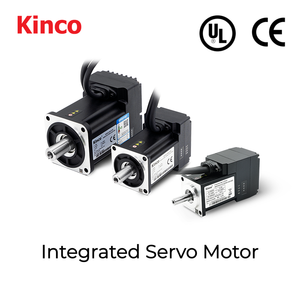
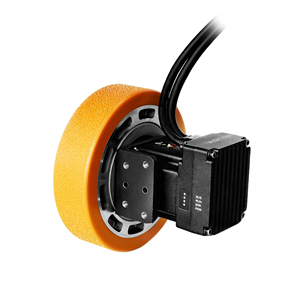
The container terminals at San Pedro Bay rely on extensive Automated Guided Vehicle (AGV) fleets, automated gantry cranes, and automated sorting conveyors. Integrated servo wheel drives (such as the Kinco IWMC series) and multi-axis motion controllers demand clean, isolated encoder feedback and noise-free RS485/CANbus communication lines to operate reliably in humid, saltwater-exposed outdoor environments plagued by heavy electrical noise from ship-to-shore cranes.
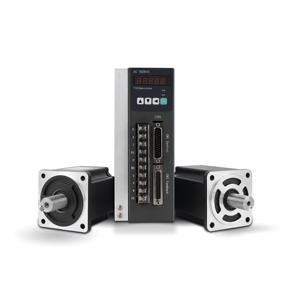
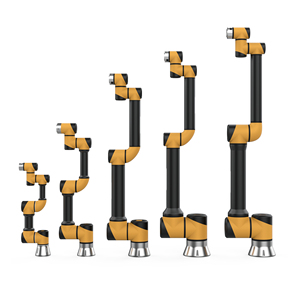
Pharmaceutical packaging lines and medical device manufacturing units mandate strict compliance with safety low-voltage standards and FDA regulatory traceability. Precision AC servo motors (1300W pulse/RS485 driven) integrated with high-performance 6-axis collaborative robotic arms demand optical isolation on sensor lines to ensure precision fluid dosing, zero risk of electrical shock to cleanroom personnel, and 100% data integrity during continuous high-speed operation.
Large-scale municipal water treatment facilities operate extensive networks of submerged level transmitters, pH probes, flow meters, and medium-voltage pump control panels. Long field cable runs through moist underground conduits introduce massive ground potential spikes. Multi-channel DIN rail signal isolators stabilize 4-20mA process loops before feeding data into central SCADA systems, preventing plant shutdowns during lightning events or grid switching.
Strategic technology developments driven by clean energy mandates, space compression, and Industry 4.0 digitisation.
With industrial real estate values in Los Angeles County among the highest in North America, machine builders and control panel assembly shops (UL 508A builders) are under constant pressure to shrink control cabinet footprints. Modern signal isolators are shifting toward ultra-compact 6.2mm and 12.5mm slimline enclosures, allowing panel builders to double channel density per linear DIN rail foot without sacrificing thermal dissipation capabilities.
Southern California manufacturers are rapidly upgrading legacy analog control loops to smart Industry 4.0 architectures. Contemporary signal isolators must not only isolate basic DC current/voltage signals, but also transparently pass high-frequency digital HART protocols or IO-Link data overlays. This enables remote diagnostic monitoring, predictive sensor failure alerts, and automated re-calibration from centralized SCADA monitoring stations.
Driven by strict California Air Resources Board (CARB) regulations and energy grid decarbonization goals, plant operators are replacing old inefficient motor starters with integrated servo drive units and low-power isolators. Energy-efficient signal conditioning modules with advanced switched-mode isolation circuits reduce panel power loss by over 40%, directly lowering internal cabinet heat generation and cutting enclosure air conditioning energy consumption.
Get fast answers to common procurement, compliance, and technical integration questions regarding signal isolation hardware and motion control systems.
Under UL 508A guidelines and National Electrical Code (NEC) standards, field instrument wiring passing outside the local enclosure must be adequately protected against over-voltage transients, hazardous area coupling, and ground potential offsets. Signal isolators provide certified galvanic separation, keeping high voltage faults localized within field loops and protecting low-voltage Class 2 control circuits inside the main panel.
Standard DIN rail signal isolators, servo drivers, and stock automation components ship directly from regional stock within 24 to 48 hours. Custom engineered control panel assemblies, type-tested assemblies (TTA), and specialized OEM servo drive packages typically undergo a 2 to 4-week engineering phase—inclusive of CAD design, wiring harness assembly, pre-dispatch routine testing, and factory acceptance testing (FAT).
High-speed pulse signals (such as 200kHz to 1MHz step/direction signals from positioning controllers) require specialized optoelectronic isolation modules designed with ultra-fast propagation speeds (<50 nanoseconds). Standard slow-response analog isolators will distort pulse wave shapes; dedicated digital/pulse signal isolators maintain sharp square wave edges to prevent loss of position tracking in high-precision AC servo applications.
Yes. As a global manufacturer and engineering exporter with over 25 years of industrial experience, Lubi Electronics supports international OEMs and plant operators across North America, Europe, Asia, and the Middle East. All export products comply with international standards (IEC, CE, UL readiness), complete with comprehensive schematic packs, routine test certificates, and remote or field commissioning assistance.
Passive (loop-powered) isolators extract operational energy directly from the 4-20mA input loop, eliminating the need for an external auxiliary power supply. They are ideal for straightforward 2-wire transmitter loops where available loop voltage is sufficient (>18V DC). Active isolators require a separate 24V DC or 110/220V AC auxiliary power input and are recommended when driving high load impedances (>500 ohms), converting signal types (e.g., 0-10V input to 4-20mA output), or providing 3-way isolation across 4-wire instruments.
Combining world-class manufacturing infrastructure, comprehensive testing protocols, and single-source engineering accountability.
Since 1997, Lubi Electronics has evolved from component distribution into a global engineering powerhouse. Operating modern manufacturing facilities near Ahmedabad, India, we produce type-tested control assemblies (TTA), medium voltage drives, precision solar modules, and industrial control electronics used across 20+ heavy industry sectors.
From sheet metal fabrication and Automated Surface Mount Technology (SMT) PCB assembly to comprehensive routine electrical testing, our integrated manufacturing lines guarantee rigorous quality control. Every panel and signal isolator leaves our facility with fully traceable test reports adhering strictly to IEC and international guidelines.
Supported by a global network of over 30 sales and service locations, our technical application engineers assist clients through hardware selection, control panel layout design, remote commissioning, and lifecycle spare part support—eliminating vendor ping-pong and reducing project execution risk.
Consult with our senior application engineers to review your electrical schematics, request signal isolator datasheets, or schedule a technical proposal for your custom control panel project in Southern California or worldwide.
Contact Us