Explore our core engineering lineup manufactured for high ambient resilience, thermal tolerance, and precise motion/power regulation across Riyadh’s solar microgrids, agricultural pumps, and industrial facilities.
As Saudi Arabia accelerates toward its ambitious Saudi Vision 2030 targets—aiming to generate 50% of its power from renewable energy sources—the demand for ultra-reliable photovoltaic control electronics in the Central Province and Riyadh region has reached unprecedented heights. Deploying solar energy systems in Riyadh presents unique thermodynamic and environmental challenges that standard off-the-shelf equipment cannot withstand.
Operating environments in the Nejd plateau experience extreme ambient summer temperatures routinely exceeding 50°C, combined with intense solar irradiance (>2,400 kWh/m²/year), abrasive dust storms (haboobs), and severe daily thermal cycling. Under these conditions, conventional MPPT (Maximum Power Point Tracking) charge controllers and solar motor drives face severe thermal derating, premature capacitor degradation, and mechanical ingress failures. As a leading manufacturer and exporter supplying industrial partners in Riyadh, our engineering framework focuses on high-temperature topology design, advanced thermal dissipation, dust-sealed IP65/IP68 enclosures, and smart grid connectivity tailored for the Kingdom’s infrastructure.
Engineered with custom heat-sink geometries and industrial-grade silicon carbide (SiC) MOSFETs to maintain 100% continuous power output up to 55°C ambient temperatures without thermal throttling.
Proprietary tracking algorithms continuously recalculate dynamic I-V curves in less than 50 milliseconds, capturing optimal yields during sudden dust cover or partial cloud transients in desert terrains.
Integrated RS485, CANbus, and cellular IoT interfaces support seamless protocol translation into centralized SEC (Saudi Electricity Company) and private microgrid monitoring platforms.
Choosing the correct solar charge controller or tracking motor drive requires analyzing key electrical parameters against local solar array configurations. Below is a comparative technical matrix illustrating how our desert-spec industrial controllers compare to standard commercial grade units exported to the Middle East market.
| Technical Parameter | Standard Commercial Controller | Lubi Industrial Desert-Spec Controller | Riyadh Project Application Advantage |
|---|---|---|---|
| Operating Temp Range | -20°C to +45°C (Derates >40°C) | -25°C to +70°C (Full output to 55°C) | Prevents thermal shutdown during summer peak heat waves in Central KSA. |
| Ingress Protection (IP) | IP30 / IP42 Indoor Rated | IP65 / IP68 Sealed Die-Cast Aluminum | Complete barrier against particulate dust ingress (sandstorm haboob defense). |
| Max PV Input Voltage (Voc) | 100V - 150V DC | 150V - 600V DC High Voltage String MPPT | Reduces string combiner box costs and minimizes line voltage drop over long distances. |
| MPPT Efficiency | 97.0% - 98.2% Static | 99.5% Dynamic (>98% Conversion) | Extracts maximum energy harvest from high-efficiency TopCon / Mono PERC modules. |
| Cooling Mechanism | Internal Forced Fan (Dust prone) | Passive Heavy Anodized Convection Fins | Eliminates mechanical fan failure points caused by fine silica accumulation. |
| Telemetry Protocols | Proprietary USB / Bluetooth | RS485 Modbus RTU / TCP, Ethernet, IoT | Enables direct SCADA integration into industrial plant control networks. |
Our solar controllers and motor automation units are deployed across critical infrastructure projects in Riyadh, Al-Kharj, Diriyah, and industrial cities (MODON). Tailored engineering adapts each unit to specific site operational demands.
Water security is paramount in Saudi Arabia’s agricultural zones. Solar pumping systems require controllers capable of handling heavy dynamic motor loads without soft-starter failure. Our heavy-duty MPPT pump controllers feature built-in frequency regulation, dry-run protection, and automatic start/stop based on dynamic solar irradiance. By driving 220V/380V AC pumps directly from high-voltage PV arrays, farmers eliminate diesel generator reliance while protecting submersible motors from voltage spikes.
Factories in Riyadh Industrial Cities 1, 2, and 3 are increasingly pairing rooftop solar arrays with battery energy storage systems (BESS) to lower grid peak demand charges. Our hybrid solar charge controllers manage complex bi-directional power flows between high-voltage lithium battery banks, PV arrays, and critical manufacturing loads. Advanced battery management system (BMS) communications via CANbus ensure precise state-of-charge (SoC) management for extended battery life.
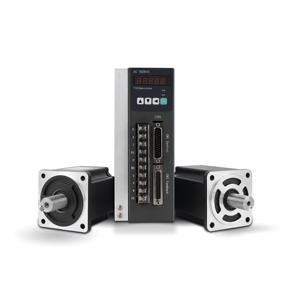
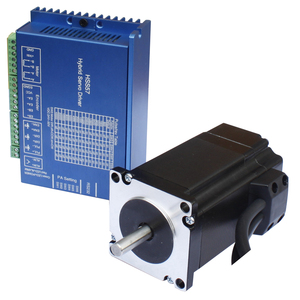
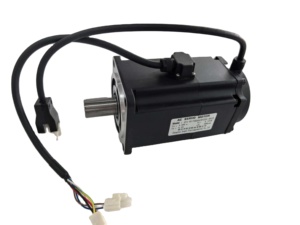
Maximizing energy yield per square meter in utility-scale installations requires single-axis or dual-axis tracking systems that continuously face the sun. Our precision AC servo drives and hybrid stepper controllers provide high-torque position control with built-in encoder feedback. Integrated wind-stow safety logic automatically signals tracking motors to lay flat during sudden desert gales, protecting structural mounts from aerodynamic shearing.
Highway monitoring stations along the Riyadh-Dammam corridor and remote telecom towers rely on continuous 24/7 power. Our low-power, high-reliability solar charge controllers supply ultra-clean DC power to cellular transceivers, IoT edge devices, and CCTV systems. Remote diagnostic features enable engineers in Riyadh headquarters to monitor battery health, load currents, and solar output in real time over cellular telemetry networks.
Saudi Arabia’s National Renewable Energy Program (NREP) is driving a rapid transformation in how energy is generated, stored, and managed across the Kingdom. The expansion of gigaprojects such as NEOM, Qiddiya, and the Red Sea Project—alongside massive infrastructure developments in Greater Riyadh—has raised the technical bar for solar hardware suppliers.
Key market trends shaping solar controller procurement in Riyadh include:
Utility scale and commercial projects are migrating from 1000V to 1500V DC string topologies to decrease cabling costs and electrical losses. Our industrial controllers support higher Voc thresholds to align with modern utility standards.
Lead-acid batteries are rapidly being replaced by high-density Lithium Iron Phosphate (LiFePO4) chemistry across KSA. Our controllers incorporate open-protocol BMS synchronization to prevent overcharge and thermal runaway.
With Saudi Electricity Company updating grid-interconnection codes, solar controllers must support dynamic active power curtailment, reactive power support, and fast frequency response during main grid fluctuations.
Selecting an international solar controller exporter requires total confidence in quality control, international compliance, and long-term technical support. Backed by over 25 years of factory-floor automation experience, our manufacturing infrastructure delivers uncompromised reliability.
Unlike trading companies, we design, manufacture, and assemble solar controllers and control assemblies in our state-of-the-art facilities. Every unit undergoes automated optical inspection (AOI), full-load burn-in testing inside high-temperature thermal chambers, and full dielectric withstand testing before export packaging.
Navigating Saudi Customs requires strict adherence to regional safety standards. Our entire export range holds valid IEC 62109-1/2 certifications, CE approvals, and SASO (Saudi Standards, Metrology and Quality Organization) compliant test reports. We facilitate seamless SABER certificate registration to guarantee smooth customs clearance at King Khalid International Airport and Riyadh Dry Port.
Every industrial project has unique requirements. Our team of in-house embedded system developers and panel builders provides custom firmware tailoring (e.g. customized Modbus register maps, OEM branding) as well as turnkey IP65 outdoor cabinet assemblies equipped with AC/DC surge protection, breakers, and terminal blocks.
Our technical commitment does not end at export dispatch. Overseas clients and installation contractors in Saudi Arabia receive direct application engineering support, CAD wiring schematics, register documentation, and remote video commissioning assistance to ensure rapid onsite project turn-key deployment.
We address the common technical, logistical, and compliance questions asked by Saudi project developers and electrical contractors during equipment sourcing.
Our desert-grade controllers are built using high-temperature rated solid-state components, heavy anodized aluminum extruded heat sinks, and Silicon Carbide (SiC) power electronics. Rather than throttling performance early, our thermal management design maintains continuous rated output up to 55°C ambient temperatures. Internal conformal coating also protects circuit boards from thermal shock and condensation cycles.
Imports into Saudi Arabia require a Certificate of Conformity (CoC) issued through the SABER online platform. Our product lines carry full type-test reports under IEC 62109-1 and IEC 62109-2 standards from accredited laboratory facilities, allowing us to rapidly generate the required Product Certificate of Conformity (PCoC) and Shipment Certificate of Conformity (SCoC) for hassle-free clearance through Saudi Customs.
Yes. All of our industrial-grade MPPT and motor controllers come standard with isolated RS485 interfaces supporting open Modbus RTU or Modbus TCP protocols. Detailed Modbus memory maps are supplied with each dispatch, enabling system integrators in Riyadh to map voltage, current, power harvest, temperature, and fault status registers directly into Siemens, Schneider, Omron, or ControlX SCADA systems.
Absolutely. Our controllers feature customizable 3-stage charge profiles as well as direct BMS integration protocols via CANbus or RS485. This allows the charge controller to adjust voltage targets and charge currents dynamically based on real-time cell parameters sent by the lithium battery management system, protecting the battery pack from overvoltage or high-temperature stress.
Standard model inventory is dispatched within 5 to 7 business days. Air freight shipments to King Khalid International Airport (RUH) typically arrive within 5 to 8 transit days. Sea freight shipments routed to Dammam or Jeddah Islamic Port, followed by rail/truck transit to Riyadh Dry Port, typically take 18 to 25 days. Express door-to-door DDP (Delivered Duty Paid) options are also available.
Yes. We manufacture type-tested IP65/IP66 enclosures and complete control assemblies in-house. We can supply fully wired solar combiner and charge controller cabinets integrated with DC disconnect switches, Type II surge protection devices (SPDs), fused string protection, and customer-specified branding tailored for turnkey site installation across Saudi Arabia.
Contact our application engineering team today to request technical datasheets, CAD drawings, thermal derating curves, or a competitive FOB/CIF export quotation for your Saudi Arabian installation.
Contact Us