
1. Strategic Shift: Stepper & Servo Automation in the Mexico City Metropolitan Area (ZMVM)
The industrial landscape across the Metropolitan Area of Mexico City (Zona Metropolitana del Valle de México - ZMVM) and neighboring manufacturing belts—including Tlalnepantla de Baz, Cuautitlán Izcalli, Vallejo, Naucalpan, Toluca, and the Querétaro logistics corridor—is undergoing a rapid technological transformation. Driven by nearshoring momentum under the USMCA (T-MEC) agreement, global automotive OEM suppliers, medical device manufacturers, consumer packaging plants, and electronics assemblers are upgrading legacy production lines to ultra-reliable, high-efficiency stepper motors and drive systems.
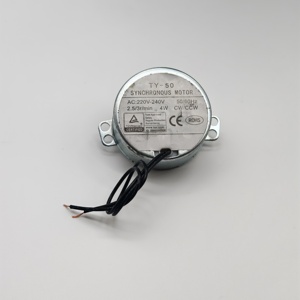
While traditional open-loop stepper motors historically dominated basic indexing and conveying setups, the rigorous throughput standards of modern Mexican manufacturing plants demand zero step loss, high thermal efficiency, and seamless industrial fieldbus networking (Modbus RTU, RS-485, CANopen, and EtherCAT). Procuring directly from certified stepper motors and drives factories ensures that plant engineers receive factory-calibrated, impedance-matched motor-driver sets engineered specifically for high-duty operational cycles.
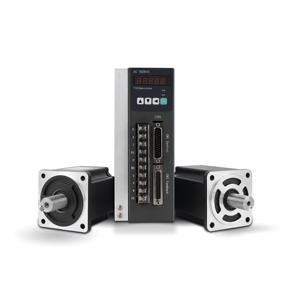
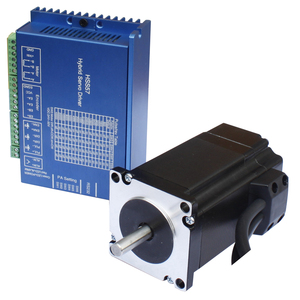
Operating precision rotary motion equipment in Mexico City presents unique environmental challenges. Situated at an altitude of approximately 2,240 meters (7,350 feet) above sea level, CDMX has an atmospheric pressure of ~75 kPa compared to 101.3 kPa at sea level. The lower air density decreases convective thermal dissipation on motor frame surfaces by 8% to 12%. When specifying NEMA 23, NEMA 24, or high-torque NEMA 34 hybrid steppers, our factory engineers apply thermal derating curves and recommend closed-loop current modulation (Easy Servo drives such as the HSS60) to limit copper loss ($I^2R$ heating) during continuous operation.
2. Engineering Deep-Dive: Open-Loop vs. Easy Servo vs. AC Servo Architectures
Selecting the optimal motion control drive train requires evaluating dynamic torque demands, encoder feedback requirements, position holding characteristics, and total system expenditure. Below is a engineering comparison matrix designed for plant procurement specialists and automation integrators in the Mexico City region:
| Performance Parameter | Standard Open-Loop Stepper | Hybrid Closed-Loop (Easy Servo) | Integrated AC Servo System |
|---|---|---|---|
| Positioning Accuracy | Open loop ($\pm 5\%$ non-cumulative step error) | Closed loop ($\pm 1000$ to $4000$ PPR encoder feedback) | Absolute / Incremental 17-bit to 23-bit encoder ($\pm 0.01\text{ mm}$) |
| Step Loss Risk | Possible under mechanical overload / resonance | Zero position loss (auto-corrects within step error) | Zero position loss (instant fault alarm trip) |
| Low-Speed Torque | Maximum rated holding torque at zero RPM | Maximum holding torque with dynamic current response | Rated torque maintained up to nominal RPM (e.g., 3000 RPM) |
| Thermal Generation | High (constant peak phase current) | Low to Moderate (load-dependent current drawing) | Minimal (optimized vector control) |
| System Cost Index | Baseline ($1.0\times$) | Optimal Cost-to-Performance ($1.4\times - 1.8\times$) | High Performance ($2.5\times - 3.5\times$) |
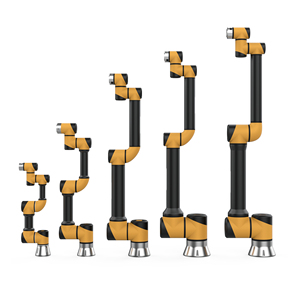
| Target CDMX Applications | Conveyors, simple feed rolls, basic labeling | NEMA 24 pick-and-place, CNC routers, dose pumps | High-speed packaging, medical liquid filling, 6-axis cobots |
3. Localized Application Scenarios Across Greater Mexico City Industrial Hubs
Automotive & Tier-1 Parts (Toluca & Cuautitlán)
High-precision NEMA 24 hybrid easy servo motor sets paired with HSS60 digital drivers powering automated screwing units, vision-guided component inspection rigs, and leak testing stations where 100% position retention is mandatory.
Medical Devices & Pharma (Vallejo & Tlalnepantla)
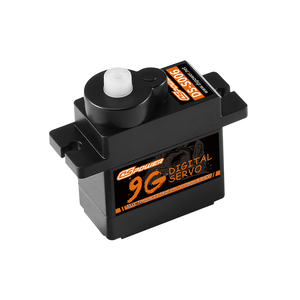
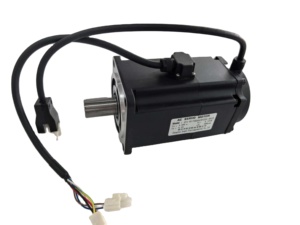
Deploying 1300W 220V AC Servo Motors with RS485 communication protocols and micro-gear submicro servos in sterile fluid dosing pumps, blister packaging lines, and high-speed rotary tablet counters requiring compliance with strict sanitization standards.
AGV / AMR Intralogistics (Tepoztlán & Logistics Hubs)
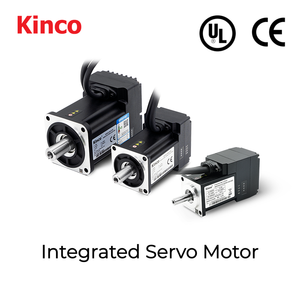
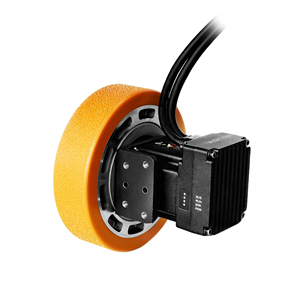
Integrated Servo Wheel Drives (e.g., Kinco IWMC05606 series) enabling compact, high-payload Autonomous Mobile Robots (AMRs) and Automated Guided Vehicles (AGVs) operating 24/7 in large-scale e-commerce distribution centers in the CDMX perimeter.
4. Technical Factory Capabilities: Why Direct Supplier Partnerships Matter
Procuring motion hardware from a integrated factory supplier provides significant operational advantages over unverified third-party trading intermediaries. With over 25 years of industrial engineering heritage, our manufacturing plants operate certified assembly, sheet metal, surface-mount technology (SMT), and high-pot dielectric testing facilities.
- Strict Type-Tested Assemblies (TTA): All high-torque 2-phase/3-phase hybrid steppers and AC servo systems undergo routine load test insulation checks, phase resistance balancing, and thermal imaging runs prior to factory dispatch.
- Multi-Brand Ecosystem Compatibility: Native integration with leading global control automation platforms including Omron, Delta, Panasonic, Schneider Electric, Advantech, Cognex, Baumer, and Moxa.
- Component-Level Repair & Retrofit Support: Full diagnostic and refurbishment support for existing drive cards, printed circuit boards (PCBs), switch-mode power supplies (SMPS), and optical encoder disc alignments to minimize plant downtime in Mexico.
- Comprehensive Export Documentation: Providing full Factory Acceptance Test (FAT) reports, Certificate of Origin, customs classification paperwork under USMCA/T-MEC tariff codes, and complete wiring schematics to streamline importation into Mexico.
5. High-Altitude Torque Calculation Formula for Stepper Sizing in CDMX
When engineering stepper motor drive trains for installation in Mexico City, mechanical project managers should utilize the compensated sizing equation to prevent thermal shutdown and mid-frequency resonance stalling:
$T_{\text{required}} = \left( \frac{T_{\text{load}} + T_{\text{acceleration}}}{\eta_{\text{altitude}} \times \mathrm{SF}} \right)$
Where:
• $T_{\text{load}}$ = Static friction torque & opposing load forces ($\text{N}\cdot\text{m}$)
• $T_{\text{acceleration}}$ = Rotor and load inertia acceleration torque ($J \times \alpha$)
• $\eta_{\text{altitude}}$ = Altitude thermal derating factor ($0.88 - 0.92$ for Mexico City at $2,240\text{m}$)
• $\mathrm{SF}$ = Recommended safety factor ($1.3 - 1.5$ for closed-loop, $2.0$ for open-loop)