High-dielectric vacuum interrupter contactors customized for harsh Australian operational environments.
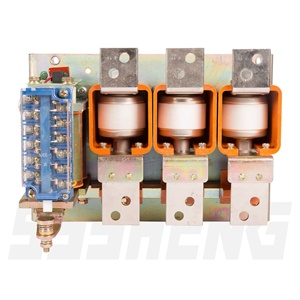
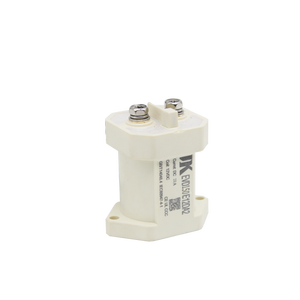
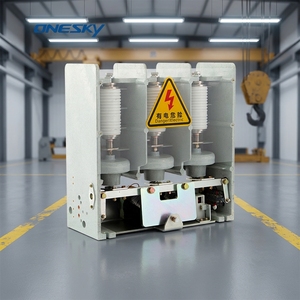
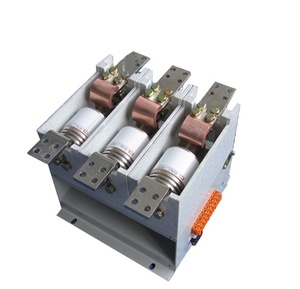
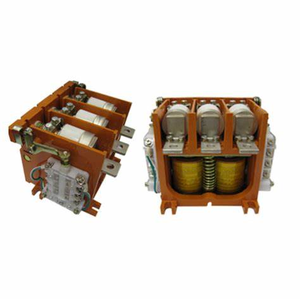
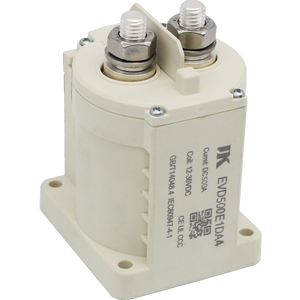
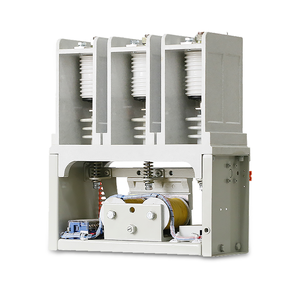
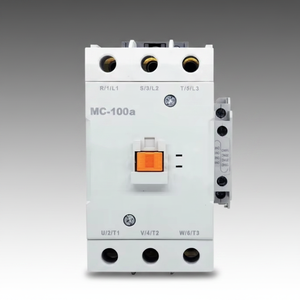
Australia’s industrial sector operates under some of the world's most severe ambient and electrical environments. From the hyper-arid, dust-laden Pilbara mining sites in Western Australia to high-salinity coastal processing installations in Queensland, electrical switchgear components are subjected to extreme thermal stress, mechanical vibration, and rapid thermal cycling. Achieving operational continuity requires vacuum contactors that far exceed baseline IEC standards, embodying robust insulation geometries, zero-maintenance interrupter bottles, and high fault-break tolerances.
This technical whitepaper provides switchgear builders, mining electrical engineers, and utility procurement managers across Sydney, Melbourne, Perth, Brisbane, and Adelaide with the definitive guide to specifying, integrating, and maintaining low and medium voltage vacuum contactors. By leveraging advanced vacuum interrupter (VI) technology, industrial operators eliminate arc flash risks, cut contact erosion, and achieve mechanical lifespans exceeding 1,000,000 switching operations under AC-3 and AC-4 loading conditions.
Key Engineering Gain: Vacuum contactors utilize sealed ceramic-metal vacuum bottles to extinguish arcs within microseconds upon contact separation. Because dielectric recovery in a vacuum is nearly instantaneous (exceeding 10kV/μs), contact wear is reduced by up to 90% compared to conventional air-break or SF6 contactors, virtually eliminating open-air ionizing gas release.
The Australian industrial switchgear market is undergoing a rapid transition toward vacuum-based medium voltage control gear driven by three core pressures: strict safety compliance under AS/NZS 60947.4.3 and AS 2067, operational cost reduction in remote sites, and decarbonization mandates targeting the phase-out of SF6 gas.
Traditional air-break contactors fail prematurely in Australian mining environments due to dust ingress (fine iron ore, coal, or quartz dust) which coats contact tips and tracking surfaces, causing phase-to-phase flashovers. Vacuum contactors feature hermetically sealed ceramic contact chambers. The main switching contacts operate in a high vacuum (10-4 to 10-7 Pa), rendering the switching arc entirely immune to atmospheric humidity, corrosive airborne salts, or conductive particulate dust.
Historically, early-generation vacuum switchgear suffered from high "chopping currents," which induced severe transient recovery voltage (TRV) spikes that degraded motor winding insulation on large induction motors. Modern vacuum contactors manufactured by our plants incorporate advanced Chromium-Copper (CrCu) contact materials. This alloy maintains a low chopping current (typically < 0.5A), safeguarding motor stators, dry-type transformers, and variable speed drive (VSD) isolation transformers from voltage breakdown without requiring external RC surge suppressors in standard duty cycles.
Direct-on-line (DOL) starting, forward-reversing, and soft-starter bypass for SAG mills, jaw crushers, underground haulage winches, and slurry pumps operating at 1.14kV, 3.3kV, 6.6kV, and 11kV.
High-voltage direct current (HVDC) vacuum switching for battery energy storage systems (BESS), solar inverter isolation, and grid-forming STATCOM capacitor bank switching under high ambient heat.
Continuous AC-4 switching duty in alumina refineries, nickel smelters, water desalination pumping plants, and chemical processing facilities requiring zero arc discharge.
DC vacuum contactors engineered for heavy EV buses, mining haul truck electrification, and ultra-fast charging hub protection up to 1500V DC.
Selecting the correct switching device requires comparing dielectric media across key operational metrics. The table below details why engineering switchgear builders across Australia are retrofitting legacy air contactors with vacuum interrupters.
| Performance Feature | Vacuum Contactor (Our Factory) | Traditional Air-Break Contactor | SF6 Gas Contactor |
|---|---|---|---|
| Arc Extinction Speed | Microseconds (< 10ms) | Slow (30 - 80ms) | Moderate (15 - 30ms) |
| Mechanical Operations Lifespan | 1,000,000 to 2,500,000 cycles | 100,000 to 300,000 cycles | 500,000 cycles |
| Contact Maintenance | Zero Maintenance (Sealed Bottle) | Frequent Filing & Tip Replacement | Gas pressure monitoring required |
| Environmental Impact | 100% Eco-Friendly (Zero Gas) | Generates ozone/arc products | High GWP (SF6 regulation risk) |
| Explosion Risk in Mines | Zero (Hermetically Sealed) | High (Open arc discharge) | Low (Pressurized tank risk) |
| Size & Footprint | Compact Panel Footprint | Large Arc Chutes Required | Medium |
As a global OEM direct manufacturer with over 25 years of specialized power electronics and switchgear experience, our manufacturing facilities adhere to rigorous production protocols, delivering factory-direct advantages to Australian buyers:
Several macro trends are driving the adoption of medium voltage vacuum contactors across the Australian industrial landscape:
With major mining enterprises in WA and SA committing to zero-emissions by 2050, diesel haulage trucks are being replaced with battery electric vehicles (BEVs) and tethered underground electric loaders. This shift requires high-amperage (150A to 500A) DC vacuum contactors capable of handling continuous fast-charging pulses and high DC interruption currents without contact welding.
As renewable penetration on the National Electricity Market (NEM) increases, grid operators enforce strict power factor and harmonic limits. Industrial users must frequently switch capacitor banks and harmonic filter units. Vacuum contactors, equipped with high-duty mechanical latching, enable precise zero-crossing switching to eliminate grid voltage sags and resonance harmonics.
Connect directly with our senior application engineers. We provide CAD models, wiring schematics, type-test certificates, and direct factory pricing for your project.
Inquire Now