High-efficiency Variable Frequency Drives, integrated servo motors, and micro-actuators engineered for Tokyo’s demanding medical, robotic, and precision manufacturing sectors.
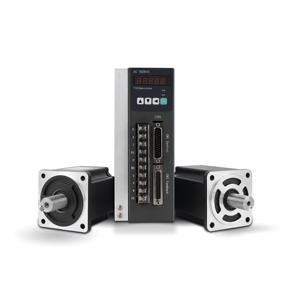
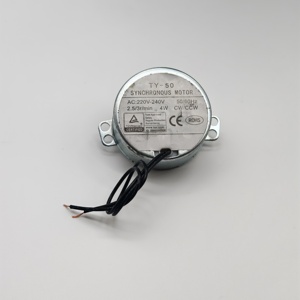
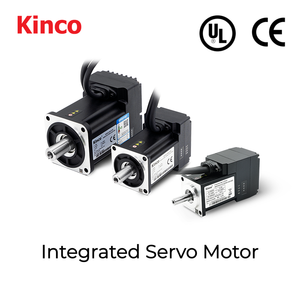
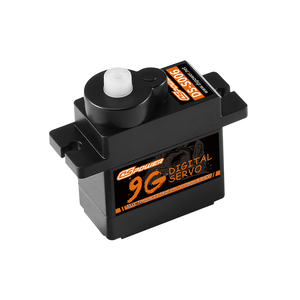
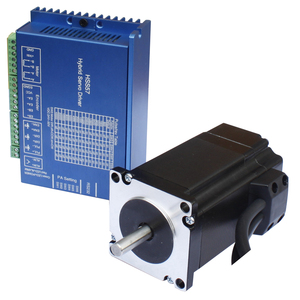
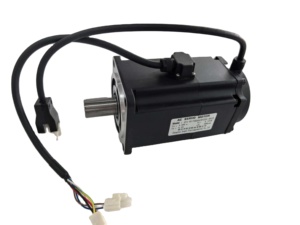
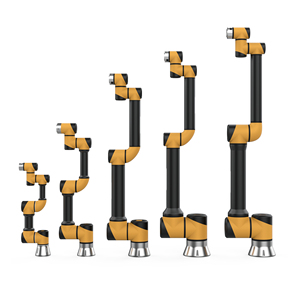
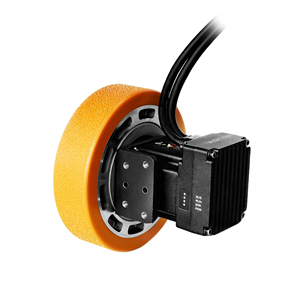
The Tokyo metropolitan area—spanning major industrial hubs across Ota City, Shinagawa, Kanagawa, and Chiba—represents one of the world's most concentrated clusters of advanced precision engineering, semiconductor tooling, pharmaceutical manufacturing, and automated intralogistics. As energy overheads rise and the Tokyo Metropolitan Government enforces stringent carbon-neutrality mandates under the Tokyo Cap-and-Trade Program, selecting the right Variable Frequency Drive (VFD) inverter manufacturer is no longer merely a procurement exercise; it is a core operational strategy.
Unlike standard European or North American manufacturing environments, Japan presents a unique electrical architecture. Eastern Japan—including Tokyo, Kanagawa, Saitama, Chiba, and Tochigi—operates strictly on a 50 Hz grid frequency (served by TEPCO - Tokyo Electric Power Company), utilizing standard voltages of 200V 3-Phase (for industrial medium loads) and 400V 3-Phase (for heavy industrial plants).
Engineers procuring VFD inverters for Tokyo industrial applications must ensure dual-frequency capability (50/60Hz seamless switching), robust voltage tolerance against transient sag (+/- 10-15%), and ultra-strict compliance with JEAC 9701 harmonic suppression guidelines. High-performance VFD inverters equipped with integrated DC chokes, active front ends (AFE), and built-in EMC noise filters (EN 61800-3 Class C2/C1) are essential to prevent cross-talk on localized factory power lines, protecting delicate CNC micro-encoders and cleanroom sensor arrays.
VFD Inverters serve as the silent engines driving continuous throughput across Japan's most vital economic sectors. Below are the primary deployment scenarios where high-gain frequency converters provide measurable energy payback and motion accuracy.
Ota Ward houses thousands of specialized micro-factories producing semiconductor sub-assemblies and medical surgical tools. High-frequency vector control VFDs deliver ultra-smooth low-speed torque (up to 200% starting torque at 0.5Hz) and low carrier noise (up to 16kHz PWM), preventing vibration marks on ultra-fine metal lathe surfaces.
Around Tokyo Port and Chiba distribution parks, automated guided vehicles (AGVs) and high-speed sorters rely on compact DC-input servo drives and integrated VFD wheels (such as the Kinco IWMC series). High energy density, CANopen/EtherCAT bus responsiveness, and regenerative braking boost operational uptime in 24/7 fulfillment centers.
Pharmaceutical and electronics plants demand strict positive pressure control and particulate filtration. Variable Torque VFD inverters optimize fan and pump continuous speeds via PID feedback loops, cutting energy usage by up to 45% while adhering to ISO Class 5 cleanroom air exchange requirements.
Selecting between standard V/f inverters, sensorless vector drives, and servo-hybrid systems impacts overall plant Power Factor, harmonic emission, and motor thermal rise.
| Drive Specification / Feature | Standard Scalar (V/f) Inverter | Sensorless Vector Control VFD | SiC/GaN High-Frequency Servo Drive |
|---|---|---|---|
| Speed Control Precision | ±1% to ±3% nominal speed | ±0.02% to ±0.1% with encoder feedback | ±0.001% (Sub-micron spatial accuracy) |
| Starting Torque Efficiency | 100% torque at 3Hz | 200% rated torque at 0.0 Hz (FOC) | 250% instantaneous peak torque |
| Harmonic Suppression (THD-i) | High (~35-45% without external choke) | Medium (<10% with internal DC Choke) | Ultra-Low (<3% with Active Front End) |
| Energy Efficiency Grade | IE2 / Standard Efficiency | IE3 / Premium Efficiency | IE4 / IE5 Ultra-Premium (SiC Module) |
| Tokyo Application Fit | Conveyors, Basic HVAC Pumps | Extruders, Crane Hoists, Injection Moulding | 6-Axis Robotics, AGV Drive Wheels, CNC Spindles |
Three core macro trends are accelerating the upgrade cycle of variable speed drive systems throughout Tokyo and the broader Kanto area.
Japan’s Ministry of Economy, Trade and Industry (METI) has intensified decarbonization targets. Industrial facilities in Tokyo are shifting from standard induction motors to Permanent Magnet Synchronous Motors (PMSM) controlled by smart vector VFDs, slashing power losses by up to 30% and qualifying for municipal energy transition subsidies.
Tokyo plant managers prioritize seamless connectivity. Modern VFDs must natively speak CC-Link IE Field, EtherCAT, Modbus TCP, and Profinet. Real-time telemetry monitoring motor temperature, vibration harmonics, and instantaneous power allows predictive maintenance before line stoppage occurs.
Factory floor space in Greater Tokyo commands a premium. Modern drive engineering focuses on book-style zero-clearance side-by-side mounting. Furthermore, enclosures and internal circuit boards feature heavy-duty conformal coating (IEC 60721-3-3 Class 3C2) to resist humidity and seismic vibration stress common to the Kanto region.
Backed by over two decades of industrial automation experience, our enterprise delivers high-grade variable frequency drives, type-tested control panel assemblies (TTA), and precision motion controllers engineered to IEC standards.
With in-house Surface Mount Technology (SMT) lines, automated sheet metal fabrication plants near major shipping corridors, and rigorous routine testing protocols, we empower overseas OEMs and Tokyo machine builders with reliable hardware, complete FAT documentation packs, and rapid technical support.

Addressing essential technical compliance, grid synchronization, custom OEM options, and local logistics for Kanto area factory procurement managers.
Consult with our senior application engineers to obtain custom VFD sizing, CAD dimensional drawings, sample evaluation units, and localized factory pricing for your upcoming automation build.